
Table of Contents
Best Cameras for Ad Film Making: The Camera Question Every Brand Asks and Why the Answer Is Never Simple
It’s one of the most common questions we receive at Cybertize Media Productions: ‘What camera do you use?’ It sounds simple. It is not.
Best Cameras for Ad Film Making: The camera that’s right for your ad film depends on your budget, your distribution platform, your DOP’s experience, your shooting conditions, the look you’re trying to achieve, and — critically — whether you’re buying or renting. A premium automotive brand shooting a 60-second cinematic TVC for national TV has entirely different camera requirements than a D2C skincare brand producing a 15-second Instagram Reel.
Both deserve the right answer. Not the same answer.
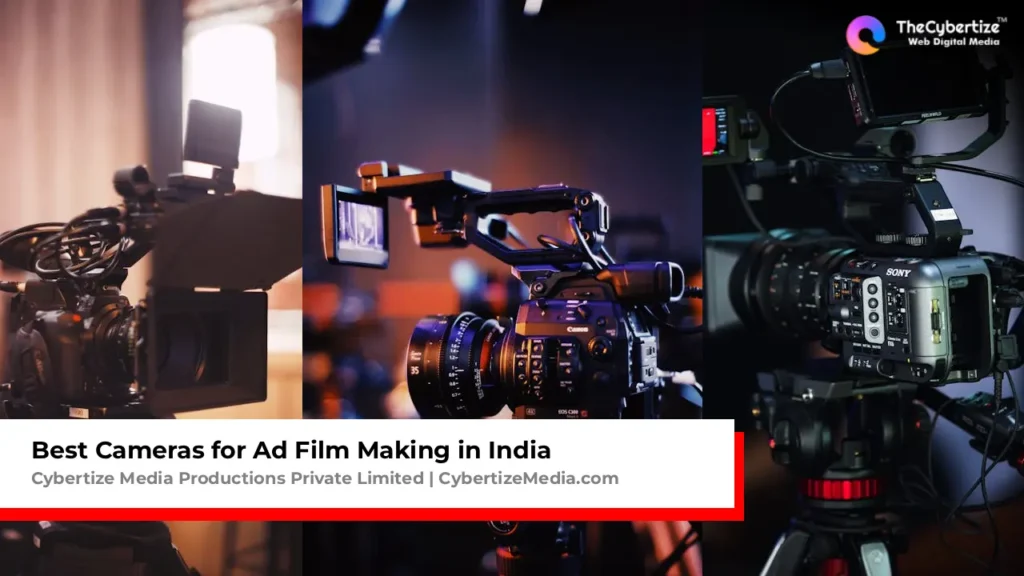
This guide is Cybertize Media’s honest, insider breakdown of every major camera used in Indian ad film production in 2026 — from the ARRI Alexa 35 that Bollywood DPs reach for on premium national campaigns to the Sony FX30 that produces broadcast-ready results for a fraction of the rental cost. We’ll cover specs, India-specific rental rates, what each camera is genuinely best for, and the questions you need to ask before committing to any camera for your production.
Best Cameras for Ad Film Making: No camera brand is paying us to say this. We’re saying it because the right camera for your production is the one that makes your ad film look exactly as professional as your brand deserves.
1. Why Camera Choice Matters — and When It Doesn’t
Here’s the truth that camera manufacturers don’t want you to know: at the professional end of the market, the differences between cameras are more subtle than the price differences suggest. An ARRI Alexa 35 and a Sony VENICE 2, shot by the same experienced DOP in the same lighting conditions, will produce footage that most viewers — including most clients — cannot reliably distinguish.
What matters more than the camera body in almost every production scenario:
- The lenses attached to it — which shape the optical character of the image far more than the sensor
- The lighting design — which determines the quality and mood of everything the sensor captures
- The DOP operating it — whose craft decisions translate technical capability into visual storytelling
- The colour grade applied in post — which defines the final emotional tone of every shot
Camera choice matters significantly at three specific thresholds: when your distribution platform has technical delivery specifications (Netflix 4K, broadcast SD/HD), when your production requires specific performance characteristics (extreme low light, high frame rate slow motion, very large format), and when the camera body signals your production’s seriousness to experienced talent and crew. Outside of these thresholds, the camera is a tool — and the craftspeople using it determine the quality of what it produces.
Cybertize Principle: We choose cameras for our productions based on three factors: what the DOP knows best, what the distribution platform requires, and what the budget allows. In that order. The ‘best’ camera is always the one that best serves those three priorities on that specific project.
A RED Komodo costs ₹45 lakh to buy outright — but renting premium cinema cameras in India for ₹80,000–₹1,50,000/day makes Hollywood-quality cinema accessible to mid-budget Indian brands. — Camera Rental India market data, 2026
2. Best Cameras for Ad Film Making — 5 Questions
Before you look at a single spec sheet, answer these five questions. Your answers will narrow the field from twenty cameras to two or three that are genuinely right for your project:
Q1: Where will this ad film be distributed?
Best Cameras for Ad Film Making: TV broadcast, OTT platforms, YouTube, Instagram, or all of the above? Each platform has different technical specifications. Netflix requires cameras on their approved list (which includes ARRI, Sony VENICE/FX series, RED, and Canon Cinema EOS). National TV broadcast in India requires 1080p minimum. Instagram Reels and YouTube are format-agnostic at professional production quality. If your film goes to TV or OTT, the camera spec matters more than if it lives purely on social platforms.
Rent RED Komodo 6K Camera in India
Q2: What is your total production budget?
Camera rental should be 15–25% of your total production budget. For a ₹5 lakh production, that’s ₹75,000–₹1.25 lakh — which means mid-tier cinema cameras like the Sony FX3, Canon C70, or Blackmagic URSA Mini Pro. For a ₹25 lakh production, ₹3.75–6.25 lakh on camera opens access to ARRI Alexa Mini LF or RED Monstro territory. For a ₹2 lakh production, ₹30,000–50,000 gets you a capable Sony FX30 or Canon EOS R5 C — still entirely professional-quality results.
Q3: What are the primary shooting conditions?
Indoor controlled studio, outdoor daylight, low-light interiors, fast-moving action, product close-ups? Low-light conditions favour cameras with higher ISO performance (Sony FX series, Canon Cinema EOS). Action and slow-motion require cameras with high frame rate capability. Large format sensors (ARRI LF, Sony VENICE) are specifically valuable for cinematic depth of field work. Handheld run-and-gun shooting favours cameras with in-body image stabilisation (IBIS).
Q4: What does your DOP know best?
Best Cameras for Ad Film Making: This is the most undervalued factor in camera selection. A DOP who has spent three years shooting on ARRI Alexa systems can extract more from a modestly-specced Alexa than a first-timer can from a brand-new flagship. Colour science, exposure latitude, codec workflows, and menu navigation are not interchangeable skills between systems. Always align camera selection with your DOP’s primary platform of expertise.
Q5: Are you buying or renting?
For most brands and small production houses in India, renting is significantly more cost-effective than owning. An ARRI Alexa 35 costs over ₹1.5 crore to purchase — renting at ₹19,800/day means you can access it when needed without capital lock-in, maintenance costs, or technology obsolescence risk. Unless you’re a production house shooting more than 200 days per year on the same system, renting outperforms buying on pure economics in the Indian market.
3. Camera Categories for Indian Ad Film Production
| Category | Cameras | India Rental Range/Day | Best Production Type | Platform Suitability |
|---|---|---|---|---|
| Ultra-Premium | ARRI Alexa 35, ARRI Alexa Mini LF, ARRI AMIRA | ₹14,800 – ₹1,20,000 | National TVC, OTT, Feature, Brand film | TV, OTT, Cinema, Netflix |
| Premium Cinema | RED Monstro 8K, RED V-Raptor, Sony VENICE 2 | ₹45,000 – ₹1,50,000 | Automotive, luxury brand, cinematic TVC | TV, OTT, Cinema, Netflix |
| Mid Cinema | Sony FX6, Sony FX9, Canon C300 III, Canon C500 II | ₹8,000 – ₹35,000 | Brand TVC, corporate film, regional TV | TV, OTT, YouTube, All digital |
| Accessible Cinema | Sony FX3, Canon C70, Blackmagic URSA Mini Pro 12K | ₹5,000 – ₹15,000 | Digital ad film, YouTube, OTT pre-roll | YouTube, OTT, Instagram, TV |
| Budget Cinema | Sony FX30, Blackmagic BMPCC 6K G2, Canon EOS R5 C | ₹2,000 – ₹6,000 | Social ad film, product demo, reel | Instagram, YouTube, Digital |
| Mirrorless Hybrid | Sony A7S III, Panasonic S1 II, Fujifilm GFX ETERNA | ₹1,500 – ₹5,000 | Behind-scenes, doc-style, portrait work | Digital, Social, Corporate |
4. The Complete Camera Breakdown — 10 Best Cameras for Indian Ad Films
TIER 1: THE GOLD STANDARD
ARRI Alexa 35 — The Indian Ad Industry’s First Choice
Sensor: ALEV 4 Super 35mm | Resolution: 4K (up to 4.6K open gate) | Dynamic Range: 17 stops — highest in class
Slow-Mo FPS: 4K/120fps, 4K/75fps in crop | IBIS: No internal IBIS
India Rental: ₹19,800/day (New Delhi, IndiaMart verified) | Buy Price (approx): ₹1.5 Crore+ (buy)
Best for: National TVC, luxury brands, cinematic brand films, OTT originals, any production where colour rendering is non-negotiable
Watch out: No internal IBIS means handheld work requires a gimbal or Steadicam. Large body is not run-and-gun friendly. High rental cost must be justified by production tier.
Rent Red DSMC2 Helium 8K S35 Camera
The ARRI Alexa 35 is the most trusted camera in Indian high-budget ad production in 2026. Its ALEV 4 sensor delivers 17 stops of dynamic range — the highest in any production camera — which means it holds shadow and highlight detail in mixed lighting conditions that would clip any other sensor. The colour science is so mature and industry-trusted that ARRI Log C4 footage grades faster and more predictably than any competing system.
Bollywood DOPs, advertising cinematographers, and OTT directors reach for the Alexa 35 when the brief requires images that look unmistakably cinematic. Brands like premium automotive, luxury FMCG, high-end real estate, and jewellery typically shoot with ARRI systems specifically because the footage carries a visual gravitas that clients can feel even when they can’t name why.
Cybertize Tip: The ARRI Alexa 35’s 17-stop dynamic range means you can expose for your subject confidently and recover detail in post that other cameras would have lost. In Indian outdoor shooting conditions with harsh sunlight and deep shadows, this matters more than resolution.
ARRI Alexa Mini LF — Large Format Cinematic Depth
Sensor: LF ALEV III Large Format (full-frame equivalent) | Resolution: 4.5K (open gate 4448×3096) | Dynamic Range: 14+ stops
Slow-Mo FPS: 4K/90fps | IBIS: No internal IBIS
India Rental: ₹45,000 – ₹1,20,000/day (varies by city and lens package) | Buy Price (approx): ₹58,000+ USD (approx ₹48+ Lakh)
Best for: Brand films requiring shallow depth of field, portrait-heavy TVCs, beauty and fashion advertising, jewellery, premium lifestyle
Watch out: Expensive to rent with appropriate LF lenses. Large format adds cost to entire lens kit. Not suitable for budget productions.
Best Cameras for Ad Film Making: The Alexa Mini LF shoots on a larger-than-Super-35 sensor that produces the shallow depth of field and field of view that defines the cinematic ‘large format’ look — the visual quality associated with Hollywood feature films and premium global brand advertising. When a beauty brand wants the viewer to feel drawn into a close-up, or a jewellery brand wants a product to sit against a dreamlike blurred background, the Alexa Mini LF’s sensor delivers what smaller-format cameras cannot.
TIER 2: PREMIUM PRODUCTION
RED V-Raptor 8K VV / RED Komodo 6K — Compact Power
Sensor: VV (Vista Vision) full-frame / Super 35 6K | Resolution: 8K (V-Raptor) / 6K (Komodo) | Dynamic Range: 17 stops (V-Raptor) / 16 stops (Komodo)
Slow-Mo FPS: 8K/120fps, 6K/150fps | IBIS: No internal IBIS
India Rental: ₹50,000 – ₹1,50,000/day for RED V-Raptor; Komodo ₹15,000–₹35,000 | Buy Price (approx): RED Komodo ₹45 Lakh (buy); V-Raptor significantly higher
Best for: Automotive advertising (slow-motion capture), action sequences, product launch films, technology brand advertising
Watch out: RED’s RAW workflow (R3D codec) requires significant post-production investment in storage and capable editing workstations. Not ideal for productions without experienced RED workflow operators.
RED cameras are the preferred choice for ad films requiring extraordinary slow-motion capability and ultra-high resolution. The RED V-Raptor’s ability to shoot 8K at 120fps means a 4-second real-time action sequence becomes a 16-second cinematic slow-motion sequence at 30fps — which is the kind of frame rate that makes automotive TVC chase sequences, cricket bat swings, and product splash shots look genuinely spectacular.
Cybertize Tip: If your ad film concept requires a dramatic slow-motion moment — a product reveal, a sporting action, a liquid pour, a fabric unfurling — RED cameras are the primary choice in the Indian production market for this specific capability. The combination of high resolution and extreme frame rates produces footage that cannot be matched by any other system at the same quality level.
Sony VENICE 2 — The OTT and Broadcast Standard
Sensor: Full-frame 8.6K CMOS | Resolution: 8.6K (open gate) | Dynamic Range: 15 stops
Slow-Mo FPS: 8.6K/30fps, 4K/120fps | IBIS: No internal IBIS (needs Extension System for some handheld use)
India Rental: ₹80,000 – ₹1,50,000/day (rare in India; typically special-order) | Buy Price (approx): ₹5,50,000+ (approx ₹45+ Lakh)
Best for: Netflix-approved productions, OTT originals, high-end brand films for international distribution
Watch out: Very high rental cost in India. Less commonly available than ARRI or Sony FX series. Post workflow requires experienced colourist familiar with Venice colour science.
Explore:
The Sony VENICE 2 is Netflix-approved and carries Sony’s most refined colour science — Venice Colour — which is widely considered the most accurate skin tone reproduction of any digital cinema camera. It’s the preferred choice for OTT productions destined for international distribution, and for beauty and skincare brand films where accurate, flattering skin colour is a creative and commercial requirement.
TIER 3: MID-RANGE PROFESSIONAL — THE INDIAN SWEET SPOT
Sony FX6 — The Indian Market’s Most Versatile Ad Camera
Sensor: Full-frame 12.1 MP back-illuminated CMOS | Resolution: 4K (10-bit 4:2:2) | Dynamic Range: 15+ stops in S-Log3
Slow-Mo FPS: 4K/120fps, 1080p/240fps | IBIS: 5-axis IBIS (up to 5.5 stops)
India Rental: ₹8,000 – ₹18,000/day (widely available across India) | Buy Price (approx): ₹3.7 Lakh (approx)
Best for: Regional TV TVC, brand films, corporate productions, any shoot requiring handheld versatility + high-quality results
Watch out: Smaller body than cinema cameras means it benefits from rigging for larger productions. No internal ND on some configurations.
The Sony FX6 is the most widely used professional camera in Indian mid-budget ad production in 2026. It sits in a sweet spot that covers the vast majority of brand advertising requirements: full-frame sensor for cinematic depth of field, 4K/120fps for creative slow motion, 15+ stops of dynamic range for challenging lighting, 5-axis IBIS for handheld shots without a gimbal, and a price-to-performance ratio that makes it the default choice for productions where ARRI access is outside the budget.
Productions using the FX6 include regional TV commercials, digital brand films, YouTube brand content, OTT pre-roll ads, and corporate films. It is also the camera most commonly paired with Sony FX9 or FX3 as B-camera on larger ARRI-led productions.
Canon EOS C300 Mark III / C500 Mark II — The Broadcast Reliable
Sensor: Super 35 / Full-frame Dual Gain Output (DGO) sensor | Resolution: 4K DCI (C300) / 5.9K (C500) | Dynamic Range: 16+ stops (DGO)
Slow-Mo FPS: 4K/120fps | IBIS: 5-axis optical IS (lens-dependent)
India Rental: ₹8,000 – ₹20,000/day; C500 higher | Buy Price (approx): C300 III approx ₹4.8 Lakh; C500 II approx ₹7.5 Lakh
Best for: Corporate films, broadcast TV, live events, documentary-style ad films, education and healthcare brand films
Watch out: Canon’s autofocus is its strongest advantage over Sony/ARRI; image character is cleaner and less ‘filmic’ than ARRI — which is sometimes the wrong look for premium cinematic briefs.
Canon Cinema EOS cameras are the preferred choice for productions where autofocus reliability is a genuine requirement — documentary-style brand films with moving subjects, live event coverage, education and healthcare brand content, and multi-camera setups where manual focus across all units is impractical. Canon’s Dual Pixel autofocus system is the most reliable subject-tracking autofocus in any cinema camera in the Indian market in 2026.
Cybertize Tip: If your ad film involves children, animals, sports action, or any talent who moves unpredictably — Canon Cinema EOS cameras with Dual Pixel AF will save you hours of unusable footage from missed focus pulls. This specific use case justifies Canon over ARRI or RED regardless of image quality differences.
TIER 4: ACCESSIBLE CINEMA — HIGH QUALITY, HONEST BUDGETS
Sony FX3 — The Social-First Ad Film Workhorse
Sensor: Full-frame 12.1 MP BSI CMOS | Resolution: 4K (10-bit 4:2:2 S-Log3) | Dynamic Range: 15 stops
Slow-Mo FPS: 4K/120fps | IBIS: 5-axis IBIS + Active SteadyShot
India Rental: ₹4,000 – ₹8,000/day | Buy Price (approx): Approx ₹3.3 Lakh (buy)
Best for: Instagram Reels, YouTube ad films, OTT pre-roll, social brand content, gimbal and handheld work
Watch out: No fan-assisted cooling — prone to overheating in long continuous recording. Small body size means it needs accessories (cage, handles) for professional rigging.
The Sony FX3 is the most popular camera for social-first ad film production in India in 2026. Its compact full-frame body, professional S-Cinetone and S-Log3 colour science, and 4K/120fps capability make it the go-to camera for DPs producing high-quality brand content for Instagram, YouTube, and digital platforms without a premium cinema budget.
It is also the most popular B-camera in larger ARRI-led productions — its matching Sony colour science means FX3 footage grades seamlessly alongside FX6, FX9, and even VENICE footage, allowing productions to use the FX3 for handheld, gimbal, or risky shots where a ₹19,800/day ARRI would be inappropriate.
Canon EOS C70 — The Compact Cinema Powerhouse
Sensor: Super 35 DGO sensor | Resolution: 4K DCI (10-bit 4:2:2) | Dynamic Range: 16 stops
Slow-Mo FPS: 4K/120fps | IBIS: 5-axis optical IS
India Rental: ₹4,000 – ₹9,000/day | Buy Price (approx): Approx ₹3.1 Lakh (buy)
Best for: Run-and-gun brand documentary, corporate films, travel brand content, hybrid photo-video shoots
Watch out: RF mount — smaller lens ecosystem than PL/EF mount cinema cameras. Not suitable for productions requiring cinema glass (Cooke, Zeiss, Leica lenses need EF/PL adapter).
The Canon EOS C70 combines cinema-grade image quality with a mirrorless-style compact body that is exceptionally practical for documentary-style brand films, travel content, and productions where the camera must be inconspicuous or mobile. Its Canon Log 2 colour science is excellent, and the Dual Pixel autofocus extends to 4K/120fps — a capability that Sony cameras at the same price point cannot fully match.
Blackmagic URSA Mini Pro 12K — The Indie Brand Film Choice
Sensor: Super 35 12K CMOS | Resolution: 12K (internal Blackmagic RAW) | Dynamic Range: 14 stops
Slow-Mo FPS: 4K/120fps in windowed mode | IBIS: No IBIS
India Rental: ₹8,000 – ₹20,000/day | Buy Price (approx): Approx ₹3.7 Lakh (buy)
Best for: Brand films requiring extreme resolution for large format output or significant cropping flexibility, commercial DPs who master DaVinci Resolve workflow
Watch out: No IBIS means every handheld shot needs a gimbal. 12K RAW workflow requires significant storage and post-production infrastructure. DaVinci Resolve expertise needed for optimal results.
You may be interested in:
The Blackmagic URSA Mini Pro 12K is the highest-resolution camera in its price tier and the preferred choice for cinematographers who work natively in DaVinci Resolve. Its Blackmagic RAW format is extremely colour-grade-friendly — the footage is designed to be manipulated in post with exceptional latitude. For brand films destined for large-format display (cinema screens, large outdoor LED installations, or productions requiring extreme crop flexibility), 12K resolution provides a buffer that no competing camera in the mid-price tier can match.
TIER 5: BUDGET CINEMA — PROFESSIONAL RESULTS, LEAN BUDGETS
Sony FX30 — Best Value Cinema Camera in India 2026
Sensor: Super 35 APS-C BSI CMOS 6K oversampled | Resolution: 4K (10-bit 4:2:2 at 120fps) | Dynamic Range: 14+ stops S-Log3
Slow-Mo FPS: 4K/120fps | IBIS: 5-axis IBIS
India Rental: ₹2,000 – ₹5,000/day | Buy Price (approx): Approx ₹1.5 Lakh (buy)
Best for: Budget brand films, social content, YouTube, first ad films for small businesses, student productions
Watch out: APS-C sensor (not full-frame) — 1.5x crop factor on full-frame lenses. No internal RAW (requires external Atomos Ninja for RAW workflow). Less cinematic shallow depth of field than full-frame cameras.
The Sony FX30 is the most cost-effective entry point into genuine professional cinema production in India in 2026. Its Super 35 APS-C sensor delivers 4K footage in 10-bit 4:2:2 with Sony S-Cinetone colour science — the same colour engine as the FX6 and FX9 — which means footage grades with the same professional quality as its more expensive siblings. The 4K/120fps slow-motion capability, 5-axis IBIS, and compact weight make it the most versatile camera in its price class.
For a brand producing their first professional ad film, a regional business shooting digital content, or a production working with a ₹2–4 lakh total budget, the FX30 produces results that are indistinguishable from more expensive cameras in the final graded output — on digital distribution platforms.
Explore:
Arri ALEXA 35 for Rent in India, Premium Cinema Camera Rentals
Blackmagic Pocket Cinema Camera 6K G2 — The Indie Filmmaker’s Choice
Sensor: Super 35 6K CMOS | Resolution: 6K (Blackmagic RAW 12-bit) | Dynamic Range: 13 stops
Slow-Mo FPS: 6K/50fps, 2.8K/120fps | IBIS: No IBIS
India Rental: ₹2,000 – ₹4,500/day | Buy Price (approx): Approx ₹1.5 Lakh (buy)
Best for: Indie brand films, short format digital content, productions using DaVinci Resolve post pipeline
Watch out: No IBIS — every shot needs tripod, slider, or gimbal. Battery life is genuinely poor (40–60 mins per battery). No internal ND.
The Blackmagic Pocket Cinema Camera 6K G2 is the most popular camera among independent cinematographers in India who manage their own post-production in DaVinci Resolve. Its Blackmagic RAW codec is colour-grade-friendly, its dynamic range handles mixed lighting well, and the active Micro Four Thirds lens mount accepts a huge range of adapted lenses. For brand filmmakers who want full control of their workflow and are comfortable in DaVinci Resolve, the BMPCC 6K G2 is an exceptional value proposition.
Available for Rent:
5. Lenses — The Overlooked Half of Your Visual Story | Best Cameras for Ad Film Making
The single most underestimated factor in Indian ad film production camera selection is the lens choice. A lens defines the optical character of your image — its sharpness rendering, bokeh quality, flare characteristics, colour rendering, and distortion profile — in ways that the camera body cannot. You can change the sensor’s image quality with a ₹1 lakh lens upgrade more dramatically than you can with a ₹5 lakh camera upgrade.
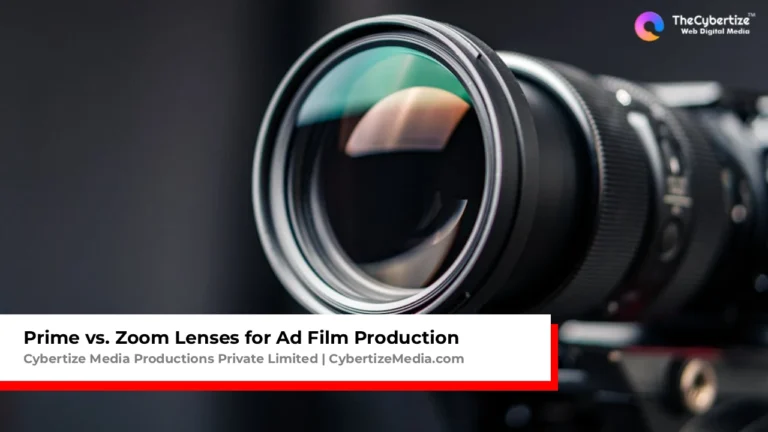
Prime vs. Zoom Lenses for Ad Film Production
Prime lenses: Fixed focal length (35mm, 50mm, 85mm, etc.) — wider aperture (f/1.4–f/2), more cinematic character, better low-light performance. More expensive and require more lens changes on set. Industry standard for premium brand and narrative advertising.
Zoom lenses: Variable focal length (24–70mm, 70–200mm) — versatile for run-and-gun, event coverage, and situations where changing lenses quickly is impractical. Slightly less optical quality than equivalent primes at the same price.
Read Comparison between Prime and zoom lenses
Also See:
| Lens Family | Best For | India Rental/Day | Mount Compatibility | Character |
|---|---|---|---|---|
| Zeiss Supreme Primes | Premium TVC, luxury brand, OTT | ₹5,000 – ₹12,000/set | PL, EF | Ultra-sharp, clinical, modern |
| Cooke S4/S7 Primes | Narrative brand films, cinematic TVC | ₹8,000 – ₹20,000/set | PL | Organic ‘Cooke Look’, warm, filmic |
| ARRI Signature Primes | High-end brand and OTT with Alexa | ₹15,000 – ₹35,000/set | LPL, PL | Cinematic, flare-controlled, character-rich |
| Leica Summilux-C | Ultra-premium, luxury, fashion ads | ₹10,000 – ₹25,000/set | PL | Exceptional micro-contrast, German precision |
| Sony G Master (FE mount) | FX series cameras, corporate, social | ₹1,000 – ₹3,000/set | Sony FE | Modern, sharp, AF-capable |
| Canon CN-E Primes | Canon Cinema EOS productions | ₹1,500 – ₹4,000/set | EF/PL | Sharp, broadcast-reliable, good AF |
| Sigma Art Cine Primes | Budget-to-mid productions | ₹800 – ₹2,500/set | EF, Sony E, L mount | High optical quality, very affordable |
The Lens Rule: For premium ad films — particularly beauty, fashion, jewellery, and luxury product advertising — invest at least 30% of your camera budget in quality lenses. A ₹1.5 lakh lens set on a ₹5 lakh camera produces better images than a ₹5 lakh lens set on a ₹1.5 lakh camera would ever suggest.
6. Buying vs. Renting in India — The Honest Economics
This is a question that every production house and serious brand eventually asks. Here’s the honest framework:
| Scenario | Buy or Rent? | Why |
|---|---|---|
| Shooting fewer than 80 days/year | Rent | Equipment depreciation, maintenance, and insurance costs exceed rental economics below ~80 shoot days annually |
| Shooting 80–200 days/year | Hybrid — own entry kit, rent premium | Own workhorse cameras (Sony FX series, Canon C70) for regular work; rent ARRI/RED for premium projects |
| Shooting 200+ days/year | Consider buying workhorse cameras | At this volume, owning mid-tier cameras pays off; still rent premium for flagship projects |
| Technology changes every 2–3 years | Favour renting | Camera technology evolves rapidly — owning locks you into a depreciating asset. Renting ensures you always access current-generation equipment |
| Production house with regular premium clients | Invest in Sony FX series as base | FX6/FX9 as owned workhorses, ARRI/RED rented per project — the most common model in Indian production houses |
Renting premium cinema cameras (RED, ARRI) vs. buying saves Indian production houses ₹40–60 lakh in capital expenditure while maintaining access to the same equipment on demand. — Camera Rental India analysis, 2026
7. Camera Specifications for Indian Distribution Platforms
Every distribution platform in India has minimum technical specifications that your camera must meet. Here’s the breakdown that matters for ad film production:
| Platform | Minimum Resolution | Frame Rate | Format | Camera Requirement |
|---|---|---|---|---|
| Star Plus / Sony / Colors / Zee TV (broadcast) | 1080i or 1080p | 25fps (Indian broadcast standard) | XDCAM, ProRes, MXF | Mid-tier cinema camera minimum (FX3, C70, or above) |
| JioHotstar / OTT (standard) | 1080p | 24/25/30fps | H.264/H.265 | Any professional camera producing 1080p 10-bit |
| Netflix India (original content) | 4K (minimum 4096×2160) | Any standard frame rate | Camera on Netflix approved list | ARRI Alexa, Sony VENICE/FX9, RED, Canon C300 III+ |
| YouTube (brand advertising) | 1080p minimum recommended | 24/25/30fps | Any modern codec | Any professional camera producing clean 1080p |
| Instagram Reels / YouTube Shorts | 1080×1920 vertical (recommended) | 30fps optimal | H.264/H.265 | Any camera producing 1080p vertical or croppable 4K |
| IPL / JioHotstar Digital Ad (pre-roll) | 1080p minimum | 25fps | H.264/H.265 per platform spec | Mid-tier cinema or above |
| Cinema/Theatre (PVR, INOX) | 4K DCP (4096×2160) | 24fps | DCP (JPEG2000) | High-end cinema camera required: ARRI, RED, VENICE |
8. The Quick Reference — Which Camera for Which Ad Film?
| Ad Film Type | Recommended Camera | Why | India Rental Cost |
|---|---|---|---|
| National TV TVC (premium brand) | ARRI Alexa 35 or Alexa Mini LF | Industry standard for premium broadcast. 17 stops DR, trusted colour. | ₹19,800 – ₹1,20,000/day |
| National TV TVC (mid-budget) | Sony FX9 or Canon C300 III | Broadcast-quality 4K, professional colour, practical body | ₹10,000 – ₹25,000/day |
| Automotive / action TVC | RED V-Raptor or Monstro 8K | 8K resolution + high frame rate slow motion for dramatic sequences | ₹50,000 – ₹1,50,000/day |
| Beauty / fashion / jewellery | ARRI Alexa Mini LF or Sony VENICE 2 | Large format sensor for ultra-shallow DoF; best skin tone rendering | ₹45,000 – ₹1,50,000/day |
| OTT pre-roll (Netflix approved) | ARRI Alexa 35, Sony FX9, RED Komodo | Netflix approved camera required for OTT original content | ₹15,000 – ₹1,50,000/day |
| Regional TV TVC | Sony FX6 or Canon C70 | Professional 4K quality, practical rental cost, versatile | ₹5,000 – ₹18,000/day |
| Digital brand film (YouTube / OTT ads) | Sony FX3 or Canon EOS R5 C | Full quality for digital platforms at accessible rental cost | ₹3,000 – ₹8,000/day |
| Instagram Reels / Social Ad Film | Sony FX30 or Blackmagic BMPCC 6K G2 | Professional colour science at budget-friendly rental | ₹2,000 – ₹5,000/day |
| Documentary-style brand film | Canon C70 with Dual Pixel AF | Best AF tracking for unpredictable subjects; documentary aesthetic | ₹4,000 – ₹9,000/day |
| Corporate / B2B brand film | Sony FX6 or Canon C300 III | Reliable, professional, widely available, easy post workflow | ₹8,000 – ₹20,000/day |
| First ad film (small business) | Sony FX30 or Blackmagic BMPCC 6K G2 | Maximum quality per rupee; professional results on tight budget | ₹2,000 – ₹4,500/day |
| Multi-camera live event TVC | Canon C300 III × 3 bodies | Best multi-cam AF reliability; consistent colour across bodies | ₹8,000 – ₹20,000/day per body |
The Bottom Line: The Best Camera Is the One That Serves Your Brief
Best Cameras for Ad Film Making: There is no universally ‘best’ camera for ad film production in India. There is only the camera that best serves your specific brief, your distribution platform, your DOP’s expertise, and your production budget.
The ARRI Alexa 35 is the finest ad film camera available in India in 2026 — and it is the right choice for premium national TVCs where image quality is a direct reflection of the brand’s positioning. The Sony FX30 is a remarkable camera that produces professional-quality digital ad films at a fraction of that cost — and it is entirely the right choice for a regional brand’s first professional ad film or a social-first digital campaign.
Best Cameras for Ad Film Making: Both cameras can produce excellent ad films. Both cameras can produce poor ones. The difference is never the camera. It is always the brief, the pre-production, the crew, the direction, and the craft applied throughout.
At Cybertize Media Productions, we advise on camera selection as part of every production brief we take on — because matching the right tool to the right creative vision is what makes the difference between an ad film that serves its purpose and one that exceeds it.
Cybertize Media Productions Private Limited
From Sony FX30 to ARRI Alexa 35 — we match the camera to the brief, every time.
OTT. Digital. Social. Every format. Every platform.