Table of Contents
Complete Ad Shoot Checklist: Before We Get Into the List, Let’s Be Honest About Something
Most brands walk into an ad shoot thinking the hard work begins when the camera rolls. It does not. By the time your director says “action,” roughly 70 to 80 percent of what determines the final quality of that film is already locked in – or already broken.
At Cybertize Media Productions, we have worked on ad films, corporate videos, and brand campaigns across industries. The single biggest reason a shoot goes sideways is not a bad location or a missed delivery. It is an incomplete or nonexistent pre-production process. Someone forgot to check location permissions. Someone assumed the talent brief was “understood.” Someone did not confirm the equipment list against the actual shot list.
This checklist exists to prevent exactly that.
We have organized it the way a real production cycle works: pre-production, shoot day, and post. Use it phase by phase. Do not skip sections because something “seems obvious.” The most expensive mistakes in ad film production happen in the obvious places.
Phase 1: Pre-Production Checklist (Begins 3 to 6 Weeks Before Shoot Day)
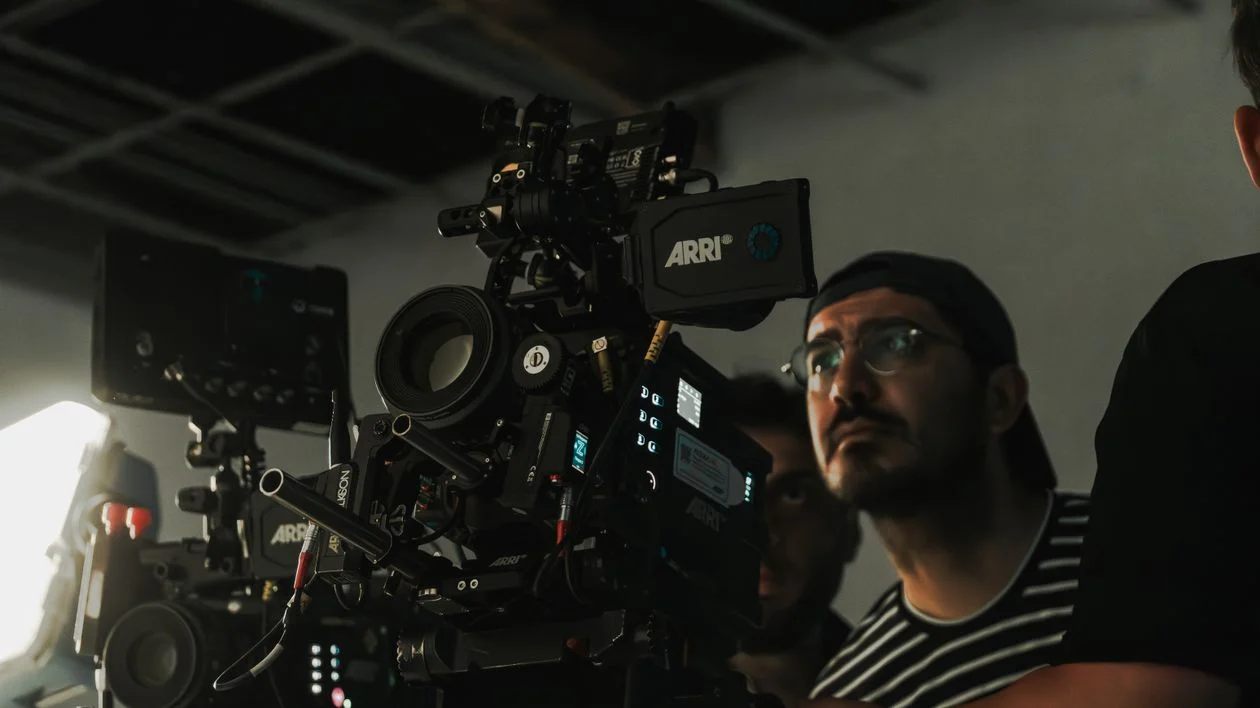
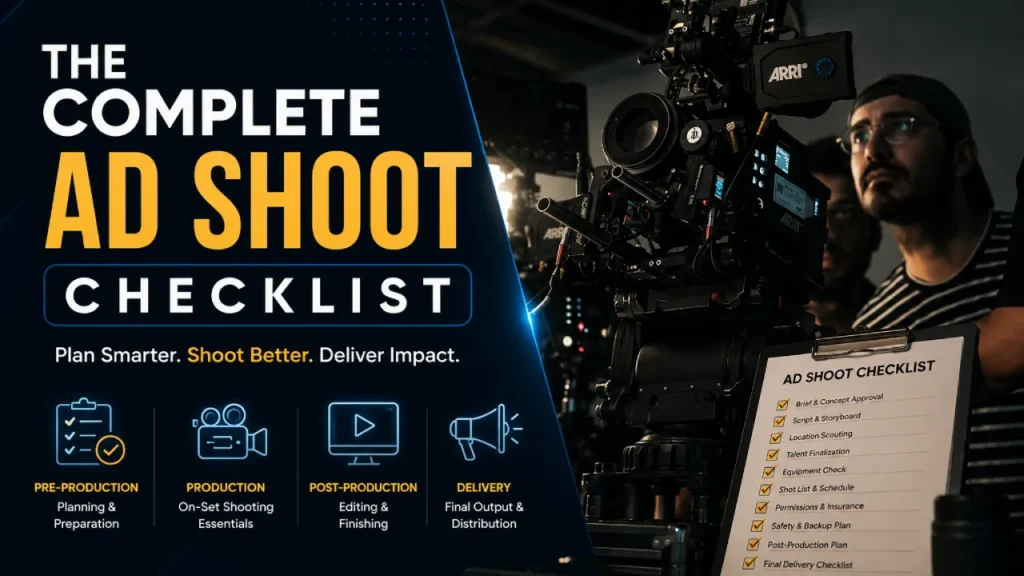
The Complete Ad Shoot Checklist: Pre-production is where ad shoots are won or lost. According to the Producers Guild of America, poor pre-production planning accounts for nearly 40 percent of budget overruns on commercial projects. The same pattern holds true in the Indian ad film market, where last-minute changes during shoot week regularly inflate budgets by 20 to 35 percent.
Here is every major checkpoint.
1.1 Creative and Script Lock
Before anything else moves, the creative must be finalized and formally approved by the client.
What to confirm:
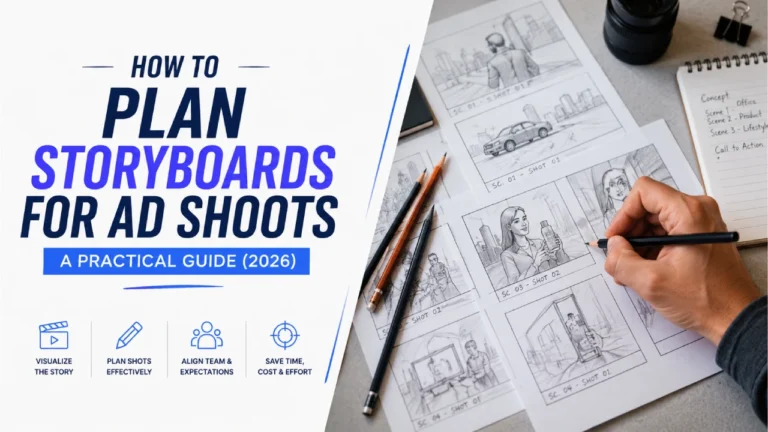
- Final script or storyboard approved in writing (email or signed document – not a WhatsApp “yes”)
- Shot list derived from the approved storyboard, not created separately in isolation
- Duration of the final film confirmed (10 seconds, 30 seconds, 60 seconds – this affects everything from talent pricing to edit structure)
- Any mandatory elements locked: taglines, logos, product close-ups, mandatory voiceover lines, legal disclaimers
- Brand guidelines received and reviewed by the creative team: color palette, typography, tone of brand
- Revised script reviewed for any licensing requirements – if you are referencing a song, a news clip, or a third-party brand, clear it now
Red flag to watch: When clients say “we will finalize the script once we see some rough visuals.” That is not a process. That is a money drain. Push for script lock at least three weeks before the shoot.
1.2 Budget Finalization
Indian ad film budgets vary dramatically. A basic 30-second digital ad with 1 location and minimal cast can be executed between Rs. 2 lakhs and Rs. 8 lakhs. A high-end broadcast TVC with multiple locations, celebrity talent, and advanced post-production routinely crosses Rs. 30 to Rs. 50 lakhs or more. Know where yours sits.
Use our Free Ad & Video Production Budget Calculator
Budget checklist:
- Detailed breakdown sheet covering: pre-production, location, crew, cast, equipment, production design, wardrobe, catering, transport, post-production, and contingency
- Contingency line item set at a minimum of 10 percent (15 percent is safer for complex productions)
- Payment schedule agreed with the production house: typically 50 percent advance, 25 percent at shoot start, 25 percent on delivery
- GST provisions confirmed (18 percent GST applies to production services in India)
- Separate budget line for music licensing if original composition or licensed tracks are required
- Equipment insurance and production insurance confirmed or declined in writing
1.3 Location Scouting and Permissions
Complete Ad Shoot Checklist: This is one of the most commonly underestimated parts of ad production in India, and it is one of the costliest when mishandled.
Location checklist:
- Location shortlisted and visited physically (never book a location based solely on photos or virtual tours)
- Location agreement or rental contract signed, with specific dates and hours confirmed
- Permissions obtained from relevant authorities: municipal body, police department, private property owner, housing society, forest department (if outdoor), airport authority (if near an airport or using drones)
- Power availability at location checked: voltage, load capacity, generator requirement
- Noise environment assessed: traffic, construction, ambient sound that could interfere with audio recording
- Toilet and changing facilities confirmed for cast and crew
- Parking space for production vehicles assessed
- Backup location identified in case of weather disruption or last-minute location cancellation
- If shooting in a mall, hotel, or commercial establishment: facility manager’s written approval obtained for the specific areas to be used
In India specifically: Outdoor shoots in cities like Mumbai, Delhi, and Bengaluru often require police permission (Form 29 or equivalent depending on state). Starting this process a minimum of two weeks before the shoot is strongly recommended.
1.4 Crew Confirmation
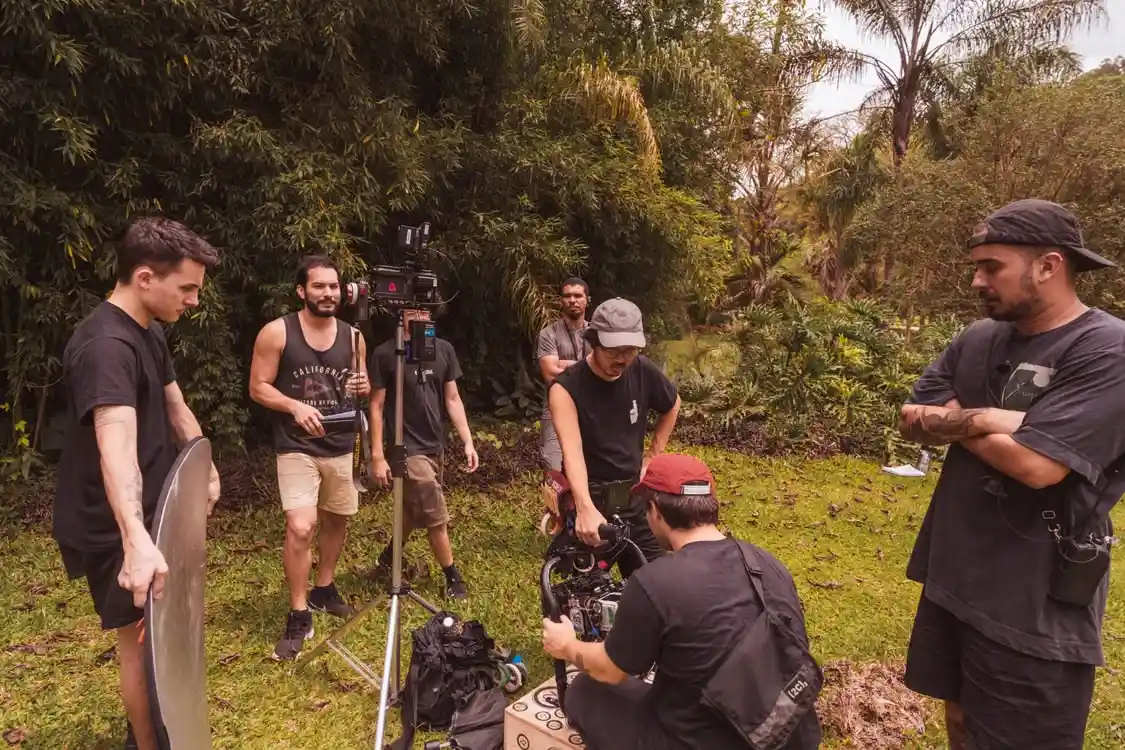
Your crew is the backbone of your shoot. Undercutting this area to save costs is a false economy.
Roles to confirm based on production scale:
- Director
- Director of Photography (DoP) / Cinematographer
- Camera Operator (if different from DoP)
- First Assistant Director (1st AD) – critical for managing the floor and maintaining the shooting schedule
- Second Assistant Director (2nd AD) for larger shoots
- Production Manager
- Art Director / Production Designer
- Set Dresser and Props Coordinator
- Wardrobe Stylist
- Hair and Makeup Artist(s)
- Gaffer (lighting head)
- Key Grip
- Sound Recordist (if on-set audio is required)
- Continuity Supervisor
- Photographer (for still captures during shoot, used for press and social)
- Production Assistant(s)
Crew confirmation checklist:
- All crew members confirmed with signed agreements or confirmed purchase orders
- Call sheet template prepared showing reporting time, location, parking instructions, and emergency contacts
- NDA or confidentiality agreement signed where the project involves unreleased products or sensitive brand information
1.5 Talent Casting and Management: Complete Ad Shoot Checklist
For principal cast:
- Casting brief shared with casting director or talent agencies: required look, age range, language, specific skills
- Auditions or look tests conducted and recorded for client approval
- Talent finalized with signed model release forms and talent agreements
- Fees negotiated and confirmed: buyout terms, usage rights (digital only, broadcast, OOH), territory (India only or global), and exclusivity period
- If using celebrity talent: separate celebrity management agreement, mandatory appearance clause, morality clause reviewed
For child artists (if any):
- Special attention required: child artists in India are governed by The Child Labour (Prohibition and Regulation) Amendment Act, 2016. Entertainment work for children below 14 requires parental consent and restrictions on working hours (maximum 5 hours per day)
- Parent or guardian must be present on set at all times
For background artists (extras):
- Total number confirmed against requirements in each scene
- Wardrobe instructions communicated
- Separate arrival time set: background usually arrives 1 to 2 hours before principal cast
1.6 Equipment and Technical Requirements
Camera and grip:
- Camera package confirmed (ARRI, RED, Sony Venice, Blackmagic – chosen based on look requirements and budget)
- Lenses: prime lenses or zoom set selected, focal lengths confirmed against shot list
- Camera support: tripod, fluid head, dolly and track, gimbal, Steadicam, or crane based on specific shots
- Monitor: director’s monitor and client monitor confirmed
- DIT (Digital Imaging Technician) engaged for high-end productions handling on-set color management and data backup
Lighting:
- Lighting plan reviewed by Gaffer in collaboration with DoP
- Equipment list confirmed: LED panels, HMI lights, tungsten, bounce boards, flags, diffusion
- Power requirements calculated and generator arranged if required
- Grip truck confirmed for transport of lighting and grip equipment
Audio:
- If on-set audio is required: boom microphone, lavalier mics, sound mixer, recorder confirmed
- If product or lifestyle shoot without dialogue: confirm that audio will be added entirely in post
- Wireless systems tested for radio frequency interference (a real issue in crowded Indian urban locations)
Drones:
- If aerial shots are required: DGCA-licensed drone operator mandatory
- Drone flight permission obtained from DGCA through the DigitalSky platform (minimum 5 to 7 working days in advance, longer near restricted airspace)
- No-fly zone check completed for the location
1.7 Production Design and Wardrobe
- Art department brief derived from storyboard: set design, props list, color palette
- Props sourced, photographed, and approved by director and client
- Set construction timeline confirmed if a fabricated set is being built
- Wardrobe brief prepared for each character with reference images
- Wardrobe options prepared: minimum 3 options per character for director and client approval during costume rehearsal
- Wardrobe fitting scheduled before shoot day (not on shoot day morning – this is a common mistake that delays production by hours)
- All props and wardrobe items tagged and catalogued: this matters in post when you need to identify continuity
1.8 Catering and Logistics
- Catering confirmed for crew and cast: number of people, dietary requirements (vegetarian, vegan, Jain, allergy restrictions)
- Meal timings planned into the shooting schedule: crew typically gets a proper meal break every 5 to 6 hours
- Water supply confirmed, especially for outdoor shoots in summer months in India where dehydration is a real risk
- Transport arranged: crew van or bus from a central pickup point, separate production vehicle for equipment, vehicle for cast
- Hotel or accommodation confirmed if shooting requires an outstation stay
Phase 2: Shoot Day Checklist (The Complete Ad Shoot Checklist)
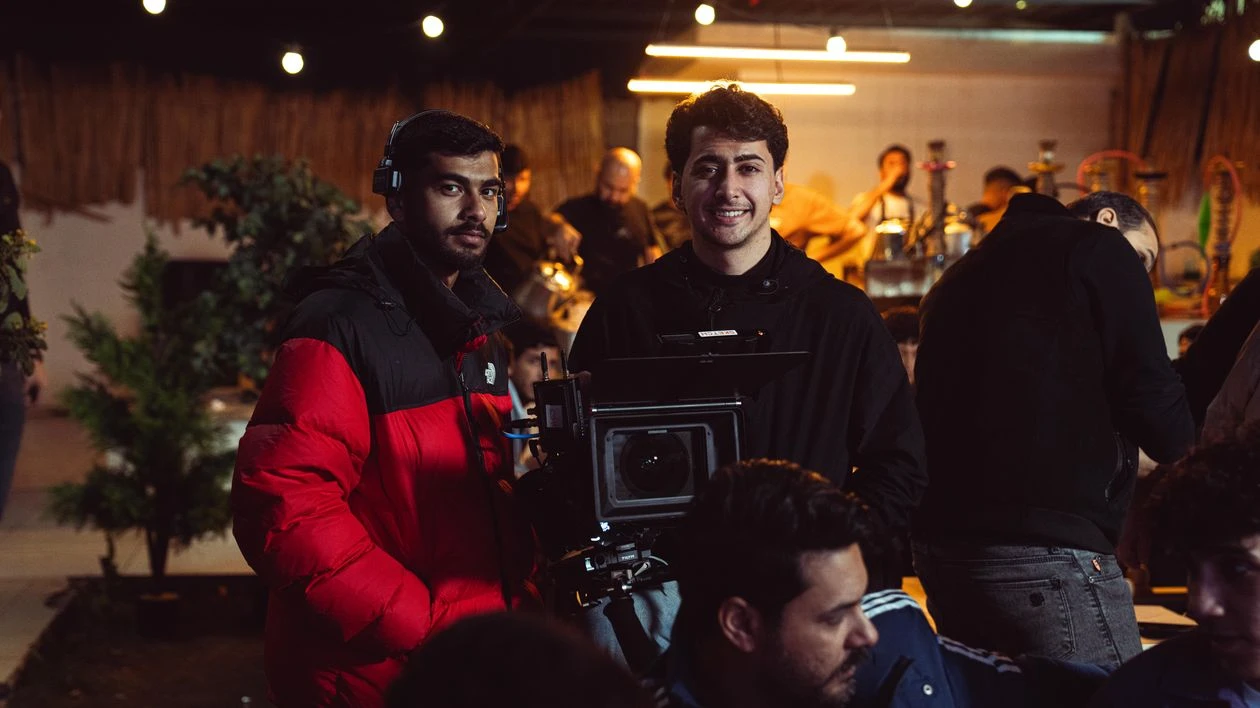
The shoot day is execution mode. Every decision made here should already have a precedent in the pre-production phase. Surprises on shoot day are expensive. Here is how to prevent them.
2.1 The Night Before Shoot Day
- Final call sheet sent to all cast and crew: confirm one more time via WhatsApp or email, and get acknowledgement
- Equipment truck loaded and cross-checked against the equipment list
- Batteries charged: cameras, lights, wireless systems, walkie-talkies
- Memory cards formatted and fresh stock confirmed
- Props and wardrobe packed and loaded
- Production petty cash arranged for day-of expenses
- Weather check done (for outdoor shoots) and contingency plan reviewed if applicable
2.2 Morning of the Shoot
Location setup (typically 2 to 3 hours before first shot):
- Location secured and access confirmed with facility manager or property owner
- Art department begins set dressing
- Lighting setup begins per lighting plan
- Camera setup and test shots done
- Sound check completed
- Catering station set up at a designated area away from the set
Cast and talent:
- Talent arrival confirmed: hair and makeup begins as per schedule
- Wardrobe check done by stylist against continuity sheet
- Talent briefing: director walks through scenes, blocking is discussed
2.3 During the Shoot
On-set management:
- 1st AD is running the floor: respect the 1st AD’s authority on timing and shot order
- Shot list physically checked off as each shot is completed
- DoP and director review each take on the monitor before moving on
- Continuity supervisor tracks every detail: wardrobe, prop positions, talent positioning, hair
- DIT or Data Manager backs up footage in real time to at least two separate drives (never one)
- Client or brand representative review on monitor: their approval or concern noted in real time, not discovered in post
- Still photographer captures BTS and product detail shots throughout
Common shoot-day mistakes to actively avoid:
- Moving to the next shot before the previous one has a confirmed “hero take” agreed by director and client
- Skipping the client sign-off on key shots (close-up of product, logo reveal, hero visual)
- Allowing talent to leave the set without checking that all their scenes are fully wrapped
- Not calling lunch until the crew has been on set for 6 hours (this violates basic labor standards and affects crew performance)
2.4 Wrapping the Shoot
- Check shot list: confirm every required shot has a take that the director and DoP are satisfied with
- Confirm all media backed up on minimum two drives and labeled correctly by scene/date
- All props and wardrobe collected, catalogued, and loaded
- Location restored to its original condition: damages documented and reported
- Location manager sign-off obtained (return the location in the condition it was received)
- Crew thank-you note or verbal debrief: acknowledge the team before dispersing
Phase 3: Post-Production Checklist (Complete Ad Shoot Checklist)
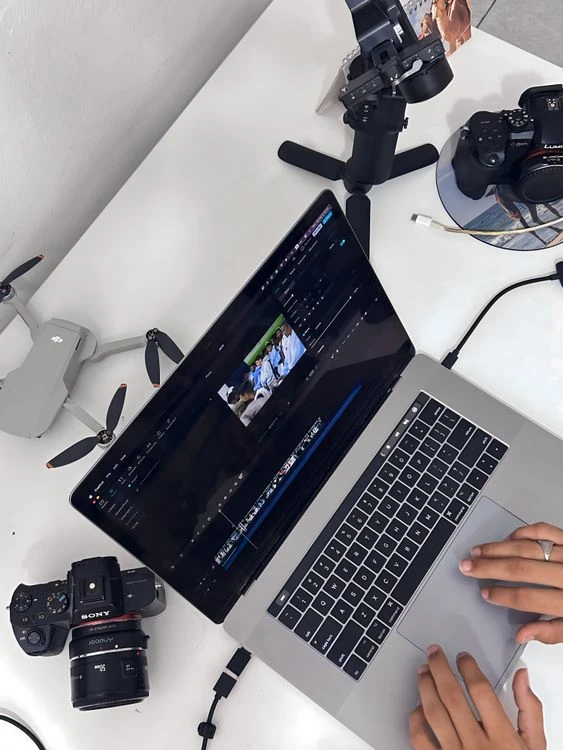
Post-production for an ad film typically takes 2 to 6 weeks depending on the complexity of the edit, VFX requirements, color grading, and music composition. Here is the structure.
3.1 Offline Edit (Rough Cut)
- All footage organized and labeled by editor
- Selects reel created from best takes, reviewed by director
- First rough cut assembled following the approved storyboard
- Rough cut reviewed internally before sharing with client
- Client review round 1: consolidated feedback (not multiple individuals sending separate notes – designate one client point of contact for feedback)
3.2 Revisions and Online Edit
- Feedback incorporated and second cut prepared
- Dialogue or on-set audio synced and cleaned
- Temp music or licensed track placed to give client a sense of pace and tone
- Graphics and typography added: supers, legal disclaimers, logo placement
- Online edit: final cut assembled in correct delivery format and resolution
3.3 Color Grading
- Color grade done by a dedicated colorist using professional tools (DaVinci Resolve is the industry standard for this stage)
- Skin tone accuracy especially important for Indian subjects: a colorist with experience in South Asian skin tones makes a visible difference in final output
- Reference look established from mood board or director’s creative intention
- Client review and approval of the grade
3.4 Music and Sound Design
- Original composition or licensed track finalized and confirmed (license obtained for all intended usage channels)
- Sound design: ambient sounds, product sounds, SFX layered in
- Voiceover recorded and mixed if required
- Final audio mix: dialogue, music, SFX balanced to broadcast or digital delivery specifications
- Audio levels checked against platform-specific standards: YouTube, broadcast, Instagram Reels, and cinema have different loudness requirements (broadcast in India typically follows -23 LUFS for dialogue-heavy content)
3.5 VFX and Motion Graphics
- VFX shots delivered from VFX studio to editor for compositing
- Product CGI or pack shots integrated if applicable
- Motion graphics finalized: logo animation, end card, title cards
- Final composite checked frame by frame for VFX quality
3.6 Final Delivery
File delivery checklist:
- Master file: ProRes 4444 or DNxHR at minimum for archival purposes
- Broadcast delivery: as per channel specifications (typically MXF or MP4, specific codec, resolution, aspect ratio, audio configuration – obtained from broadcaster’s technical delivery requirements document)
- Digital delivery: H.264 or H.265 at 1080p or 4K depending on platform
- Subtitled or captioned version for digital platforms
- Multiple aspect ratio cuts if required: 16:9 for YouTube, 9:16 for Instagram Reels, 1:1 for feed
- Audio described version if accessibility requirements apply
- All assets delivered to client: master files, graphics source files, raw audio stems, music license documentation
Legal and compliance:
- Advertising Standards Council of India (ASCI) guidelines reviewed for the final film
- All claims made in the ad are factually supported and documented (ASCI requires substantiation for any comparative or absolute claims)
- Mandatory legal disclaimers visible for the required duration as per ASCI and MIB norms
- For broadcast: CBFC clearance obtained if required (applicable for cinema exhibition)
Also Read: Sound Design: The Unsung Hero of Memorable Ad Films
Complete Ad Shoot Checklist: Final Words
An ad shoot checklist is not a bureaucratic formality. It is the difference between a production that runs with confidence and one that firefights through every phase.
At Cybertize Media Productions, every project we take on goes through a structured pre-production process. Not because we are rigid, but because the creative work happens best when the operational foundation is solid. When you are not scrambling to fix a location permit problem at 9 AM on shoot day, your director can focus on getting the performance right.
Use this checklist. Adapt it to your production. Add your own line items. The goal is simple: by the time your camera rolls, the only variable you should be managing is the creative.
Cybertize Media Productions Private Limited is an ad film and corporate video production company based in India. For production inquiries, visit our website or get in touch with our team.