Table of Contents
Every production has a moment where the script is approved but nothing else is. The locations are not locked. The cast is in discussion. The shoot date is circled on a calendar that everyone knows might move. And somewhere in the middle of all that productive uncertainty, someone needs to figure out what this film actually looks like.
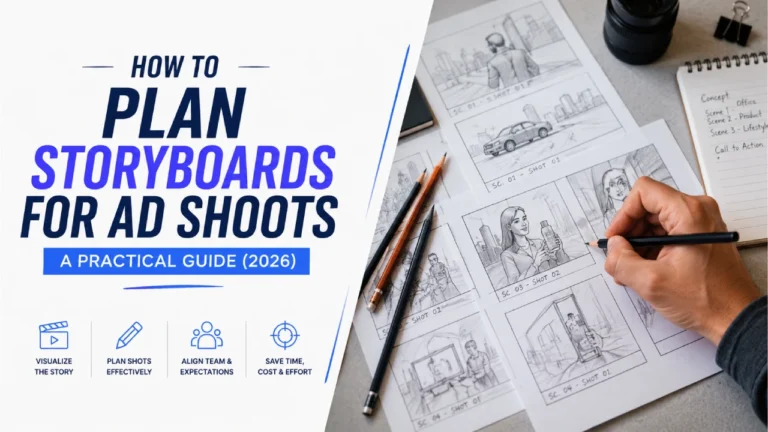
That job has historically belonged to a storyboard artist. Sometimes a good one attached early enough to genuinely shape the visual language of the project. More often, a skilled illustrator working from a director’s verbal descriptions, producing panels that communicate the film’s intended shot structure to the DP, the art director, the VFX team, and the client who needs to approve the concept before any budget gets unlocked.
Storyboarding has always been the unsung engine of pre-production. It is the translation layer between what a director sees in their head and what a crew of fifty people needs to agree on before day one. And for decades, it has been slow, expensive, and tied entirely to whether you could find and afford the right artist at the right time.
In 2026, that has changed in a way that most production companies have not yet fully absorbed. AI storyboarding tools have moved from experimental novelty to production-grade infrastructure. The numbers behind that shift are significant enough to rethink how pre-production is planned and budgeted.
The Scale of the Time Problem in Pre-Production
Before getting into what AI does, it is worth establishing what pre-production has traditionally cost in time, because the comparison is where the value becomes visible.
The global AI in film market is expected to reach USD 14.1 billion by 2033 at a CAGR of 25.7%. But the more immediately relevant number for production companies evaluating this technology is operational: studios using AI pipelines now compress pre-production from 16 to 20 weeks down to 8 to 11 weeks on mid-budget films.
That is not a marginal efficiency gain. Cutting pre-production by eight weeks on a mid-budget production represents a significant reduction in overhead, crew holding fees, location holding costs, and the general friction that builds when a project sits in the planning phase longer than it should.
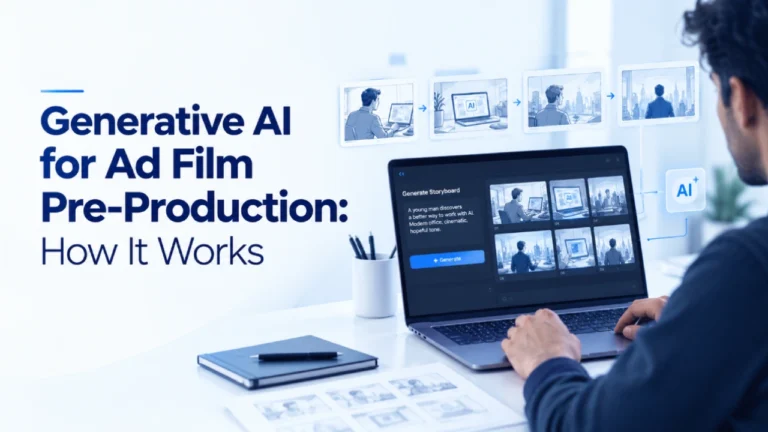
For storyboarding specifically, the compression is even more dramatic. AI storyboard generators now convert scripts and text descriptions into visual frames automatically, cutting pre-production time from 13 days to 27 minutes.
Thirteen days to 27 minutes is not a percentage improvement. It is a structural category change in how this part of the production process works.
Why Traditional Storyboarding Created Bottlenecks
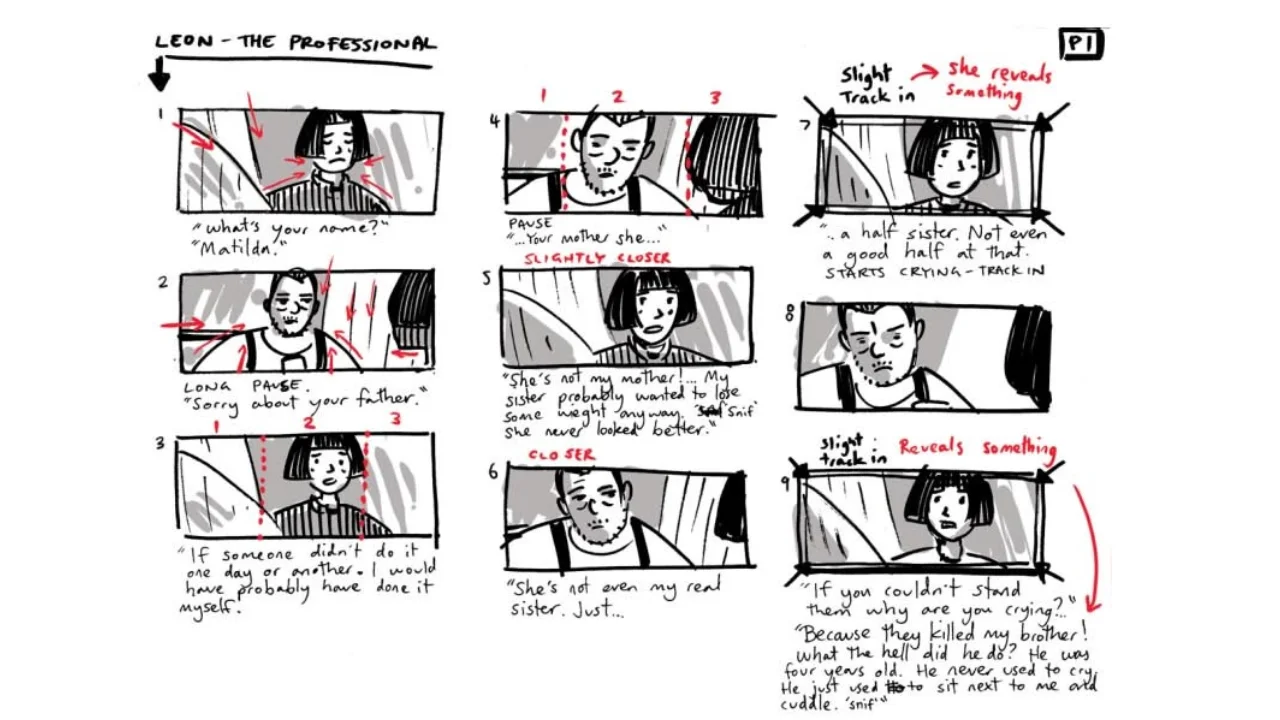
Understanding why this matters requires understanding what traditional storyboarding actually looked like in practice on a typical production, not the idealised version where an experienced artist is embedded in the project from day one, but the real version most production companies deal with most of the time.
A director describes a scene verbally or through rough sketches. That description goes to a storyboard artist, who translates it into panels. The panels come back. They are 60% right. The director gives notes. The artist revises. This loop runs multiple times per scene, for every scene in the project that requires visual pre-planning. On a 30-scene ad film or a multi-episode corporate series, the revision loops compound into weeks.
Also Read: Why Premium Brands Invest Heavily in Sound Design
The bottleneck is not that storyboard artists are slow. It is that the process of translating a director’s visual intention into a physical illustration requires multiple rounds of interpretation and correction that cannot be meaningfully compressed when each iteration depends on a human’s available time.
The biggest barrier to storyboarding has never been creative vision. It has been drawing ability. Plenty of directors can describe exactly what they want the camera to see but cannot put it on paper in a way that communicates to a crew.
AI storyboarding removes that specific barrier entirely. The director types what they see. The tool generates it. If it is wrong, the director adjusts the description and regenerates. The iteration loop that used to take days now takes minutes.
What AI Storyboarding Actually Does in 2026
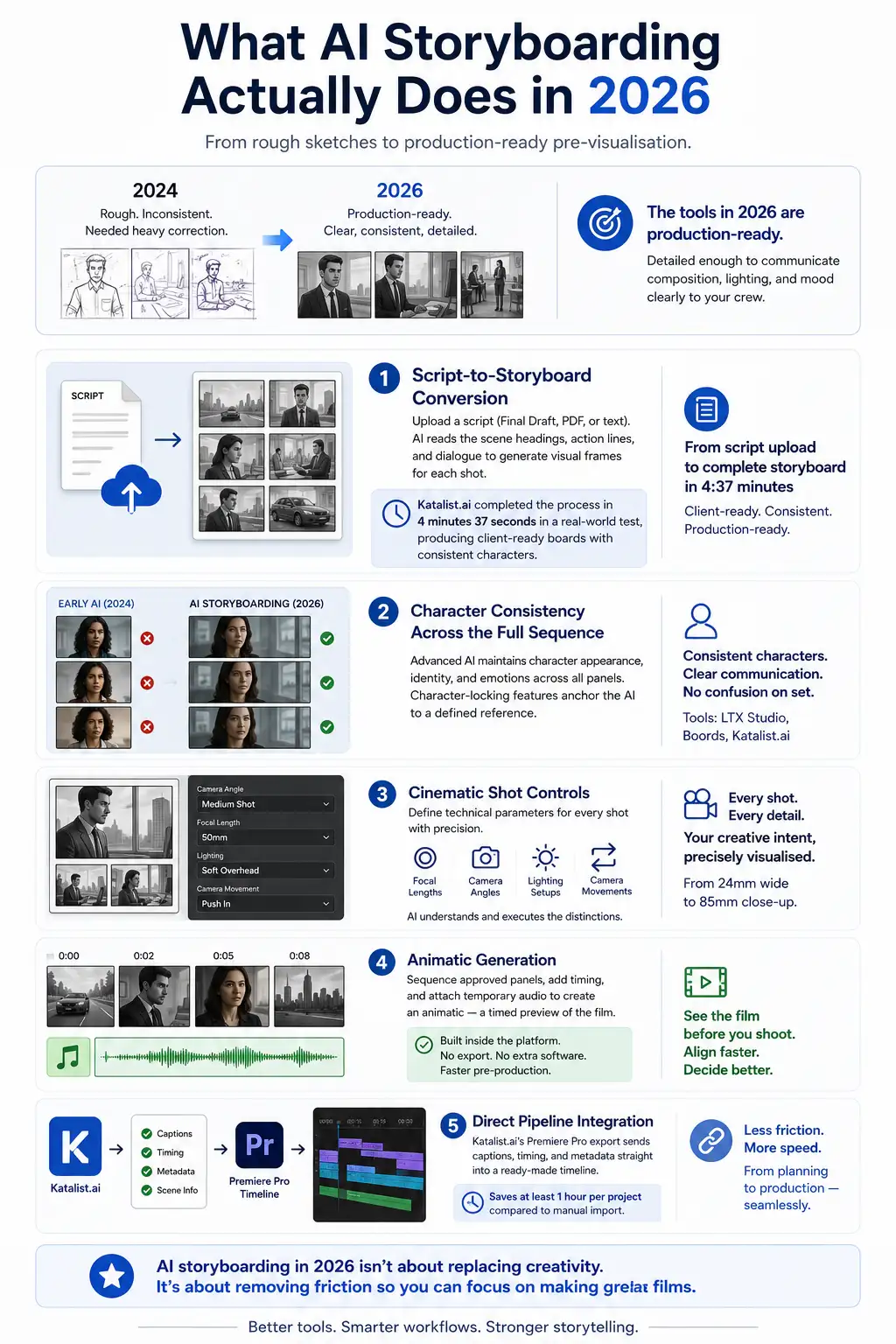
The tools in this space have moved a long way from early text-to-image generators that produced visually inconsistent frames that required significant human correction before they could be shared with a crew. In 2024, AI-generated storyboard frames were rough and inconsistent. In 2026, they are production-ready for pre-visualisation, detailed enough to communicate composition, lighting, and mood to your crew.
Here is what the best tools in the category are actually capable of today.
Script-to-storyboard conversion. Upload a screenplay in Final Draft, PDF, or text format. The AI reads the scene headings, action lines, and dialogue, then generates visual frames representing each shot. This removes the manual process of translating script text into visual briefs entirely. From script upload to a complete storyboard, Katalist.ai completed the process in four minutes and 37 seconds in a timed real-world test, producing client-ready visual boards that included consistent characters across all scenes.
Character consistency across the full sequence. This was the defining technical weakness of AI storyboarding tools through most of 2024. A character looked different in every panel, which made the boards useless for crew communication because nobody could tell who was who. That problem has been substantially solved. Advanced AI ensures that characters look consistent across different panels, preserving their identity and emotional expressions throughout the scene. Tools like LTX Studio, Boords, and Katalist.ai now maintain character appearance across panels through character-locking features that anchor the AI’s visual model to a defined reference.
Cinematic shot controls. Directors working with AI storyboarding tools can now specify technical parameters at a granular level. You can define focal lengths, camera angles, lighting setups, and camera movements for every single shot in your storyboard. A medium shot with a 50mm equivalent lens in soft overhead lighting is a different output to a wide shot with a 24mm equivalent in hard side lighting. The tools in 2026 understand and execute those distinctions.
Animatic generation. Some platforms now allow directors to sequence approved panels, add timing, and attach temporary audio to create an animatic, a timed preview of the film, directly from the storyboard. This used to require a separate workflow involving editing software and additional time. Building animatics within the storyboarding platform compresses another step in the pre-production chain.
Also Read: Modern Video Production Is No Longer About Cameras, It’s About Attention Engineering.
Direct pipeline integration. Katalist.ai’s Premiere Pro export sends captions, timing, and metadata straight into a ready-made timeline, saving at least an hour per project compared to a manual import process. As these tools integrate more tightly with editing and production management platforms, the friction between pre-production planning and production execution continues to shrink.
The Tools Leading the Category in 2026
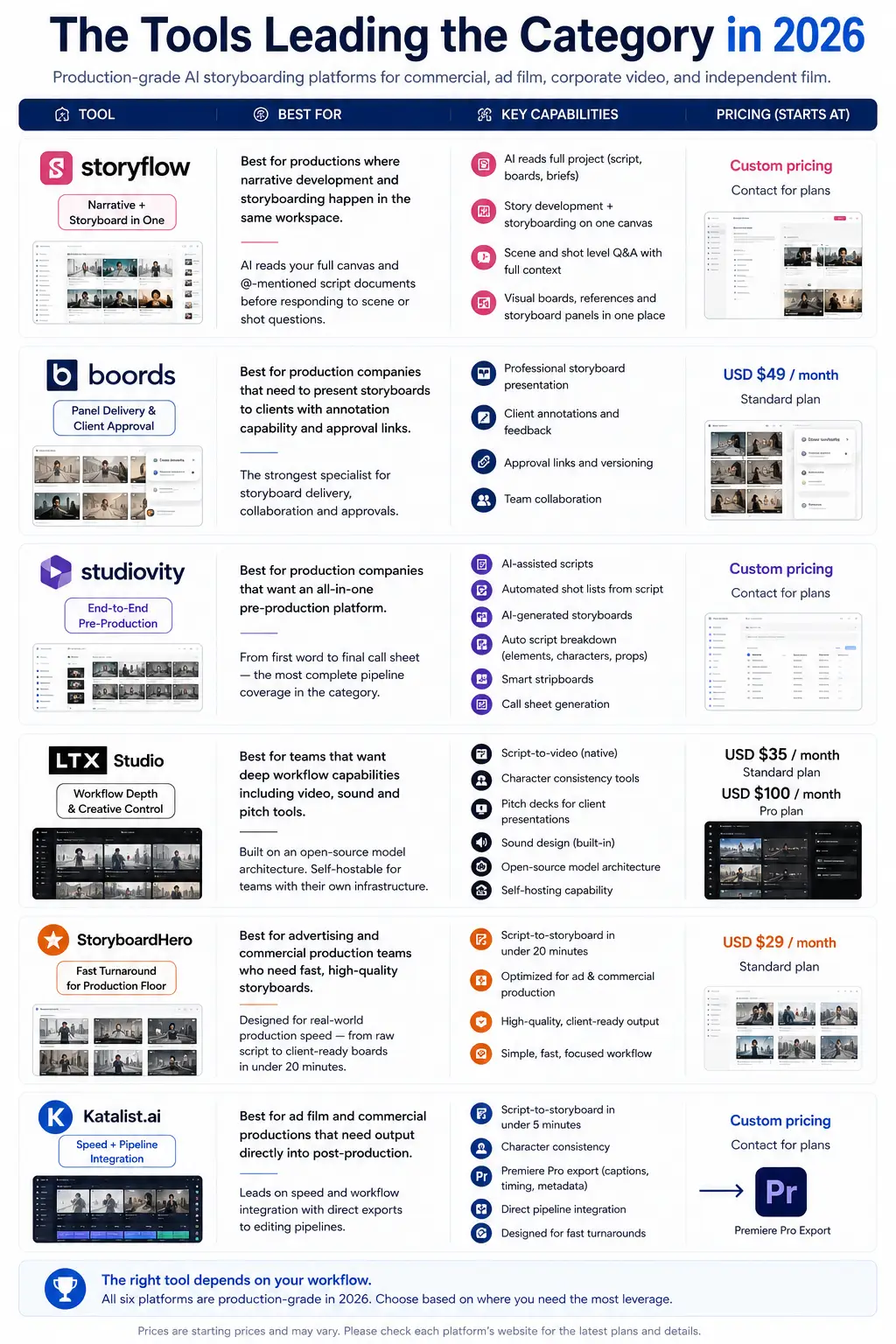
The AI storyboarding tool landscape has matured quickly. Here is a practical breakdown of the platforms that are genuinely production-grade for commercial, ad film, corporate video, and independent film work in 2026.
Storyflow is the strongest choice for productions where narrative development and storyboarding need to happen in the same workspace. Storyflow’s AI reads your full canvas and @-mentioned script documents before responding to scene or shot questions. It holds your brief, script references, visual boards, and storyboard panels on one canvas with AI that reads the full project. For directors working through structural decisions while they visualise, this integration between story development and visual planning is a meaningful workflow advantage.
Boords sits at the other end of the workflow spectrum: it is a panel delivery and client approval tool rather than a development environment. For production companies that need to present storyboards to clients with annotation capability and approval links, Boords is the strongest specialist in the category. Pricing starts at USD 49 per month for the standard plan.
Studiovity functions as an end-to-end pre-production platform rather than a storyboard specialist. From the first word of your script to the final call sheet, Studiovity provides a unified platform: AI-assisted scripts, automated shot lists generated directly from your script, AI-generated storyboard boards, automatic script breakdown extracting elements, characters and props, smart stripboards, and call sheet generation. For production companies wanting to consolidate multiple pre-production tools into a single workflow, Studiovity covers more of the pipeline than any dedicated storyboard tool.
LTX Studio prioritises workflow depth with native script-to-video conversion, character consistency tools, pitch deck creation for pre-production client presentations, and sound design built as first-class features. The platform is built on an open-source model architecture, which means teams with their own infrastructure can self-host. Pricing runs from USD 35 per month for the standard plan to USD 100 per month for the pro tier.
StoryboardHero is the production-floor fast option: from raw script to a polished, client-ready storyboard in under 20 minutes in real-world use. It is designed specifically for the advertising and commercial production context, where a client request for boards at short notice is a recurring reality rather than an exceptional circumstance.
Katalist.ai leads on workflow integration and speed for productions that need output directly into a post-production pipeline. The Premiere Pro export capability and sub-five-minute script-to-storyboard workflow make it the strongest choice for ad film and commercial production houses where turnaround time is the primary constraint.
Where AI Storyboarding Saves the Most Time on a Real Production
It is worth being specific about where in the pre-production process AI storyboarding creates the most measurable time savings, because the gains are not uniform across every use case.
Client pitch visualisation. This is where AI storyboarding delivers the highest single return on time invested. Before a project is greenlit, a production company typically needs to present a visual concept to the client. Traditionally, this required either a professional storyboard artist working for several days, or rough director sketches that under-communicate the visual ambition of the project. With AI storyboarding, a director can generate a polished, client-presentable visual deck from a script or treatment in an afternoon. The quality of the pre-sale presentation goes up. The cost of producing it goes down sharply.
VFX pre-visualisation. Sequences involving visual effects, whether compositing, CGI elements, or complex camera moves, require the most detailed storyboarding because the VFX team needs to plan their work before the shoot. Script-to-storyboard AI generates full visual sequences from screenplay text. Directors review, adjust, and approve panels in hours instead of weeks. For VFX-heavy sequences, the ability to iterate on visual approaches rapidly before committing to a VFX budget is a direct financial benefit.
Director-DP communication. Some directors generate AI storyboard frames specifically to share with their cinematographer. “Here is roughly what I am seeing for this scene,” not as a rigid blueprint, but as a conversation starter. The DP responds with practical suggestions, and together they refine the visual plan. This use of AI storyboarding as a communication tool rather than a final deliverable accelerates the director-DP alignment process significantly.
Animatic production for pacing decisions. Directors making pacing decisions in pre-production benefit enormously from being able to cut together a timed sequence of storyboard frames with temporary audio. AI storyboarding tools that generate animatics directly from panels allow this to happen within the storyboarding workflow itself, rather than requiring a separate editorial session.
Location-independent collaboration. With 37% of filmmakers now collaborating digitally on storyboards, the ability to work on, share, and comment on storyboards across geographies without physically exchanging drawings or files represents a real workflow improvement for productions where the director, DP, art director, and client are in different cities.
The Script Breakdown and Scheduling Gains Beyond Storyboarding
AI’s impact on pre-production extends well beyond storyboarding, and understanding the full picture is important for production companies evaluating whether to invest in AI tools across the pipeline.
Natural language processing reads your script. These systems tag props, cast, locations, wardrobe, and effects automatically. That tagged data then flows into schedules, stripboards, budgets, and call sheets.
Also Read: India Corporate Film Benchmark Report 2026, Excellence in Corporate Storytelling
The script breakdown process, which traditionally required a line producer to manually tag every element in every scene, a process that could take several days on a feature-length script or a multi-episode series, is now automated. Most indie teams see their breakdown phase shrink by 70 to 80 percent in the first project.
That 70 to 80% reduction in breakdown time directly compresses the schedule-building phase, because a schedule built from an AI-tagged breakdown can be generated and run as multiple scenario comparisons, different shooting order options, different groupings of locations and cast days, in the time it previously took to build a single schedule manually.
For ad film and corporate video production specifically, where the gap between script approval and shoot date is often compressed to a matter of weeks rather than months, the compounding effect of AI-accelerated breakdown, scheduling, and storyboarding on overall pre-production timeline is significant.
What AI Does Not Replace
This is the part that gets glossed over in most coverage of AI production tools, and it needs to be said directly.
AI storyboarding is excellent at generating visual frames from text descriptions. It is poor at understanding the emotional subtext of why a particular shot matters. It cannot decide which shots in a script are the ones that actually carry the story and therefore deserve the most visual planning attention. It does not know that a specific character reveal needs to be withheld until a particular moment, or that the lighting in this scene needs to contradict the warm, safe visual language of the previous one for the tonal shift to land.
The use of AI in pre-production does not limit creativity; in fact, it accelerates the workflow, saves resources, and frees up time for more focused and artistic development. But it accelerates the workflow around human creative decisions, not in place of them.
A few traps catch teams new to AI-driven planning. AI mistags about five to ten percent of elements. Skipping verification is the most common mistake. Every AI-generated storyboard, breakdown, or schedule output needs human review before it goes into the production pipeline. The tools handle the repetitive, pattern-based work. Judgment, taste, and creative intent remain entirely human responsibilities.
The most effective production companies in 2026 are not the ones using every AI tool available. They are the ones who know precisely which tasks each tool replaces, and which creative and strategic decisions they keep entirely human.
How Cybertize Media Productions Uses AI in Pre-Production
At Cybertize Media Productions Private Limited, we have integrated AI storyboarding into our pre-production workflow not as a replacement for the creative development process, but as a tool that compresses the mechanical parts of that process so our directors and creative team can spend more time on the decisions that actually require human judgment.
For client pitch presentations, we use AI storyboarding to generate visual concepts faster, which means a client sees a more polished visual representation of the project earlier in the development process, and feedback loops happen in days rather than weeks.
Also Read: UGC Videos vs Brand Videos, Which Should Your Business Invest In?
For complex ad film and corporate video sequences, AI-generated boards give our DP and art director a shared visual reference point for the director’s intent before the shoot date, which reduces the number of on-set interpretive gaps that slow down filming.
What we do not do is treat AI storyboard output as a finished creative deliverable. The boards are a starting point and a communication tool. The creative decisions behind them, the shot selection, the visual language, the emotional architecture of each sequence, those remain entirely the work of our creative team. The AI just removes the part that used to take the most time and required the least creative thinking.
That is the appropriate division of labour. And in pre-production, it changes what is possible within any given timeline and budget.
Cybertize Media Productions Private Limited is a full-service video production company based in India, producing ad films, corporate videos, brand films, and content across sectors. We integrate AI tools into our pre-production workflow where they compress timelines without compromising creative quality, and rely on human creative judgment for every decision that actually shapes what a film becomes.