Table of Contents
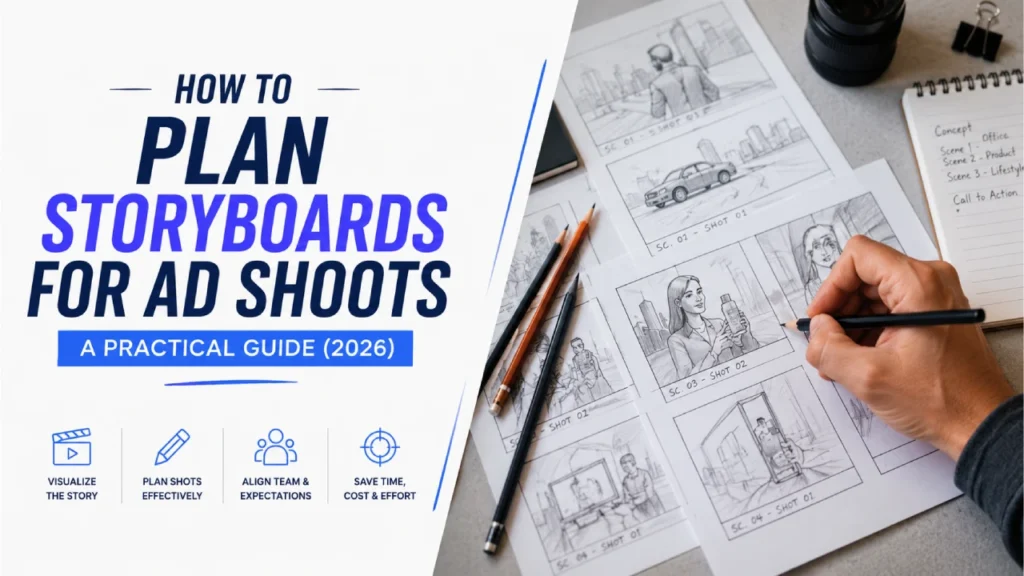
How to Plan Storyboards for Ad Shoots
Ask any producer what separates a smooth shoot day from a chaotic one, and the answer rarely has anything to do with the weather or the client showing up late. It almost always comes back to whether the storyboard was actually done properly before anyone picked up a camera.
Need Film Production Professionals? Connect now
A storyboard sounds like a simple thing, a sequence of drawn panels showing what each shot looks like. In practice, it is the single document that a director, a cinematographer, a client and a first AD all read the same way, weeks before the shoot, and agree on before real money gets spent. When it is done well, the shoot day is just execution. When it is skipped or rushed, the shoot day becomes a series of decisions being made live, on set, with a full crew standing around waiting.
At Cybertize Media Productions, we treat storyboarding as the cheapest insurance policy on a production. An hour spent catching a problem on paper costs nothing compared to catching that same problem on set with lights rigged and talent on the clock.
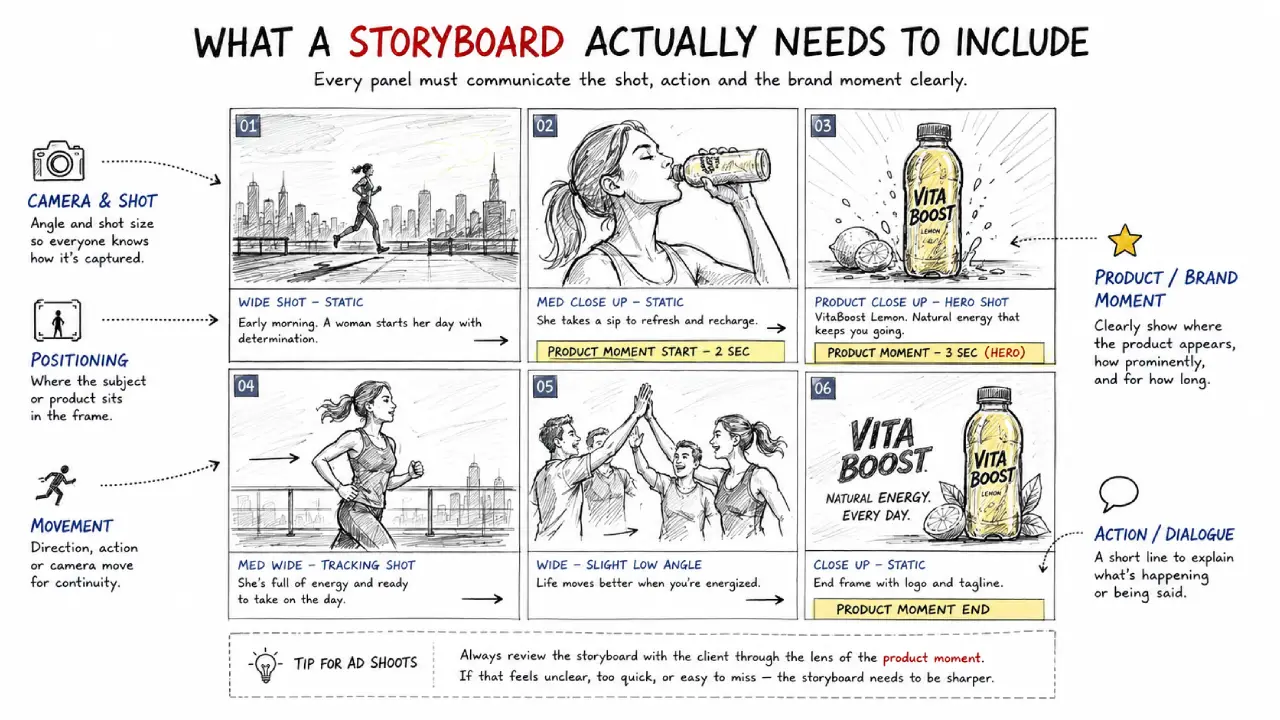
What a Storyboard Actually Needs to Include
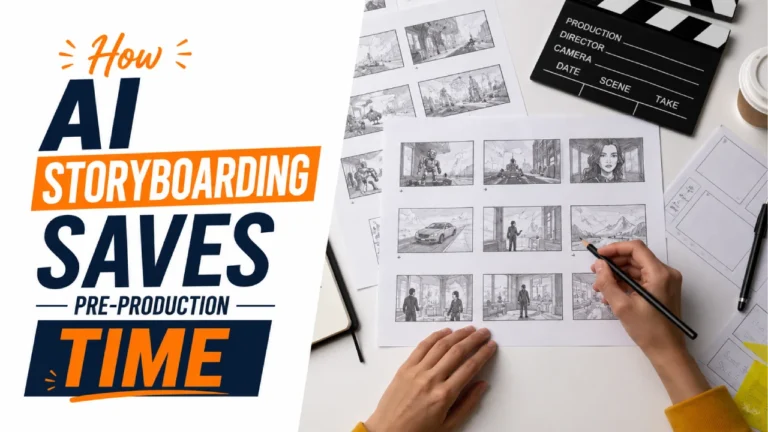
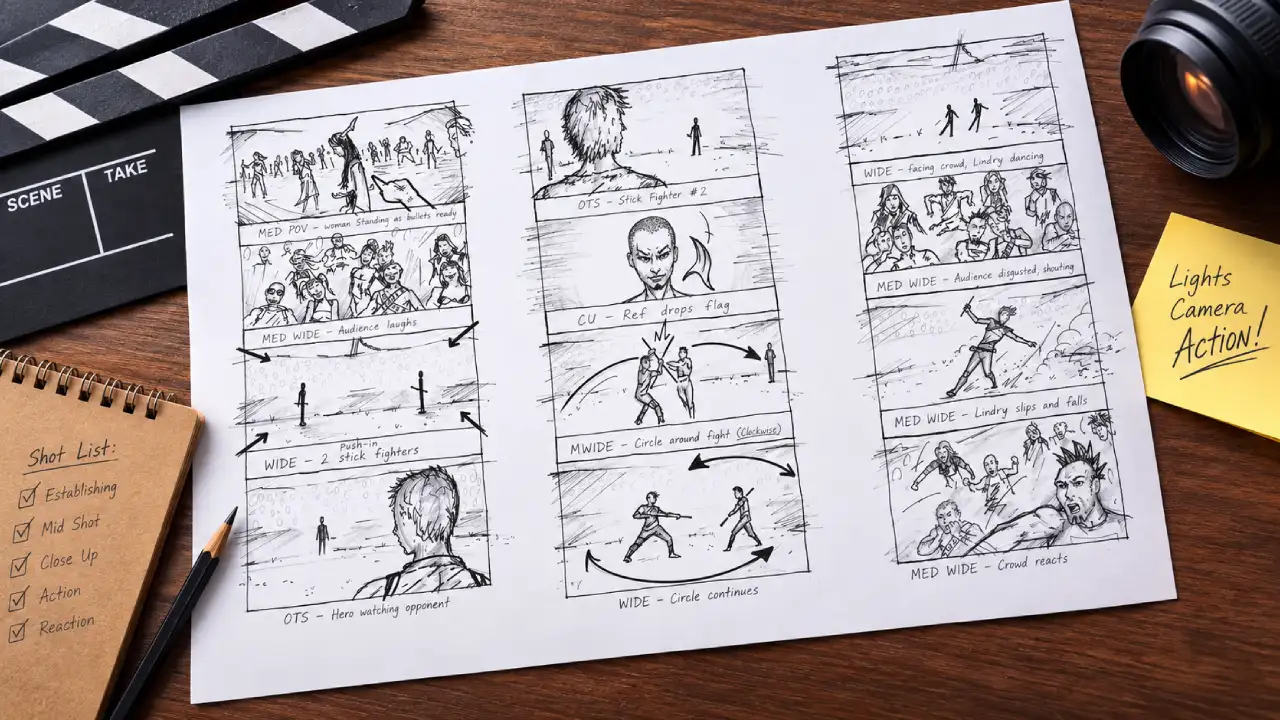
Storyboards for Ad Shoots: A storyboard is not just an illustration of what the frame looks like. Each panel needs to carry enough information that someone who was not in the concepting meeting could still understand the shot. At minimum, that means the camera angle and shot size, the character or product position within the frame, the direction of movement if there is any, and a short line describing the action or dialogue happening in that moment.
For ad shoots specifically, one more thing matters more than it does in film or television work, the product or brand moment. Every storyboard for a commercial should clearly flag exactly where the product appears, how prominently, and for how long, because that is usually the detail a client scrutinises most closely during approval, and the detail most likely to get lost if a storyboard is too loosely drawn.
How Many Frames Does an Ad Actually Need
This is one of the most common questions from teams new to the process, and the honest answer is that it depends entirely on pacing, not on the length of the script. A slower, dialogue driven scene might only need three or four panels to cover a full thirty seconds, because very little visually changes from moment to moment. A fast cut product montage, the kind common in festive or launch campaigns, might need ten or twelve panels for the same thirty seconds, because almost every shot is a new setup.
A useful rule of thumb is to storyboard every distinct camera setup, not every second of screen time. If the camera angle, framing or subject changes, it earns a new panel. If it does not, it stays inside the same panel even if the action continues for several seconds. This keeps a storyboard focused on what actually matters for planning a shoot day, the number of camera setups a crew needs to physically execute.
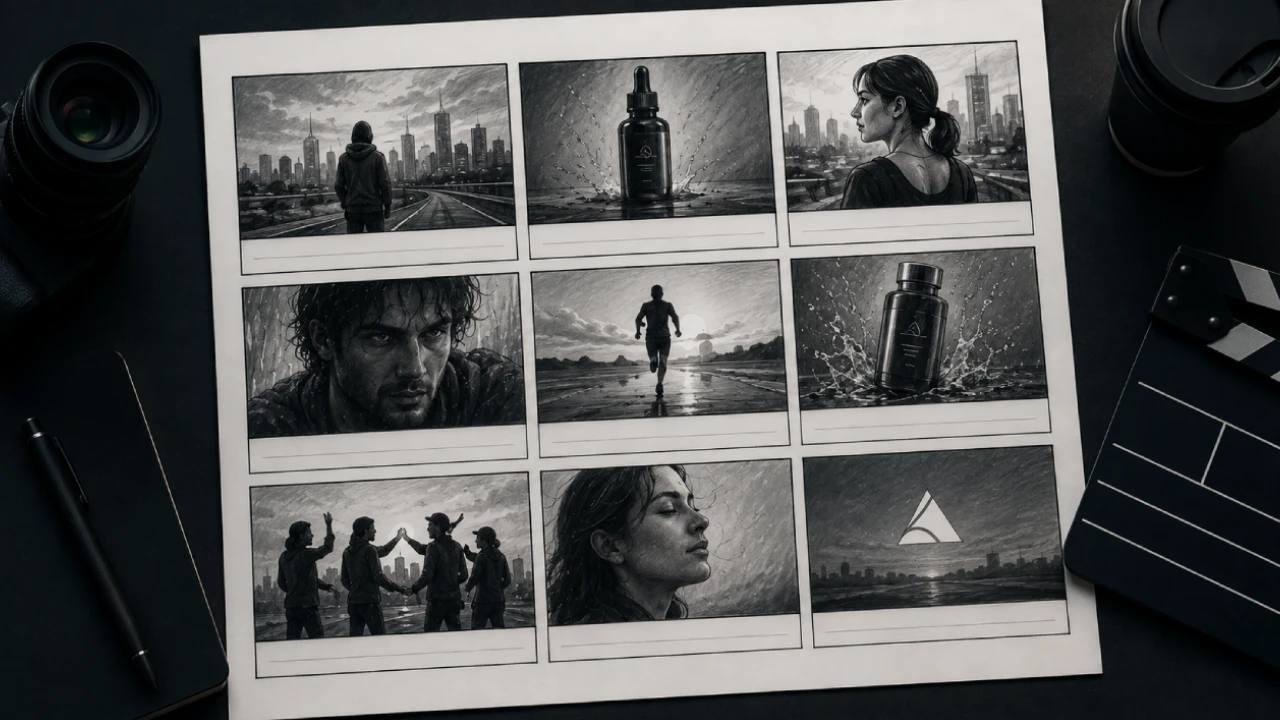
Building the Storyboard Step by Step
Start from the script, not the shot list. A shot list is a written, itemised record of every shot by scene, size, angle and movement. A storyboard is the visual version of that same information. Building the storyboard directly from an approved script keeps every panel tied to a specific narrative beat, rather than becoming a disconnected set of pretty frames.
Lock the key story beats first. Before drawing every panel, identify the three or four moments in the ad that the entire concept depends on, usually the opening hook, the product reveal, and the closing brand moment. Rough these out first, get alignment on them, and only then fill in the connective shots between them. This avoids a full redraw later if the client wants to shift the core idea.
Storyboards for Ad Shoots: Assign shot type deliberately, not by habit. Every panel should carry a clear reason for its framing choice. A wide shot establishes context. A close up isolates emotion or product detail. An over the shoulder shot implies a relationship or point of view. If a panel’s shot type could be swapped for another without changing the meaning of the scene, that is usually a sign the framing has not actually been thought through yet.
Note lighting and time of day on every panel, not just the first one. It is easy to assume lighting continuity will simply carry through a sequence, but ad shoots often compress multiple story moments into a single shoot day, sometimes shot out of order for logistical reasons. Marking lighting direction and time of day on each panel keeps continuity intact even when the actual shoot schedule does not follow the story’s chronological order.
Route it through every department before it is treated as final. A storyboard is not finished when the director likes it. It needs a pass from the cinematographer, who will flag setups that are unrealistic for the allotted shoot time, and from production, who will flag locations or props that are not actually locked yet. Catching this on paper is what a storyboard is for. Catching it on set is what a storyboard is supposed to prevent.
Where AI Tools Genuinely Help, and Where They Do Not
Storyboarding has changed more in the last two years than in the previous twenty. Traditional storyboarding for a mid sized production could consume two to three weeks of a director and illustrator’s time. AI storyboarding tools have compressed a comparable visual sequence down to a matter of minutes in many cases, and full AI assisted pre-production pipelines are pushing overall pre-production timelines from roughly sixteen to twenty weeks down to eight to eleven weeks on larger productions. The global market for this category of software has grown quickly enough to reflect real, sustained studio adoption rather than a passing trend.
For ad shoots specifically, this shows up most usefully at the concepting and client approval stage. A director can now describe a shot in plain language, a medium shot of a product on a marble counter under warm side light, for instance, and get a usable visual frame back in seconds, instead of waiting on an illustrator’s availability. This is particularly valuable when a client wants to see two or three different visual directions before committing budget to one.
Where AI still falls short is judgement. These tools can generate a technically competent frame, but they cannot decide whether that frame actually serves the story, whether the pacing feels right across the full sequence, or whether a shot is realistic to execute within the shoot day’s actual schedule and budget. Every serious production still runs a human pass over an AI generated storyboard, checking it against the same story logic and technical feasibility a human storyboard artist would apply. The tools have gotten faster. The judgement they are speeding up still belongs entirely to the director and the production team.
Common Mistakes That Undo a Storyboard’s Value
The most common mistake is treating the storyboard as a client presentation tool rather than a production planning document. A storyboard that only exists to look polished for a client deck, without carrying real shot level detail, does not actually help a crew on the day, and the gap between the pretty version and the working version usually gets discovered too late.
The second most common mistake is finalising a storyboard before locations and logistics are confirmed. A beautifully planned sequence of shots means very little if half of them are not physically possible in the location that eventually gets locked. Storyboarding too early, before key production variables are settled, is one of the most reliable ways to guarantee a reshoot of the storyboard itself.
The third is skipping continuity notes because a sequence feels short enough to keep in your head. Even a thirty second ad can involve multiple lighting setups, wardrobe changes or prop continuity issues once it is broken down into individual camera setups. Writing continuity notes into the storyboard itself, rather than relying on memory across a full shoot day, consistently prevents the kind of small mismatch that becomes an expensive fix in the edit.
Getting Storyboarding Right
A good storyboard does not guarantee a good ad. But a missing or rushed one reliably guarantees a harder shoot day, a longer edit, and a client conversation nobody wants to have about why a scene does not match what was approved. The teams that treat storyboarding as real planning, not paperwork, consistently spend less time fixing problems on set and more time actually making the film they set out to make.
Frequently Asked Questions
What is the difference between a storyboard and a shot list?
A shot list is a written, itemised record of every shot by scene number, size, angle and movement. A storyboard is the visual version of that same plan, showing what each shot actually looks like. Most productions use both together, the shot list for logistics and scheduling, the storyboard for visual and creative alignment.
How many storyboard panels does a 30 second ad need?
It depends entirely on pacing, not length. A slower, dialogue led scene might only need three or four panels for a full thirty seconds. A fast cut product montage can need ten to twelve panels for the same duration, since a new panel is needed for every distinct camera setup, not every few seconds of screen time.
Should storyboarding happen before or after the script is locked?
After. Storyboarding directly from an approved script keeps every panel tied to a specific narrative beat. Storyboarding before the script is finalised often means redrawing significant portions of the board once the story shifts, which wastes the time storyboarding is meant to save.
Can AI storyboarding tools fully replace a human storyboard artist?
Not for judgement heavy decisions. AI tools can generate a technically competent frame from a text description quickly, which is genuinely useful for early concepting and client approval. They cannot judge whether a shot serves the story, fits the shoot day’s realistic schedule, or matches the director’s actual intent, which is why a human pass still matters on every serious production.
Why does the product moment need special attention in an ad storyboard?
Clients typically scrutinise the product or brand moment more closely than any other part of an ad during approval. Clearly marking exactly where, how prominently and for how long the product appears in each relevant panel prevents miscommunication that would otherwise only surface once footage is already shot.
What is the biggest mistake teams make when storyboarding for a shoot?
Finalising the storyboard before locations, cast and key logistics are actually locked. A well planned sequence of shots is only useful if it is achievable in the location and schedule that eventually gets confirmed, which means storyboarding too early often leads to reworking the board itself.
Do continuity notes really need to be written into the storyboard itself?
Yes, particularly for ad shoots, which are often shot out of chronological order for logistical reasons within a single day. Writing lighting, time of day and continuity notes directly into each panel prevents small mismatches that would otherwise only get caught, expensively, during the edit.
How much time can AI storyboarding tools actually save in pre-production?
Significantly. Traditional storyboarding for a mid sized production could take two to three weeks. AI assisted tools have compressed comparable visual sequences down to minutes in many cases, and full AI assisted pre-production pipelines are helping some productions cut overall pre-production time roughly in half.
Who should review a storyboard before it is treated as final?
At minimum, the cinematographer, who checks whether each setup is realistic within the shoot schedule, and the production team, who confirm that locations and props shown in the panels are actually locked. A storyboard the director alone has approved is not yet production ready.
How does Cybertize Media Productions approach storyboarding for ad shoots?
The team builds every storyboard directly from the approved script, locks the key story beats first, and routes the board through cinematography and production review before it is treated as final, using AI assisted tools at the early concepting stage where useful, while keeping every creative and feasibility judgement in human hands.