Table of Contents
There is a word that has quietly become toxic in marketing, and nobody talks about it.
The word is “ad.”
Not because advertising or Brand Storytelling is dead. It is not. Brands will always need to reach people who do not yet know they exist. But the format that the word “ad” implies, a brand interrupting something a person wanted to watch in order to tell them about a product they did not ask to hear about, is failing in ways that are now quantifiable, consistent, and irreversible.
Thirty-eight percent of users say too many ads make them avoid brands entirely. Ad blocker usage continues to climb globally. 92% of consumers prefer ads that feel like a story rather than traditional promotional content. And yet the default response from most marketing departments when they need to reach an audience is still to write a brief for an ad, brief a production company to make an ad, and then wonder why their ad metrics are going in the wrong direction.
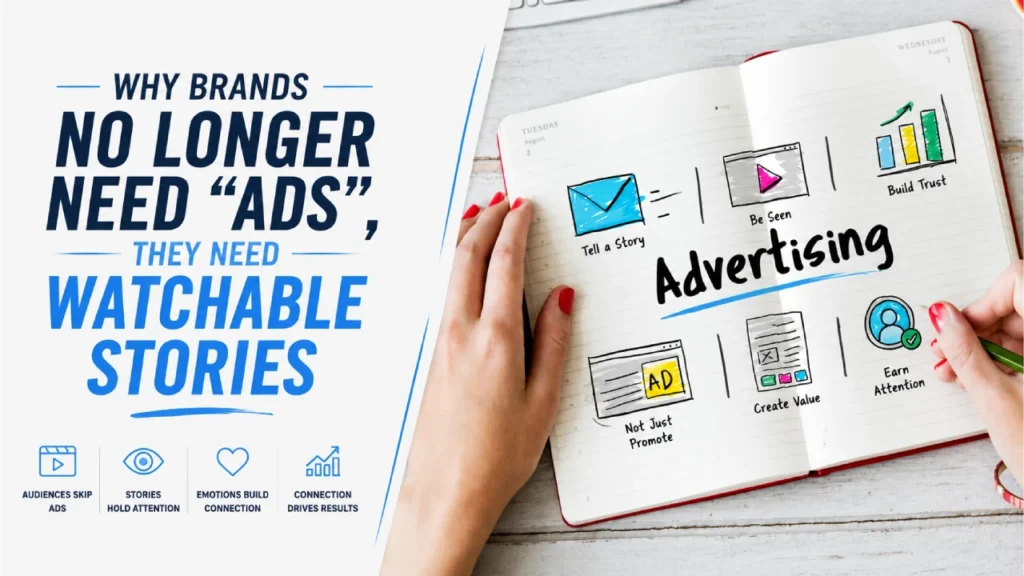
The companies that are growing fastest in the current environment are not the ones spending more on ads & Brand Storytelling. They are the ones who have figured out something the rest of the market is still catching up to: the people they want to reach have developed an almost reflexive immunity to promotional content, and the only creative format that consistently bypasses that immunity is a story they actually want to watch.
This is not a philosophical argument about brand values and human connection. It is a data-backed argument about what moves business outcomes. And the data is decisive.
The Ad Immunity Problem Is Not Going Away
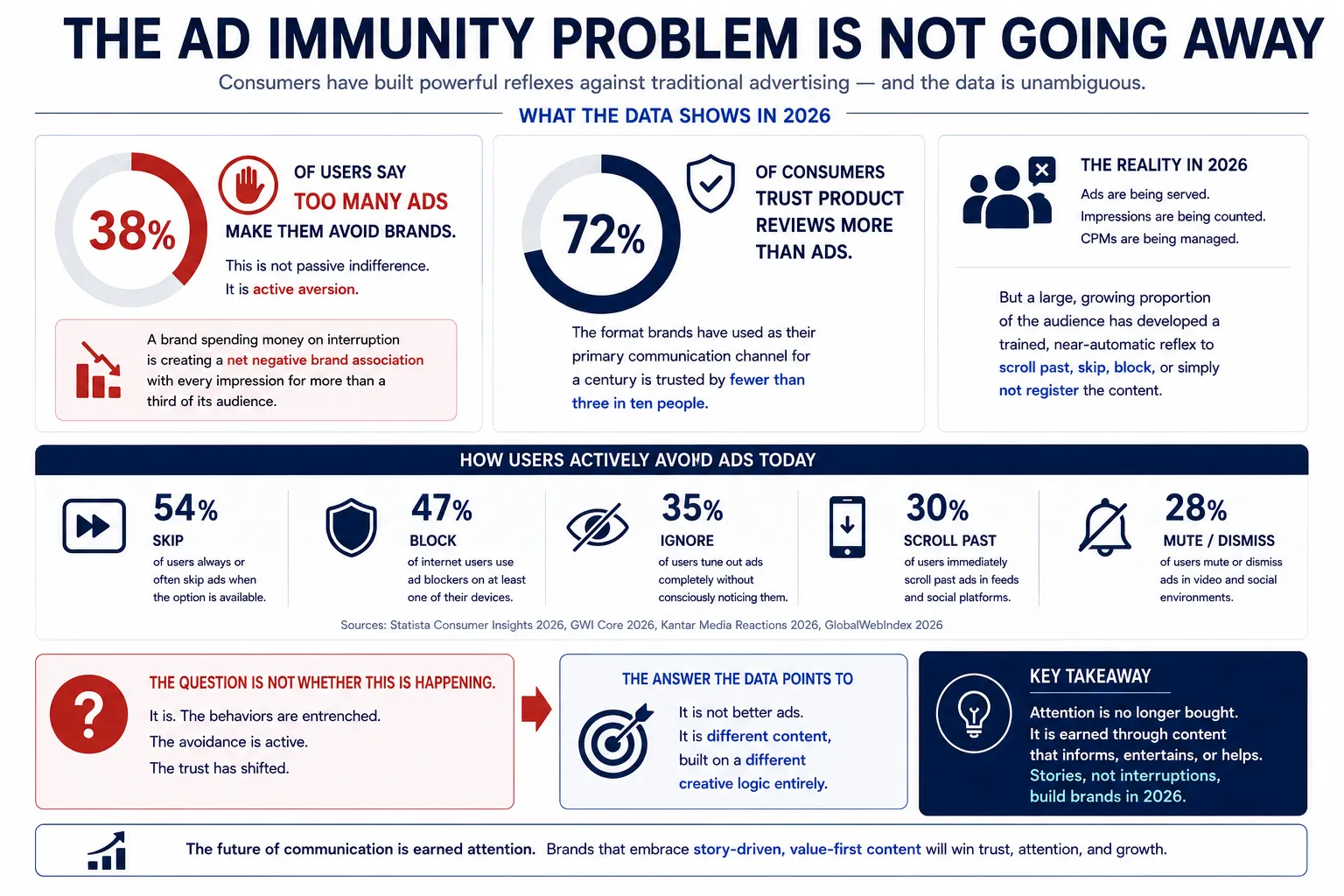
Let us start with what is actually happening to traditional advertising in 2026, because the trend lines matter.
38% of users say too many ads make them avoid brands. That is not passive indifference. It is active aversion. A brand spending money on interruption is, for more than a third of its audience, creating a net negative brand association with every impression.
72% of consumers trust product reviews more than ads. The format that brands have used as their primary communication channel for a century is trusted by fewer than three in ten people as a source of credible information about a product.
Need Assistance? Get in touch with the Brand Storytelling Experts
This is the landscape that every marketing budget is operating in today. The ads are being served. The impressions are being counted. The CPM is being managed. And a large, growing proportion of the audience on the other end of those impressions has developed a trained, near-automatic reflex to scroll past, skip, block, or simply not register the content.
The question is not whether this is happening. The question is what to do about it. And the answer the data consistently points to is not better ads. It is different content, built on a different creative logic entirely.
Brand Storytelling: Why Stories Bypass the Skip Reflex
The human brain does not process stories the way it processes promotional information. This is not a metaphor about engagement. It is a neurological fact about how the brain routes incoming information.
When a person encounters a promotional message, a claim about a product’s features or a direct ask to buy something, the prefrontal cortex evaluates it sceptically. The brain’s persuasion detection system activates. The listener or viewer goes into a mode of conscious evaluation: is this true? do I believe this? do I need this? This is the mental mode in which advertising is processed, and it is a mode that is primed to be resistant, especially in consumers who have been exposed to decades of promotional messaging.
When a person encounters a story, the brain responds differently. The narrative processing system activates across multiple regions simultaneously. The listener or viewer begins to simulate the experience being described. Emotional responses emerge. Dopamine and oxytocin are released when the narrative is engaging. The critical distance that makes advertising so difficult to land simply does not engage in the same way.
Stories are up to 22 times more memorable than plain facts due to the brain’s preference for remembering emotionally engaging narratives. This is not a marketing insight. It is a cognitive science finding that has been replicated across contexts from education to medical communication to, now, advertising.
Ads with storytelling elements increase recall by 85%. A brand that tells a story about a person whose problem its product solves is not just creating a more pleasant ad experience. It is encoding its brand into the viewer’s memory through a neurological mechanism that is 22 times more effective than the declarative fact-based format that most advertising still uses.
Ads with relatable stories are twice as effective in changing behaviour compared to those that simply talk about brand features. That is a 100% improvement in behavioural impact from a shift in creative approach. Not from a bigger media budget. Not from better targeting. From the story.
What “Watchable” Actually Means

The word “watchable” Brand Storytelling is doing a lot of work in this article’s title, and it is worth unpacking precisely because it is not the same as “entertaining” or “viral” or “creative.”
A piece of content is watchable when the viewer’s decision to keep watching is active and willing rather than passive or obligated. It is content that the viewer would choose to watch even if they had the option not to. This is a fundamentally different standard from “content the viewer tolerates while waiting for the thing they actually wanted to see.”
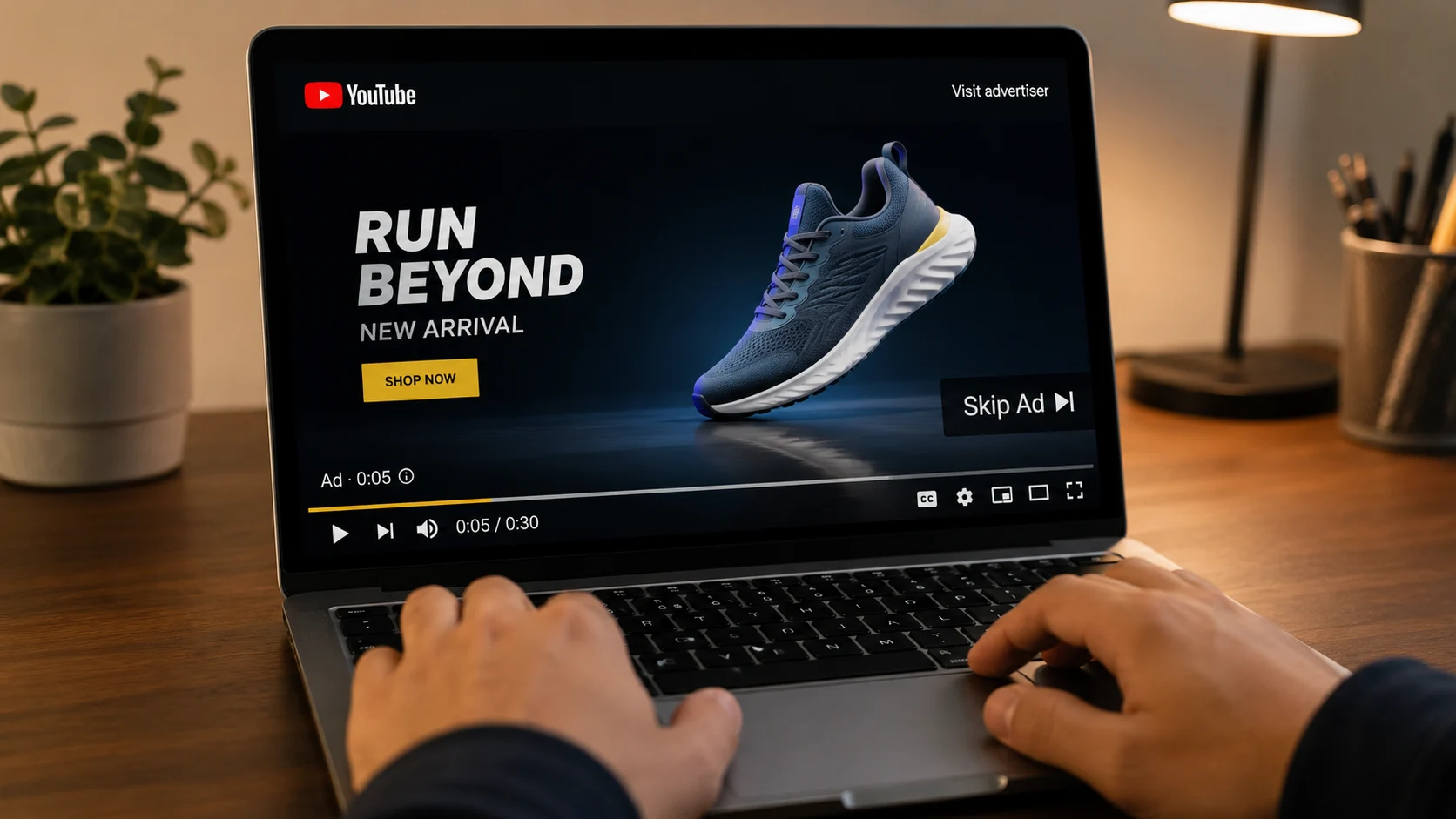
Most ads are not watchable in this sense. They are tolerated. The viewer does not choose to watch them. They are present for the ad because the platform or the programming requires it, and they exit or disengage the moment they can. This is why skip rates are high, why completion rates for pre-roll ads are low, and why ad recall for most campaigns is dismal despite high impression counts.
Watchable content earns continued viewing moment by moment because something is happening that the viewer wants to see continue. A question has been opened that they want answered. A character has been introduced that they want to follow. A conflict has been established that they want resolved. These are story mechanisms. They are not ad mechanisms.
81% of consumers say trust in a brand is influenced by the stories it tells and how transparently it communicates its values. Trust is not built by a product claim. It is built by a story that the viewer could not dismiss even if they tried, because the story was not asking for their trust. It was earning it by giving them something worth watching.
The Format Shift: What Watchable Brand Stories Look Like in Practice
The shift from ad thinking to story thinking is not a shift in production budget or channel. It is a shift in the creative question the brand starts with.
The ad question is: what do we want to say about our product?
The story question is: what is happening in the lives of the people we want to reach, and where does our brand have a true and honest part to play in that story?
These two questions produce completely different briefs, and completely different content.
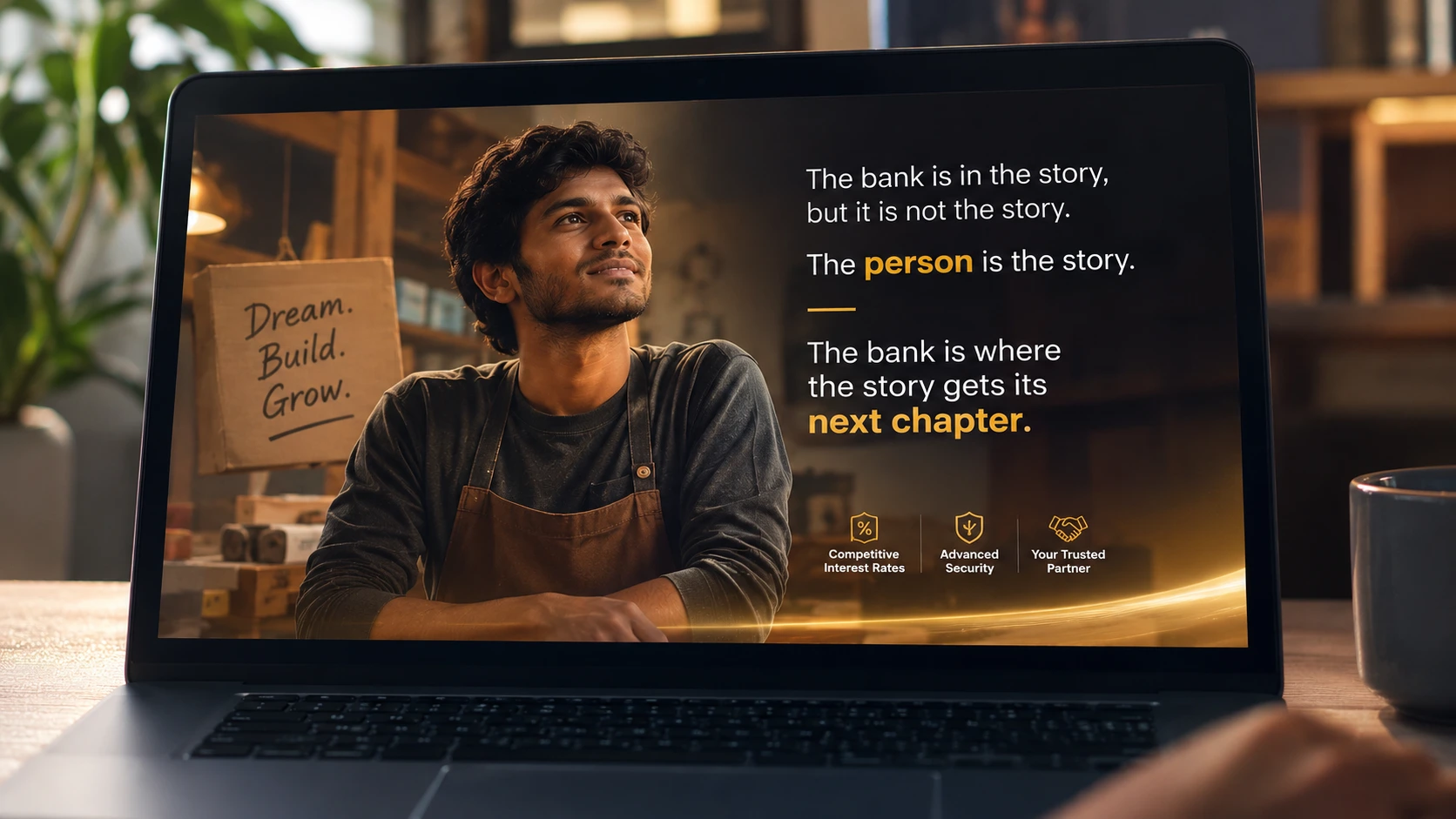
A bank that starts with the ad question makes a 30-second spot about interest rates and security features. A bank that starts with the story question makes a short film about a first-generation entrepreneur who built something their parents said was impossible. The bank is in the story, but it is not the story. The person is the story. The bank is where the story gets its next chapter.
Brand Storytelling: A sportswear brand that starts with the ad question makes a spot showing athletes in their products performing at peak level. A sportswear brand that starts with the story question makes content about the specific, ordinary, slightly embarrassing moment before someone becomes the athlete they wanted to be. The product is still there. But the story is the one the viewer recognises themselves in.
This is not a new creative insight. The best advertising in history has always known this. What is new in 2026 is the performance data that makes the business case undeniable, and the shift in viewer behaviour that makes story-led content not just the better creative choice but the necessary one if the content is going to be seen and remembered at all.
The Data That Makes This a Business Argument, Not a Creative One

Brand Storytelling may boost conversion rates by up to 30%.
Ads with storytelling elements increase recall by 85%.
92% of consumers prefer ads that feel like a story rather than traditional promotional content.
Branded stories help increase customer trust by 4% and customer loyalty by 20%.
75% of consumers believe it is important for companies to incorporate storytelling in their marketing strategies, with 79% prioritising stories in marketing messages.
Kantar’s BrandZ Immersive Content Study in 2026, covering 19,000 consumers across 12 countries, found that branded campaigns incorporating immersive storytelling elements achieved a 58% higher emotional resonance score and drove a 34% greater unaided brand recall rate than conventional narrative ads.
Ads with relatable stories are twice as effective at changing behaviour compared to those that talk about brand features.
None of these numbers are from brand storytelling advocates making the case for their own industry. They are from independent consumer research, brand tracking studies, and behavioural science. They describe a consistent, measurable performance advantage for story-led content over promotional content across every metric that a marketing team is accountable for.
The brands that treat storytelling as a nice-to-have layer on top of their advertising strategy are not just missing a creative opportunity. They are accepting a measurable handicap on recall, conversion, trust, and loyalty relative to competitors who have made the shift.
Three Reasons Most Brand Stories Still Do Not Work
Accepting that story-led content outperforms promotional content does not automatically produce good brand stories. Most attempts at brand storytelling fail for one of three reasons, and they are worth naming directly.

The brand is the hero of its own story. The most common mistake in branded storytelling is a story in which the brand is the protagonist. The brand noticed a problem, the brand built a solution, the brand is transforming the industry. The viewer is not in this story. They are watching a company talk about itself in narrative form instead of declarative form, which is marginally less irritating than a traditional ad but no more emotionally engaging.
Brand Storytelling: The brand in a watchable story is not the hero. It is the mentor, the tool, the environment, the turning point. The hero is always the person the viewer can see themselves as. When Nike tells a story, the hero is the athlete overcoming something. Nike is the thing that goes on their feet when they decide to try. That distinction is everything.
The story is too safe to be true. Brand stories that are approved by large committees tend to emerge with every sharp edge smoothed away. The conflict is resolved too quickly. The emotional stakes are too low. Nobody says anything surprising or true. The result is content that is technically narrative in structure but emotionally hollow, which is worse than a straightforward ad because it makes a promise of emotional engagement and then fails to deliver it.
66% of people say their favourite brand stories are about ordinary people rather than polished, larger-than-life narratives. The viewer is not looking for perfection. They are looking for recognition. A brand story that shows a real, slightly messy, genuinely human moment lands harder than a cinematic version of a moment that never quite felt true.
The story is one piece of content, not a sustained narrative. A single well-made brand film is not a brand story strategy. It is a brand film. The brands that have built deep, lasting audience loyalty through storytelling have done so through sustained narrative presence, a consistent point of view told across many pieces of content over time, rather than a single campaign.
Storytelling helps nonprofits retain 45% of donors, whereas those that reject it keep only 27%. The retention advantage of storytelling is not created by one story. It is created by an audience that keeps coming back because the next chapter is worth seeing.
The Formats That Carry Brand Stories Best in 2026
Not every format is equally suited to story-led content. Here is where brand storytelling works hardest in the current distribution environment.
Short-form documentary-style Brand Storytelling content. Real people, real moments, real stakes, shot with enough craft to feel worthy of the subject. Two to four minutes on YouTube, cut to 60 seconds for Instagram and LinkedIn. This format has become the most trusted branded content format among audiences who are sceptical of polished advertising, precisely because it does not look like an ad.
Series and episodic Corporate Storytelling content. A single video can tell one story. A series can build a world. Brands that commit to episodic content, even at low production volumes, one episode every two to three weeks, create something that promotional content never achieves: an audience with a reason to come back. The return visit is where loyalty is built.
Founder and employee stories. Brand messages are reshared 24 times more when distributed by employees compared to brand accounts. The people inside the company are, very often, the most compelling characters in the brand’s story. Their voices carry authenticity that no amount of production craft can manufacture. A founder talking honestly about a decision that almost broke the company is more watchable than any ad the company has ever made.
Customer story films. Not testimonials. Not case studies. Story films where the customer is the protagonist and the brand is the context. Shot with the quality and care of a short documentary. The customer’s journey, in their own words, in their own environment, with the brand present but not central. This format drives the highest trust scores of any branded content type because the narrator of the story has no commercial stake in it.
Brand films for specific inflection points. Product launches, funding milestones, market entries, anniversaries. These are the moments when a brand story film earns its production investment by being seen and shared by an audience that is already paying attention to the brand for another reason.
The Production Implication: What Changes When You Think Story First
Shifting from ad thinking to story thinking has consequences for how a production is briefed, planned, and made.
An ad is typically written, approved, shot, and delivered. The creative is locked at the scripting stage. Production is execution of a pre-approved message.
Brand Film: A story is developed. It evolves as the creative team discovers what is actually true and interesting about the subject. The most powerful moments in story-led brand content often emerge during production itself, in an unscripted comment, an unexpected visual detail, a moment of genuine emotion that no writer put in the brief because it could not have been anticipated.
This means story-led production requires a different relationship between the brand, the production company, and the people being filmed. It requires more creative trust, more pre-production depth, and a production approach that is built to capture real moments rather than execute a rigid storyboard.
It also requires a different metric framework. A brand story film is not primarily measured on CTR in its first week. It is measured on completion rate, return views, earned sharing, and the long-tail effect on brand trust and loyalty metrics. These are slower metrics than a campaign click rate, and brands that only know how to evaluate short-cycle ad performance will consistently undervalue story-led content because they are measuring it with the wrong instruments.
What Cybertize Media Productions Builds
At Cybertize Media Productions Private Limited, we produce brand content built around a story-first principle that we have arrived at not through creative philosophy alone but through watching what actually performs for the brands we work with.
The brief for every piece of content we make starts with the same question: who is the viewer, and what is the story they will still be thinking about tomorrow? Not what does the brand want to say. Not what features need to be communicated. What story is worth watching?
That question produces a completely different kind of production brief. It changes who we put on camera. It changes how we approach location and environment. It changes the role of the script versus the role of discovery during the shoot. It changes post-production, because editing a story is a fundamentally different craft from assembling a promotional message.
The result is content that brands describe differently from their other video work. Not “that’s a good ad.” But “that’s the one everyone shared,” or “we still get responses to that film two years later,” or “that’s the piece that gets people to ask us who made it.”
That is the difference between an ad and a watchable story. And in 2026, it is the difference that actually matters to whether a brand’s video budget is working.
FAQs
What does “brand storytelling” actually mean, and how is it different from a regular ad?
Brand storytelling is the use of narrative structure, character, and emotional arc to communicate a brand’s values and meaning rather than its product features and promotional claims. A regular ad answers the question “what do we want to say about our product?” A brand story answers the question “what is happening in the lives of the people we want to reach, and where does our brand have a true and honest role in that story?” The structural difference is that in a brand story, the viewer is the hero. In an ad, the brand is.
Why do 92% of consumers say they prefer ads that feel like stories?
Because story is the format the human brain is built to receive, remember, and be moved by. When a person encounters promotional content, the brain’s persuasion detection system activates a layer of scepticism that reduces receptivity and retention. When a person encounters a story, the brain simulates the experience, releases dopamine and oxytocin during engaging moments, and encodes the narrative into long-term memory through emotional association. The 92% preference figure reflects a deep, neurological preference for the story format over the declarative claim format, not just a casual content preference.
Does brand storytelling actually drive business results, or is it a brand awareness play?
Both, and the research supports both. Ads with storytelling elements increase recall by 85%, which is a brand awareness metric. But storytelling also drives direct conversion, with research showing it can boost conversion rates by up to 30%. Ads with relatable stories are twice as effective at changing behaviour compared to ads describing product features, which is a lower-funnel performance metric. Branded stories increase customer loyalty by 20%, which is a retention metric. Storytelling is not a soft brand play. It is a full-funnel performance driver that compounds over time in ways that promotional advertising does not.
What makes a brand story “watchable” as opposed to just well-produced?
Watchability is earned when the viewer’s continued engagement is active and willing rather than passive or obligated. A viewer watches something because a question has been opened they want answered, a character has been introduced they want to follow, or a conflict has been established they want resolved. These are story mechanisms. A piece of content is watchable when something is happening at every moment that gives the viewer a reason to stay for the next moment. Production quality can support watchability, but it cannot create it. Only narrative structure and genuine emotional stakes can do that.
Why do most brand stories fail even when the creative team understands storytelling?
The three most common failure modes are: the brand makes itself the hero instead of the viewer, the story is committee-approved to the point where all the sharp, true, slightly uncomfortable details have been removed, and the effort is a one-off campaign rather than a sustained narrative presence. A brand story that positions the brand as the protagonist loses the viewer immediately. A brand story that is too safe to feel true triggers the same scepticism as a regular ad. And a single, excellent brand film does not build the compounding loyalty advantage that episodic, sustained storytelling creates over time.
How long should a brand story film be in 2026?
There is no single correct answer, but the most effective approach in 2026 is a modular one: a two to four minute hero story film for YouTube, website, and LinkedIn, with 60-second and 30-second cutdowns built specifically for Instagram, Reels, and paid social. The longer format earns the depth of emotional engagement that makes brand stories effective. The shorter cutdowns distribute that emotional hook to audiences whose first encounter with the brand is in a short-form feed. Thinking about a single duration misses the point: the story is the constant, and the format adapts to the platform.
Is brand storytelling only for large brands with big budgets, or can mid-size companies use it effectively?
Some of the most effective brand storytelling is produced by mid-size companies, precisely because they still have access to the genuinely human, slightly imperfect stories that large companies often lose as they scale. A founder’s origin story, an employee’s career trajectory within the company, a customer’s specific and detailed experience of a problem being solved: these are richer story material than anything a large brand’s corporate communications team is typically allowed to say. Budget determines production quality. It does not determine story quality. A truthful story told with modest production consistently outperforms a safe story told with a premium budget.
How does brand storytelling work differently for B2B companies than for consumer brands?
B2B brand storytelling faces one specific additional challenge: the viewer is making a professional decision with accountability attached, not a personal purchase choice. This means B2B brand stories need to work on two levels simultaneously: the emotional level that makes the content watchable and memorable, and the professional credibility level that makes the viewer feel safe recommending the brand to a colleague or a board. The most effective B2B brand stories centre on a client’s real business problem and the specific, detailed outcome of solving it, with the brand present as the mechanism of the solution rather than the focus of the narrative. Client story films done in this way outperform case study documents by a significant margin for driving consideration and preference.
What metrics should brands use to evaluate the performance of story-led content?
Story-led content performs on metrics that are different from the short-cycle click and impression metrics used to evaluate promotional ads. The most relevant metrics are: video completion rate (what percentage of viewers watch to the end), earned sharing rate (how often viewers share the content without being prompted), return view rate (how many viewers come back to watch again), brand recall lift (measured through brand tracking, not campaign analytics), and long-term effects on trust and loyalty metrics in customer research. Brands that evaluate story-led content using only CTR and CPM are consistently undervaluing it because they are measuring the wrong outcomes.
How does Cybertize Media Productions approach a brief for a brand story film differently from a brief for a traditional ad?
The starting point is different. A traditional ad brief centres on the message: what does the brand want to communicate? A brand story brief centres on the viewer and the truth: who is this person, what is genuinely happening in their life, and where is there a true and honest story that connects their experience to the brand’s reason for existing? From that starting point, the production process is also different. We invest more time in pre-production research and discovery, because the most powerful moments in story-led content cannot be scripted: they have to be found. We build in more flexibility on the shoot, because a rigid storyboard is a barrier to capturing real moments. And we evaluate the finished work differently, asking not “does this communicate the message?” but “does someone who has never heard of this brand want to watch this to the end?”
Cybertize Media Productions Private Limited is a full-service video production company based in India, producing brand story films, founder narratives, customer story content, and advertising built around the creative logic of story rather than the promotional logic of the ad. We make content that people choose to watch.