
Table of Contents
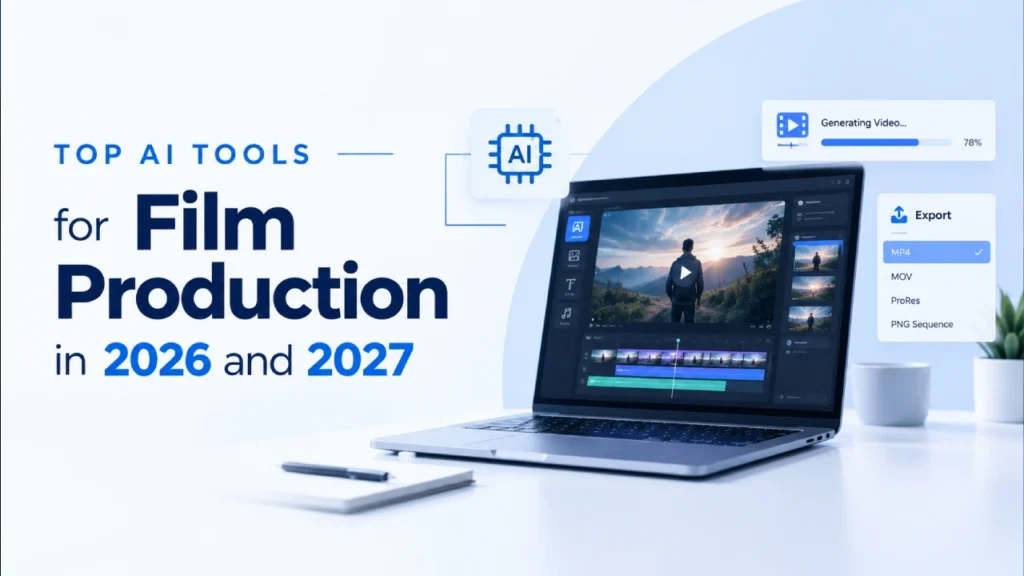
Top AI Tools for Film Production in 2026 and 2027
Two years ago, asking “which AI tool should we use for this shoot” usually meant picking one generator and hoping it covered enough of the job. That question has changed shape entirely. Production teams in 2026 are not choosing one AI tool, they are assembling a stack, a planning tool for pre-production, a generation tool for footage, a separate tool for voice and sound, and another for the edit itself. Trying to force one platform to do all of that usually produces worse results than using four tools that are each genuinely good at one part of the job.
At Cybertize Media Productions, we get asked constantly which tools are actually worth adopting versus which ones are just well marketed. This guide answers that honestly, organised the way a real production actually flows, from the first planning meeting to the final grade.
Also Read:
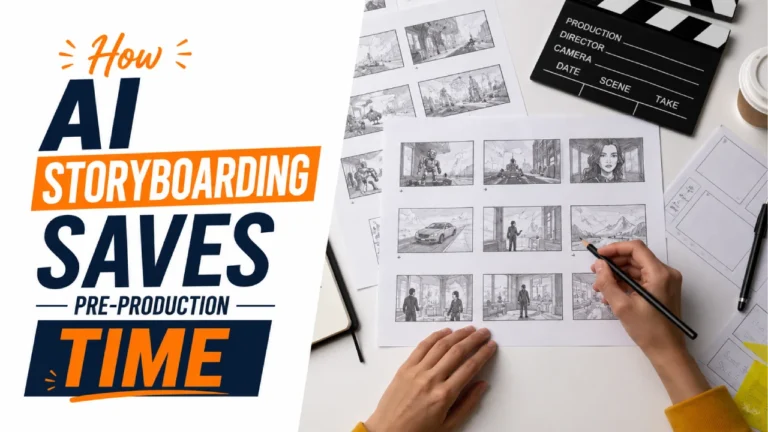
Can AI Replace an Ad Film Director? A Practical Analysis of AI vs Human Direction
Pre-Production: Planning, Scripting and Storyboarding
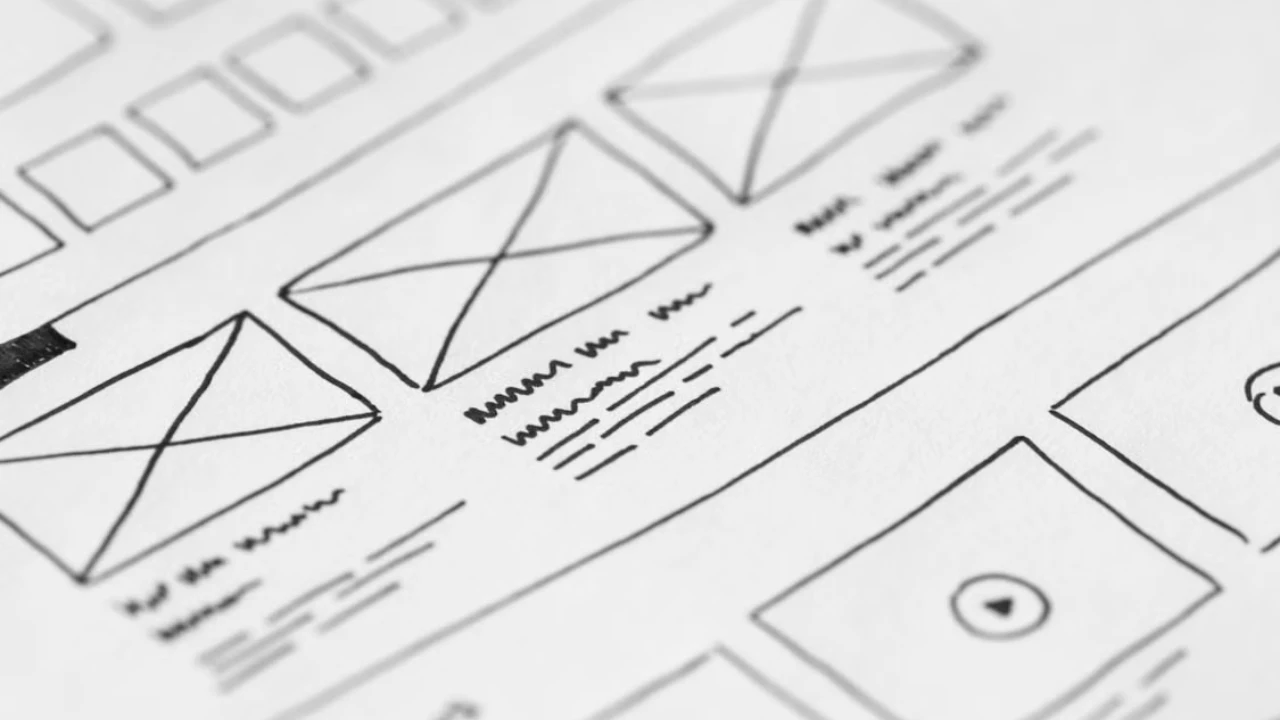
AI Tools for Film Production: This is where AI has quietly delivered the biggest time savings of any stage, because pre-production work is heavy on iteration and light on final execution, exactly what generative tools are best suited for.
LTX Studio covers the widest span of any single pre-production tool, holding script, storyboard, generated clips and a timeline edit in one workspace, with native 4K output through its LTX-2.3 model. Production studios using it have reported previsualisation turnaround up to 85% faster and meaningful production cost savings per project, which is a genuinely large claim, but one consistent with the broader pattern of AI compressing early stage planning far more than it compresses the shoot itself.
Storyflow takes a narrower, more deliberate approach, focusing purely on the thinking side of pre-production, research, story beats, treatment and mood, without generating any actual video, voice or edited footage itself. It is built to run alongside generation tools rather than replace them, which reflects a broader trend in how serious productions are structuring their AI stack, one tool per job rather than one tool for everything.
StudioBinder remains the standard for the operational side of pre-production, scheduling, call sheets and production logistics, an area where AI has helped but has not fundamentally changed the underlying workflow the way it has for creative planning.
Also Read:
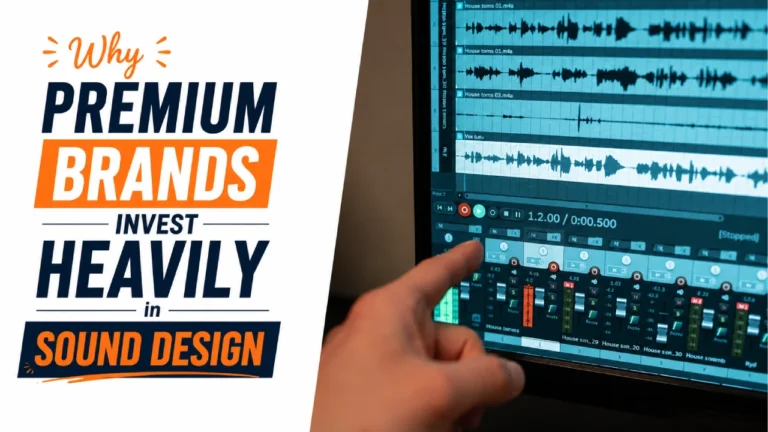
10 AI Ad Film Concepts That Brands Would Actually Buy
Production: Virtual Sets and Real Time Rendering

On the physical set itself, AI’s biggest contribution has been to virtual production, filming actors in front of large LED walls displaying digital environments that react to camera movement in real time, replacing the old workflow of shooting against green screen and building the background in post months later.
Unreal Engine remains the dominant tool for building these virtual sets, using AI to generate environmental detail, trees, terrain, structures, in seconds rather than requiring every asset to be modelled by hand. This genuinely changes the economics of location heavy shoots, letting a production see its final background live on set instead of waiting on a VFX pipeline. The tradeoff is real, this workflow needs strong hardware and specialised crew experience to run well, which keeps it firmly in the higher budget tier for now, though the gap is narrowing as rendering hardware gets cheaper year over year.
Also Read:
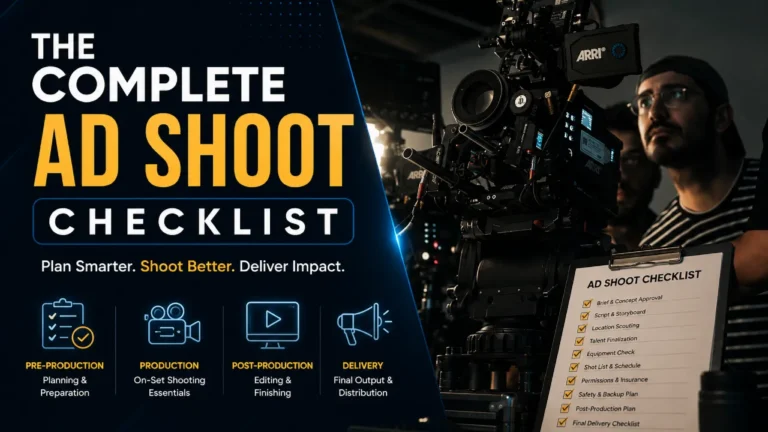
Prompt Engineering for Ad Film Concepts: A Creative Director’s Guide | Part 2
Generation: Turning a Concept Into Footage for ‘AI Tools for Film Production’
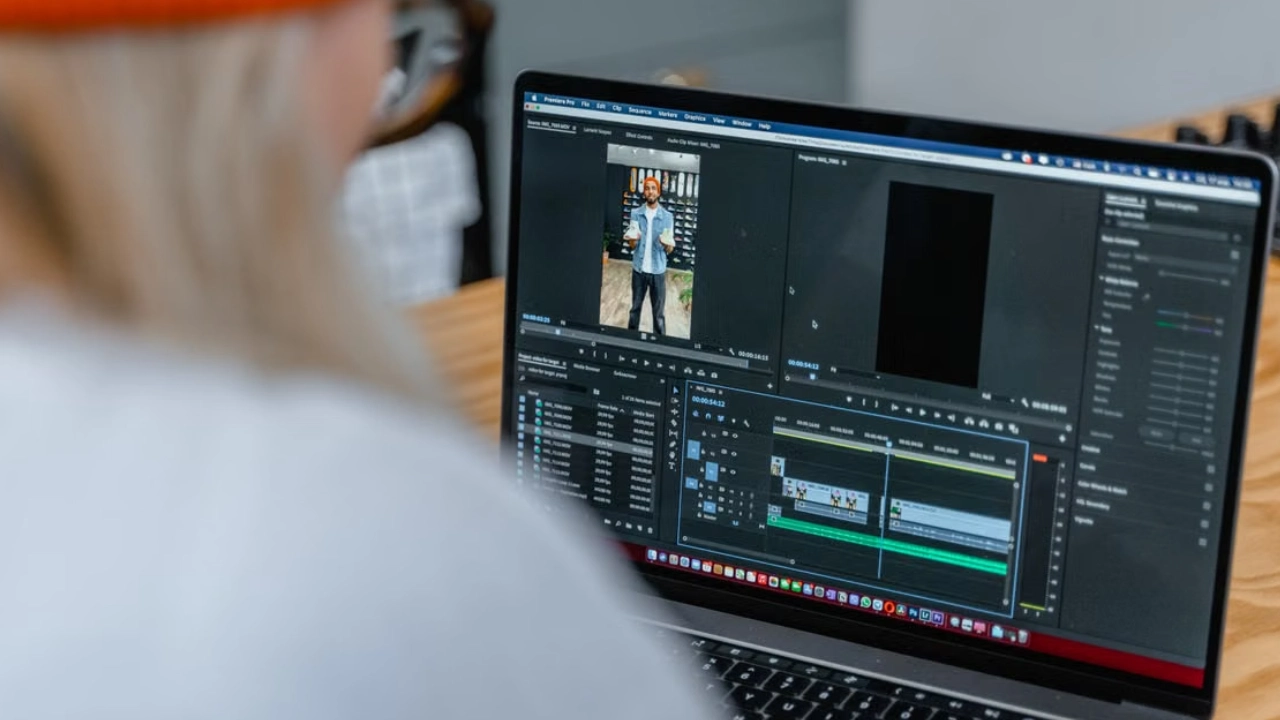
AI Tools for Film Production: This is the most crowded and fastest moving category, and the honest advice is that no single generator wins every use case. Each of the current leaders has a genuine specialty.
Runway remains the most broadly adopted tool among working commercial and music video directors, not primarily for raw generation, but for its editing suite, background removal without a green screen, frame by frame rotoscoping, inpainting to remove unwanted objects, and Director Mode for camera control. It is the tool most likely to already be inside a professional production’s actual pipeline rather than used purely for experimentation.
Google Flow, built on DeepMind’s Veo model, focuses on cinema quality clips with strong character and scene consistency across a sequence, positioning it well for narrative previsualisation where a recurring character needs to look the same shot to shot.
Kling AI has built a specific reputation for longer shot duration, supporting sequences beyond two minutes with multi character scenes, which suits short film and dramatic content better than the shorter clip lengths most competing tools are optimised for.
Higgsfield leans hard into dramatic, preset driven camera moves, crash zooms and orbits, which has made it popular specifically for trailers and stylised promotional content where a bold, immediate visual hook matters more than open ended creative control.
Hailuo and Pika round out the category at opposite ends, Hailuo aimed at big budget VFX style shots, Pika better suited to stylised, non photoreal animatics and rapid look development rather than photorealistic footage.
Voice, Sound and Dubbing
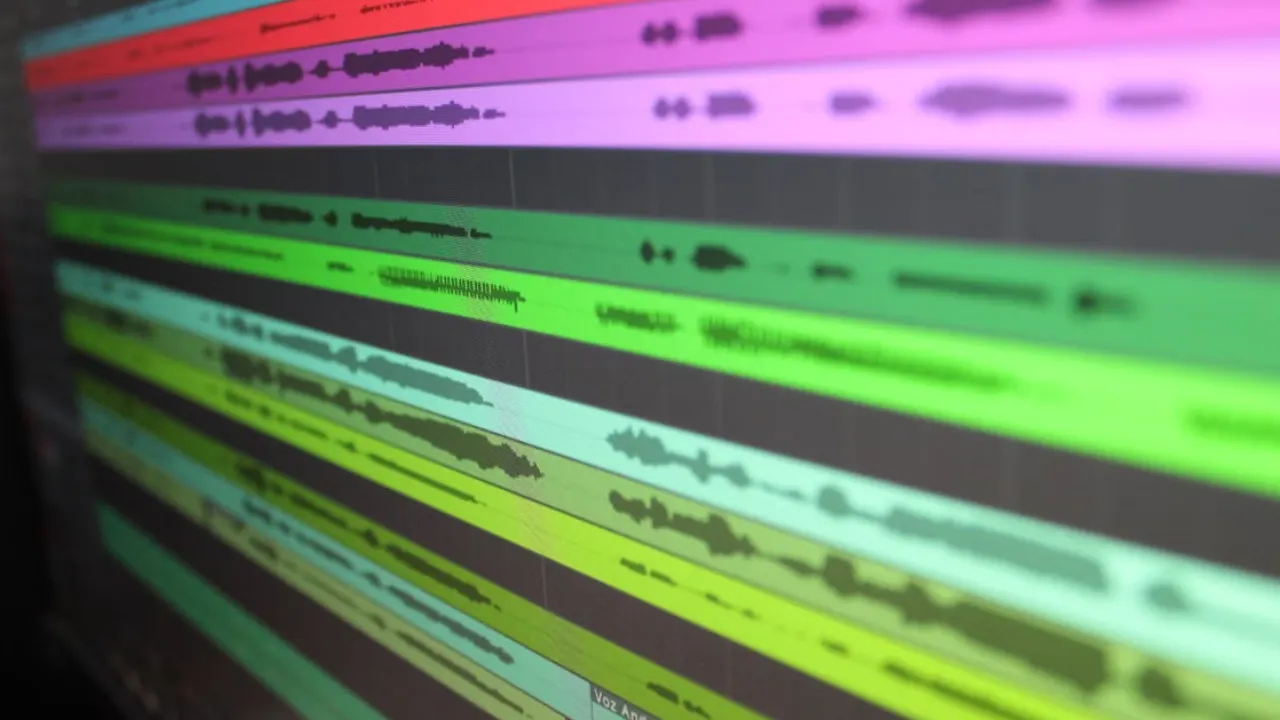
ElevenLabs has become close to the default choice for this entire category, producing natural narration and dialogue with genuine control over emotional tone and pacing, dubbing a finished cut into other languages, and generating sound effects. For Indian productions specifically, this matters more than it might elsewhere, since a single ad film or corporate piece frequently needs Hindi, English and one or more regional language versions, and AI dubbing has meaningfully cut both the cost and turnaround time that used to require separate voice artists and studio sessions per language.
Post-Production: Editing, Colour and Delivery
Descript is the most commonly cited AI editing tool for transcription based editing, letting an editor cut a sequence by editing the transcript directly rather than scrubbing through a timeline manually, alongside automated speech cleanup and subtitle generation.
Colourlab AI applies colour grading derived from reference films, giving smaller productions access to a grading process that used to require a dedicated colourist and significantly more billable hours.
Frame.io continues to serve as the review and collaboration layer tying all of this together, letting directors, clients and editors comment directly on cuts in real time rather than relying on email chains and timestamped notes, a workflow improvement that has less to do with generation and more to do with simply removing friction from approvals.
Also Read:
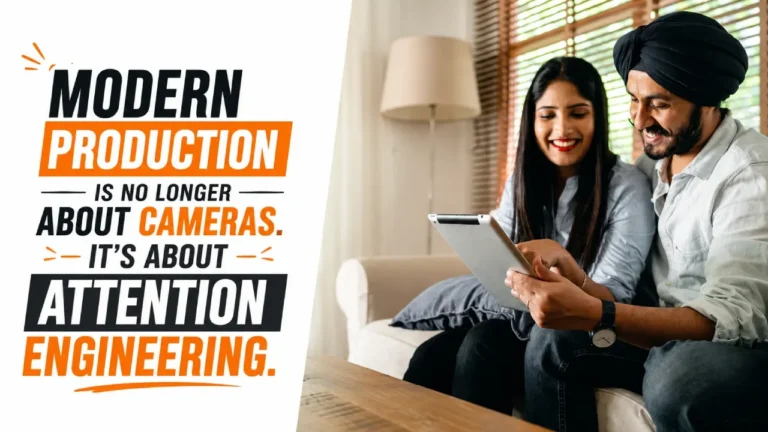
Modern Video Production Is No Longer About Cameras, It’s About Attention Engineering.
What This Actually Costs, and What It Changes for Indian Productions
The realistic entry cost for a functional indie AI filmmaking stack, combining a generation tool, a voice tool and an editing tool, runs in the range of a few thousand rupees a month at current subscription pricing, a fraction of what the equivalent specialist crew would cost per project under a traditional model. This lines up with the wider shift already visible in Indian ad film production, where AI assisted production now starts around Rs 2 to 5 lakh per project, running 40 to 70% below equivalent traditional production costs, largely because pre-production and early concepting, historically one of the most time consuming phases, have been compressed the most by these tools.
What has not changed, and what every serious guide to this category says plainly, is where the ceiling sits. AI automates the repetitive, technical parts of the job, transcription, rotoscoping, colour matching, noise reduction, dubbing across languages. It does not replace the judgment of a cinematographer framing a shot, a director deciding what a scene needs to feel like, or an editor deciding what actually belongs in the final cut. The tools have gotten dramatically better at execution. The decisions about what to execute still belong entirely to the people making the film.
AI Tools for Film Production in 2026 – 27: Building a Stack That Actually Works
The mistake we see most often is a team trying to find one tool that does everything, then feeling let down when it does most things adequately and nothing exceptionally. The productions getting real value from this category in 2026 are the ones treating it the way this guide is structured, a dedicated tool for planning, a dedicated tool for generation matched to the specific shot type needed, a dedicated tool for voice and sound, and a dedicated tool for the edit, connected by a human creative team making the calls a stack of software still cannot make on its own.