Table of Contents
First, a Reality Check on AI Ad Generation Tools available
No tool “generates sales”. Tools generate creative. Sales come from a good offer, the right audience and a product people want.
What AI changes is the cost of trying. You can test ten ideas for the price of one. That is the real value for a small business.
This article is built on public product pages and 2026 reviews. We have not hands-on tested every tool, and prices change often. Check before you pay.
The Top 10 List
| # | Tool | Best For | Starting Cost (as reported) |
|---|---|---|---|
| 1 | Meta Advantage+ Creative | Facebook and Instagram ads | No extra fee, you pay ad spend |
| 2 | Google Ads Asset Studio and Performance Max | Search, YouTube and display ads | No extra fee, you pay ad spend |
| 3 | Canva Magic Studio | Editable brand posts and ad designs | Free; Pro about US$144 a year |
| 4 | AdCreative.ai | Static ad variations with scoring | From about US$39 a month |
| 5 | Creatify | Product link to short video ad | Free tier; paid from about US$19 to US$39 a month |
| 6 | Predis.ai | Social posts, carousels and scheduling | From about US$19 to US$32 a month |
| 7 | HeyGen | Presenter videos in many languages | Paid plans; check current pricing |
| 8 | Adobe Firefly | Commercially safer image and video | Part of Adobe plans; check current pricing |
| 9 | Runway | Product shots and edited video | Free tier; paid plans up to about US$95 a month |
| 10 | ChatGPT, Claude or Gemini | Ideas, hooks, scripts and copy | Free tiers; paid plans vary |
Prices are in US dollars from third-party comparisons in 2026. Check INR billing and tax before buying.
The 10 AI Ad Generation Tools, Explained
1. Meta Advantage+ Creative
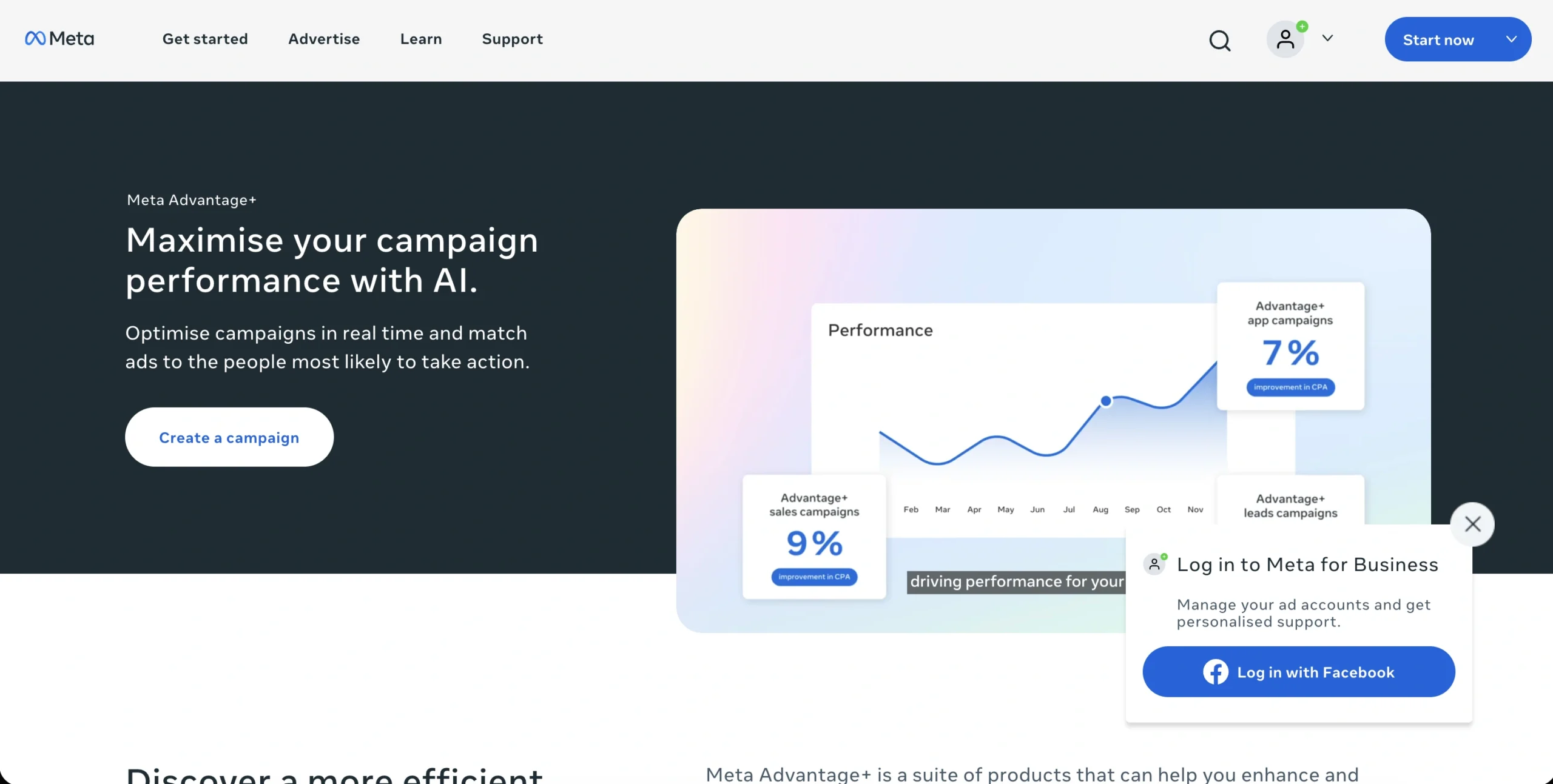
Best for: Facebook and Instagram ads on a small budget.
What it does: Builds variations of your ad inside Ads Manager. In October 2026, Meta made static-to-video generally available in Advantage+ creative and widened its Ads Creative Studio rollout.
Good:
- No separate subscription
- Turns a strong image into a short video
Watch out:
- Some AI enhancements can be pre-ticked, so check every ad
- One small-business guide advises testing with it on and off, not trusting it blindly
MSME play: Upload your best product photo, then compare the AI video against a plain version.
2. Google Ads Asset Studio and Performance Max
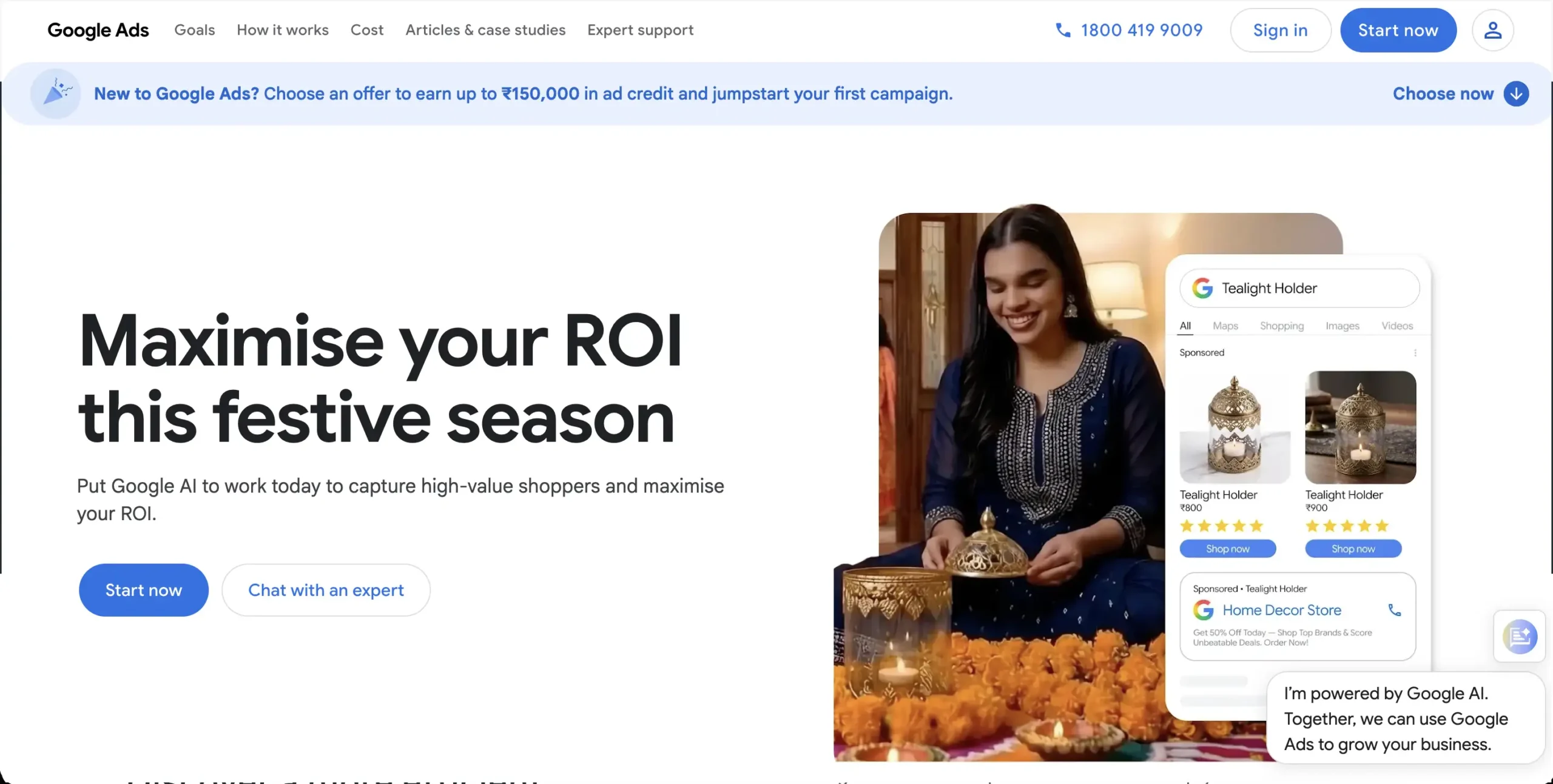
Best for: Reaching people across Search, YouTube and Maps.
What it does: Asset Studio generates images and video inside Google Ads. Performance Max then mixes your assets across Google’s channels.
Good:
- No extra tool to buy
- Needs a set of assets, so it pushes you to create variety
Watch out:
- Automation works best with enough data, which small budgets may lack
- You get less control over where ads show
MSME play: Start with Search for high-intent keywords. Add Performance Max once conversions are tracked.
3. Canva Magic Studio
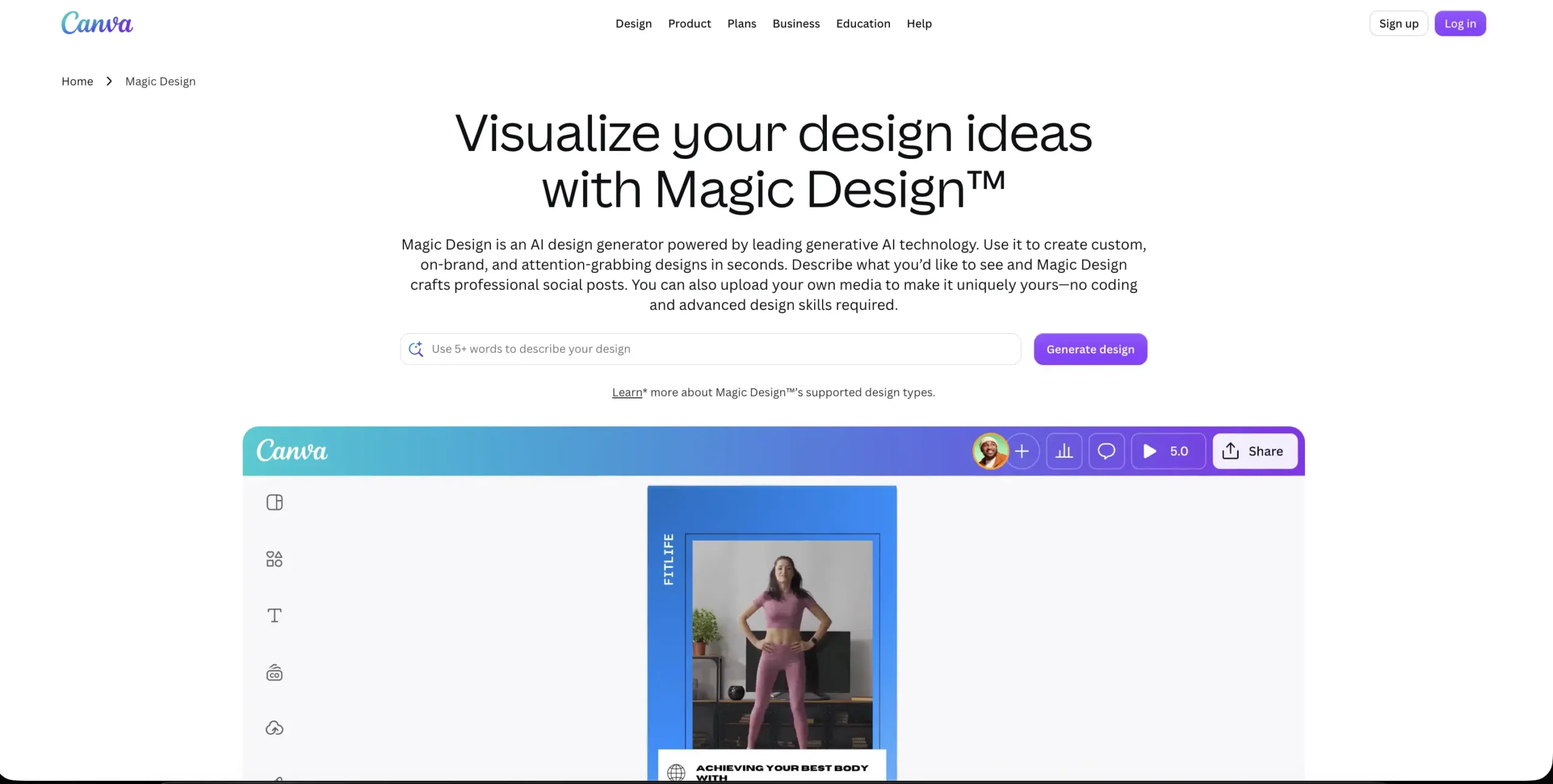
Best for: Owners who want to stay in control of the design.
What it does: Template-based designs with AI help, including layouts, resizing and copy.
Good:
- Easy to learn
- Designs stay editable
Watch out:
- It is a design tool, not an ad system, so there is no performance scoring
MSME play: Make your festival and offer creatives here, then resize for every placement.
4. AdCreative.ai
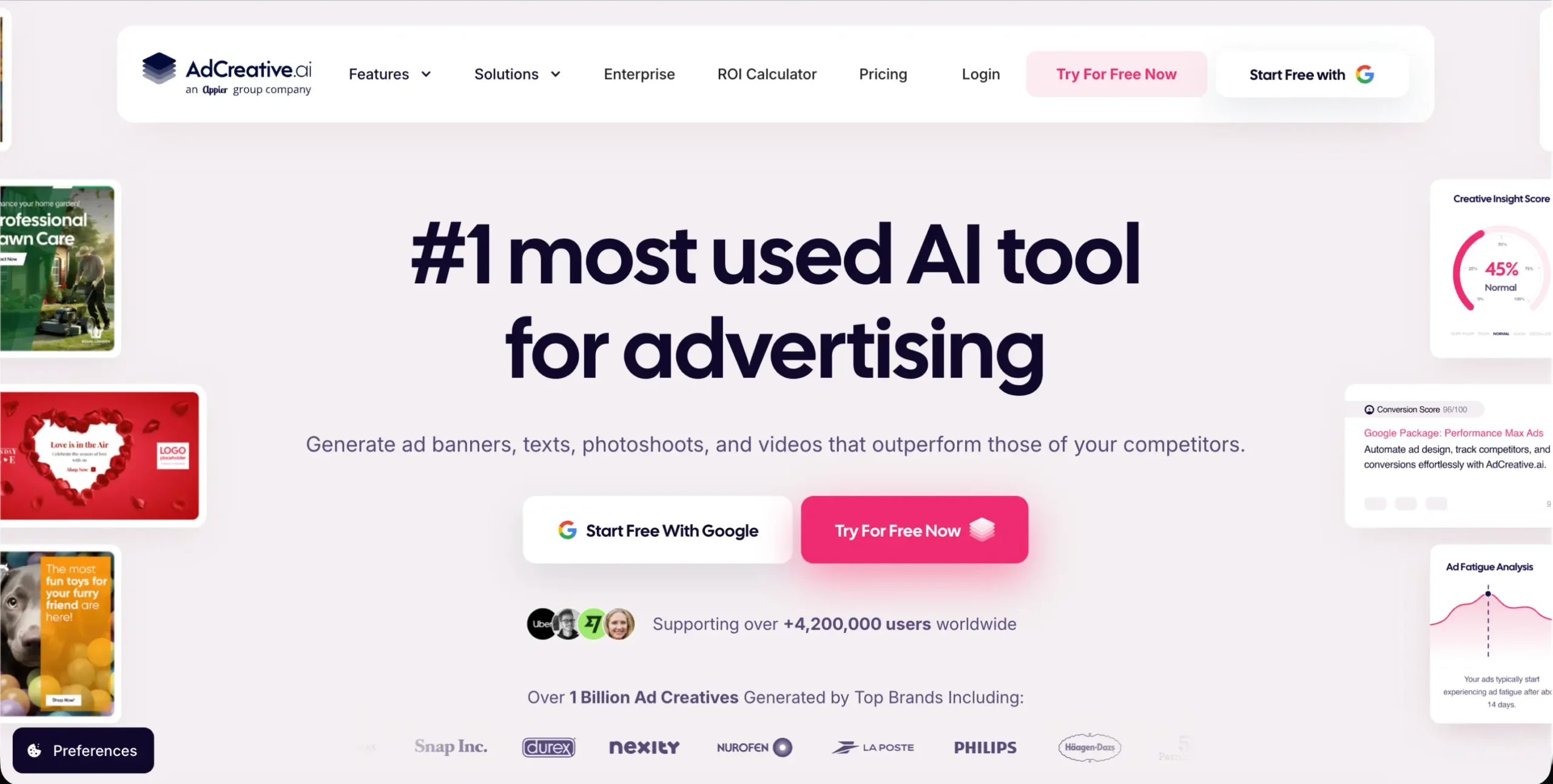
Best for: Static ads in bulk for Meta and Google.
What it does: Generates ad images and copy, and can score creatives before launch. Scoring is reported to need a higher plan.
Good:
- Fast variations
- Helps you shortlist before spending
Watch out:
- Video is described as weaker
- Credits run out quickly
MSME play: Use it for e-commerce and retargeting banners.
5. Creatify
Best for: Turning a product page into a short video ad.
What it does: Pulls from a product link and builds video ads, with AI avatars and multiple languages.
Good:
- Quick to try, with a free tier
- Good for testing hooks
Watch out:
- Free output is watermarked
- Avatars can look synthetic
MSME play: Test five hooks for one product before you shoot anything real.
6. Predis.ai
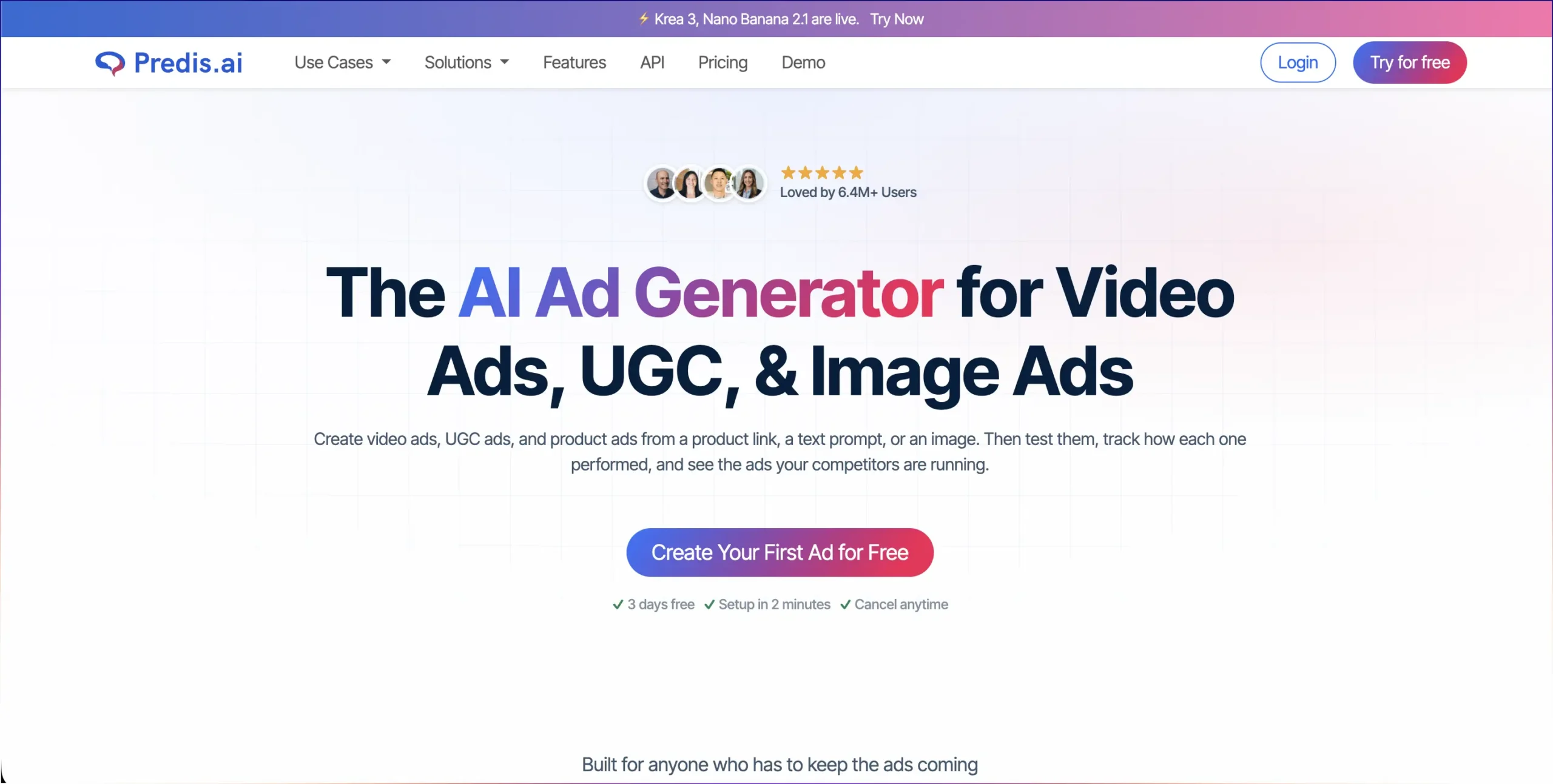
Best for: Social media posts, carousels and scheduling in one place.
What it does: Makes post visuals, captions and hashtags, then schedules them.
Good:
- Saves hours of weekly posting work
- Budget friendly
Watch out:
- Reviews describe the output as mid-quality
- Not built for deep ad testing
MSME play: Use it to keep your organic pages active while you focus on paid ads.
7. HeyGen
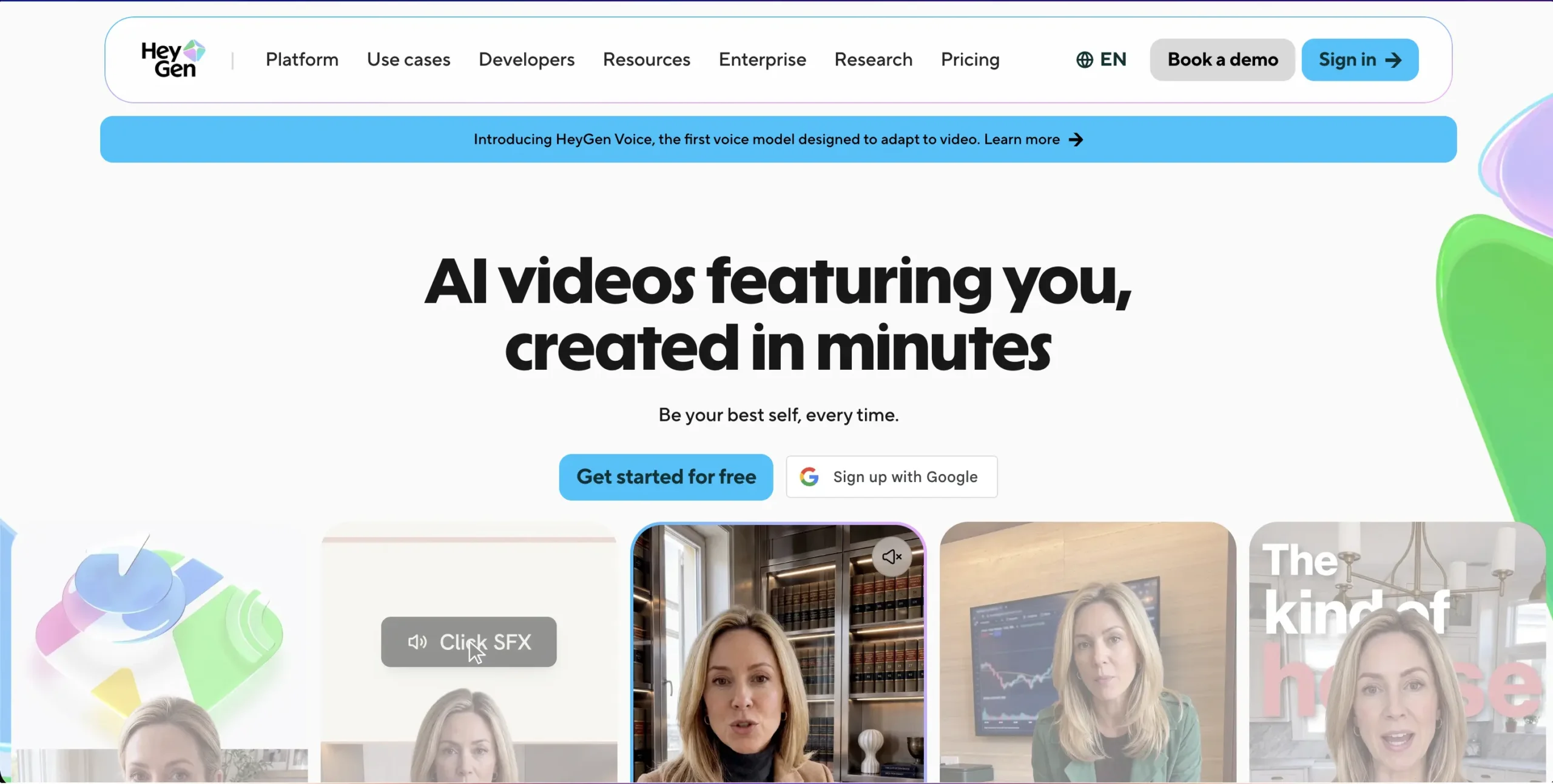
Best for: Presenter-style videos in several languages.
What it does: Creates talking-head videos from a script, with translation and lip-sync.
Good:
- Strong for multilingual explainers
- Paid plans include commercial rights, per its documentation
Watch out:
- Poor fit for product-only footage
- Indian rules on synthetic influencers apply (see below)
MSME play: Make one explainer and release Hindi, Tamil and Marathi versions.
8. Adobe Firefly
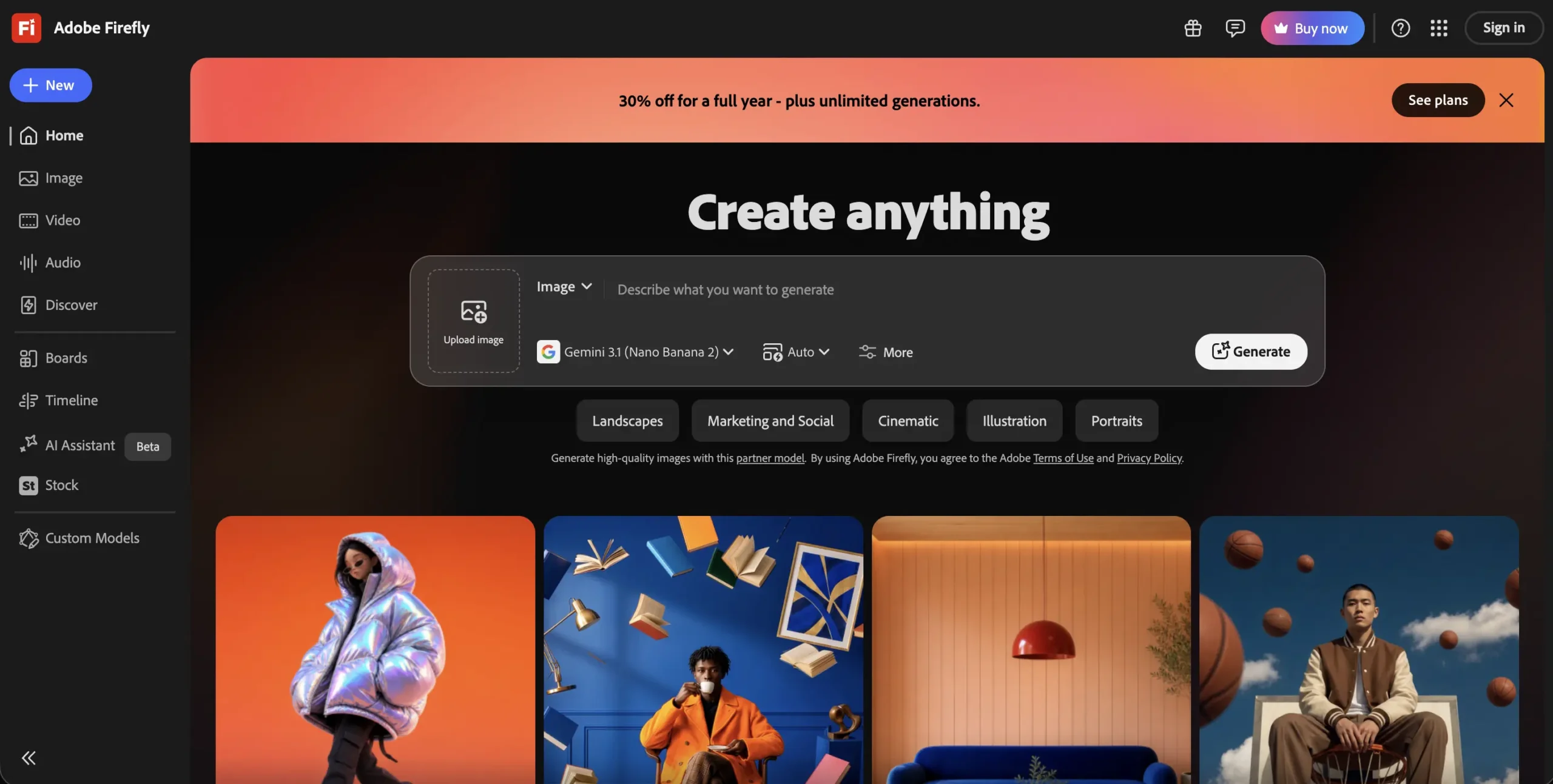
Best for: Brands that worry about copyright.
What it does: Generates images and video from models trained on licensed Adobe Stock and public domain content.
Good:
- Easier to defend commercially
- Works with Adobe editing tools
Watch out:
- IP indemnification is tied to qualifying enterprise plans, so many MSMEs will not get it
- Generally seen as less aggressive on realism than rivals
MSME play: Good for packaging, backgrounds and brand-safe visuals.
9.Runway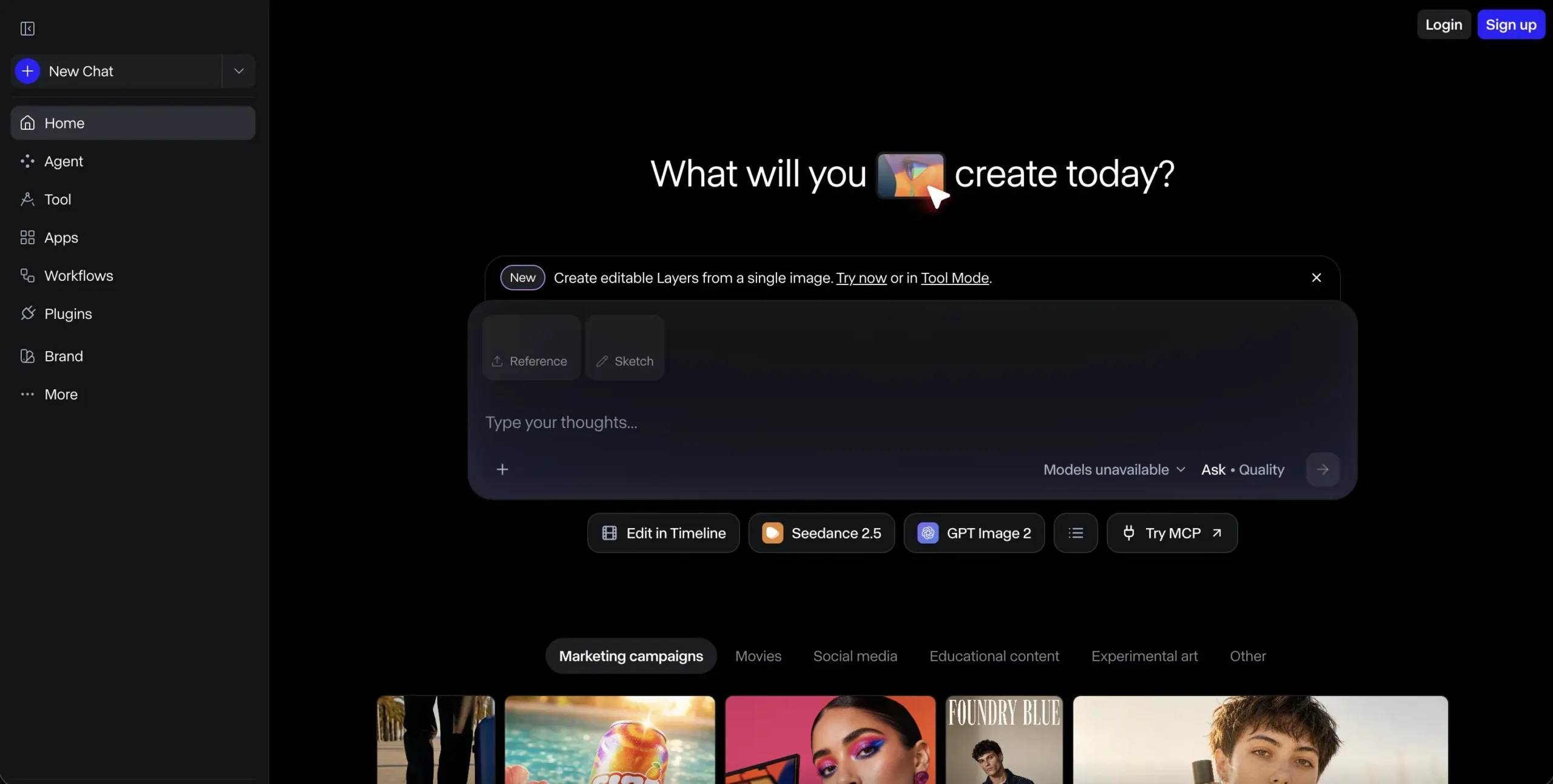
Best for: Better-looking product video.
What it does: Generates and edits video. Its developer tools include recipes for product ads, product swaps and UGC-style clips. Paid plans include commercial rights.
Good:
- Strong editing tools, like background removal
- Useful for hero product shots
Watch out:
- Credits get expensive on heavy use
- Needs more skill than the tools above
MSME play: Use it when a product needs a cinematic motion shot you cannot afford to film.
10. ChatGPT, Claude or Gemini
Best for: The thinking before the making.
What they do: Generate hooks, scripts, offer angles and translations.
Good:
- Cheap and fast
- Best used as a sparring partner
Watch out:
- Output sounds alike across brands
- They know nothing about your customers unless you tell them
MSME play: Ask for 20 hooks, keep the best two, then rewrite them in your own voice.
Pros and Cons of AI Ads
Pros
- Speed. A first draft in minutes, not weeks.
- Cost. Testing becomes cheap.
- Volume. Many versions of one idea.
- Language. Regional versions are easier. IAMAI and Kantar data shows about 98% of Indian internet users went online in Indic languages in 2024.
- Low barrier. No design team needed to start.
Cons
- Sameness. Everyone uses the same models, so ads start to look alike.
- Product errors. Logos, text and packaging can come out wrong.
- Trust. Canva’s 2026 marketing report is reported to show 87% of marketing leaders saying the best advertising needs a human touch, and about 7 in 10 consumers saying AI ads feel soulless.
- Compliance. Indian rules on AI labelling now exist (see below).
- Hidden effort. Someone still has to review, fix and approve.
- Black box. Platform AI decides placement and audience, and you see less of why.
India’s AI Ad Rules: What MSMEs Should Know
Two things matter. Check both with a legal adviser before you scale.
- IT Amendment Rules 2026. Notified in February 2026. They introduce labelling for “synthetically generated information” and place most duties on platforms.
- ASCI guidelines. ASCI released guidelines on 29 September 2026. As reported, advertisers must label AI-generated images, video and audio in ads when it could mislead consumers about their decision. They cover TV, print, outdoor and online, and include synthetic influencers.
Simple rule: if AI changes what a customer believes about your product, label it.
Where AI Falls Short: The Virality Gap
This section is Cybertize’s opinion.
AI is good at average. Viral content is rarely average.
Here is our view, in brief:
- Virality needs a human surprise. A real reaction, an unplanned moment, a joke that only lands this week.
- AI learns from the past. Culture moves faster than training data.
- Synthetic faces can feel off. Avatars and formula prompts can come across as sterile or uncanny.
- Relatability is hard to fake. People can sense when a “customer” is not real.
- Emotion is the engine. Research by Binet and Field on IPA data links emotional campaigns to stronger long-term profit than rational ones.
We are not saying AI ads cannot go viral. We are saying you cannot plan for virality with a prompt.
What to do instead: Use AI for volume. Then add one real human moment a month. A founder on camera. A customer reacting. A behind-the-scenes clip.
Where Real Agencies Win
AI Ad Generation tools make assets. Agencies make decisions. Here is where we think a real production house earns its fee.
- Insight. Knowing why a customer chooses you, not just what they click.
- Direction. Getting a real performance out of a real person.
- Casting and faces. People your audience actually recognises.
- Craft. Lighting, sound, music and pacing that you feel before you notice.
- Consistency. One brand look across films, posts and print.
- Accuracy. The product looks exactly right, every time.
- Accountability. Someone owns the outcome, the rights and the approvals.
- One shoot, many assets. A single planned shoot feeds film, social, ads and web.
At Cybertize Media Productions, an ad film and advertising production house working in Delhi and Mumbai, we plan script first and price by line item. Human direction leads. AI helps in pre-production, versions and localisation, where it saves real time.
When to Use AI Ads and When to Use Non-AI Ads
The right answer depends on your goal. Here is how we see it.
| Goal | Lean Toward | Why |
|---|---|---|
| Awareness | Human-led, AI-assisted | Memory comes from emotion and story |
| Leads | AI for variants, human for proof | Test fast, but trust needs real faces |
| Sales | AI-heavy for catalog and offers | Volume and refresh matter most |
| PR | Human only, AI for support | Trust and accuracy cannot be faked |
Awareness
Use non-AI for: The hero film. Brand story. Anything meant to be remembered for years.
Use AI for: Cutdowns, resizes, subtitles and language versions of the hero film.
Why: People remember how a brand made them feel.
Leads
Use AI for: Hooks, static ads, retargeting, regional versions and fast tests.
Use non-AI for: Customer testimonials, founder videos and proof of work.
Why: A lead form is a trust decision. For high-ticket services, trust needs a real person.
Sales
Use AI for: Catalog ads, seasonal refreshes, offer cards and product video variants.
Use non-AI for: The core product shoot. Real customers using the product.
Why: Sales ads are about speed and testing. But the product must look right, or returns follow.
PR
Use non-AI for: Launch films, CSR stories, founder statements and crisis communication.
Use AI for: Transcripts, subtitles and rough drafts only.
Why: PR runs on credibility. One fake-looking frame can damage it.
The 3-Question Test
Ask before every ad:
- Does the viewer need to trust a real person?
- Must the product look exactly right?
- Do we need people to feel something, not just click?
If you answer yes to any one, lead with human-made work.
When NOT to Use AI Ad or AI Ad Generation Tools
- Real customer testimonials or reviews
- Before and after results
- Health, finance or legal claims
- Anyone’s likeness without permission
- Crisis or sensitive moments
- Products where size, colour or texture decide the sale
A Simple MSME Stack
- Starter: Meta Advantage+ and Canva. Shoot product photos on a phone.
- Growing: Add AdCreative.ai or Creatify for faster testing. Use an AI assistant for hooks.
- Brand-building: Keep AI tools for variants. Invest in one professionally produced film every year, and cut it into many assets.
Test every AI ad against a human-made one. Let your own numbers decide.
Methodology and Sources
How we built this. We reviewed 2026 AI ad tool comparisons, product pages, platform update reports and Indian regulatory coverage. We have not hands-on tested every tool. The opinions are Cybertize’s, and are marked.
Sources consulted
- Tool and pricing comparisons (2026): Fast.io, CamClo, Wireflow, Omid Saffari, Creascale, Shhots, Superprompt
- Meta and Google updates: AdsUploader (October 2026), Spresso Studio (October 2026), Hawky.ai, Digital Applied, AdNabu, Verde Media
- India regulation: MediaNama on ASCI guidelines (October 2026), Khurana and Khurana, Legal500 on the IT Amendment Rules 2026
- Language data: IAMAI and Kantar, Internet in India Report 2024
- Emotion and effectiveness: Binet and Field analysis of the IPA Databank, as widely summarised; Canva 2026 State of Marketing and AI, as reported
Limits. Prices are third-party reports in US dollars. Tool features change monthly. Regulatory points are summaries, not legal advice. The list is current to October 2026 and is our editorial pick for MSMEs, not a ranking.