Table of Contents
Introduction to AI video generators for product advertising
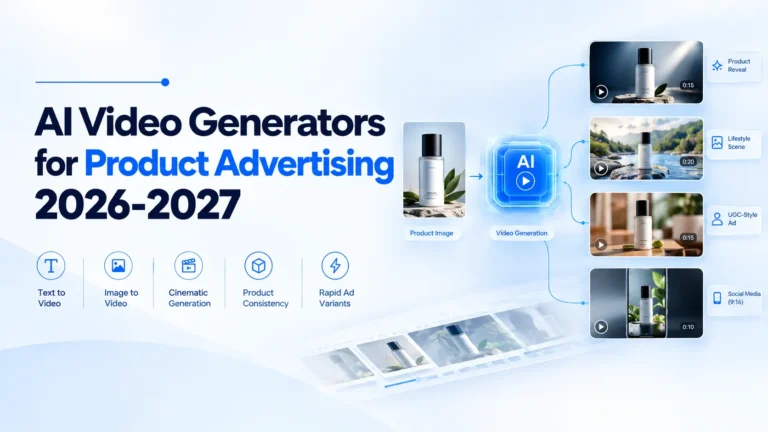
Product advertising has quietly become the proving ground for AI video generation, and for a practical reason. Product ads are short, repeatable and format heavy, which is exactly the kind of work generative video handles best right now. A brand does not need a generator to direct an actor’s performance to produce a hero shot of a skincare bottle rotating under studio light, a sneaker caught mid stride in a lifestyle scene, or a dozen seasonal variants of the same creative for different markets.
That is where the real adoption is happening in 2026. Teams are using AI video generators for product demonstrations, hero shots, social ads, lifestyle scenes, concept visualization before a full shoot is committed to, short form ads for Reels and Shorts, localized versions of one campaign for different regions, seasonal creative refreshes, and rapid testing of multiple angles before spending media budget on any single one. None of this requires a generator to replace a production company. It requires a generator to produce usable footage fast enough and cheaply enough to make testing ten ideas as normal as testing two used to be.
Hire Ad Film Video Production Team in India
This guide evaluates the AI video generators genuinely relevant to that use case, not every popular text to video tool on the market. It explains what actually matters for commercial product work, how each platform stacks up on the criteria that matter, where the real limitations sit, and how these tools fit into an advertising workflow that still depends on human creative direction to work.
What Makes an AI Video Generator Useful for Product Advertising?
Product advertising asks different things of a video model than cinematic storytelling does. A narrative generator can get away with a face that looks slightly different between two shots. A product generator cannot, because a label, a logo or a packaging shape that drifts between frames is immediately visible to anyone who has ever held the actual product.
| Factor | Why It Matters in Advertising |
|---|---|
| Product consistency | The product’s shape, color and proportions need to stay identical across every frame and every variant |
| Product identity preservation | A specific product, not a generic approximation of the category, needs to appear on screen |
| Texture and material accuracy | Glass, fabric, metal and liquid need to read correctly, since inaccurate material rendering is one of the fastest ways viewers spot AI generated content |
| Lighting control | Studio, outdoor and mood lighting all need to be directable, not left to the model’s default interpretation |
| Camera movement | Advertising depends on deliberate moves, push ins, orbits, reveals, not generic motion |
| Scene control | The environment around the product needs to match brand context, not a random background |
| Prompt adherence | A specific creative direction needs to actually produce the intended result, not a loose approximation of it |
| Image to video capability | Converting an existing, approved product photograph into motion is often more reliable than generating a product from text alone |
| Text to video capability | Useful for concept visualization and lifestyle scenes where no reference image exists yet |
| Reference image support | Locking a model’s output to an actual product photo is the single most reliable way to preserve brand accuracy |
| Aspect ratio support | A usable generator needs to output 9:16, 1:1 and 16:9 without reworking the whole generation |
| Short form generation | Most product ad placements run 6 to 30 seconds, which rewards tools optimized for short, punchy output |
| Editing capabilities | Background removal, object swap and inpainting matter as much as raw generation for commercial polish |
| Brand consistency | A tool’s ability to hold a consistent look across a full campaign, not just one clip |
| Commercial licensing | Whether generated output can legally run in a paid campaign, and under what terms |
| Output resolution | Broadcast and premium digital placements still expect 1080p or better |
| Generation speed | Rapid testing across multiple creative directions depends on fast turnaround per clip |
| API and workflow integration | High volume campaigns need programmatic generation, not a manual web interface for every variant |
How We Evaluated AI Video Generators
This is not a popularity ranking. Platforms were assessed against twelve factors specifically relevant to commercial product advertising, weighted toward the things that determine whether output is actually usable in a paid campaign rather than a demo reel.
| Evaluation Factor | Why It Matters in Product Advertising |
|---|---|
| Product Consistency | Prevents visual changes to the product across shots and variants |
| Image to Video Quality | Converts existing, approved product imagery into motion reliably |
| Prompt Control | Enables precise creative direction rather than loose approximation |
| Motion Quality | Determines whether product movement looks physically plausible |
| Camera Control | Enables advertising style shots, not just generic movement |
| Visual Quality | Determines whether output is commercially usable without heavy correction |
| Brand Suitability | Important for maintaining a consistent visual identity across a campaign |
| Commercial Licensing | Critical, since not every platform’s terms actually permit paid advertising use |
| Editing Workflow | Determines how much post production work a clip still needs |
| Generation Speed | Important for rapid creative testing before committing media budget |
| API and Automation | Important for high volume, multi variant campaigns |
| Pricing | Determines whether a workflow scales affordably across a real campaign |
This article distinguishes between three kinds of claims throughout. Documented capabilities come directly from a platform’s own pricing pages, API documentation or published terms. Observed industry capabilities reflect consistent reporting from independent technical reviews and comparative testing. Reasonable editorial assessment is used sparingly, and flagged as such, where no primary source exists. No platform here was personally tested by the authors of this guide, and no claim in this article treats editorial assessment as equivalent to documented fact.
Best AI Video Generators for Product Advertising
Runway
Best for: Product specific generation recipes and editing workflow integration
What it does: Runway’s Gen-4 and Gen-4.5 models handle general text and image to video generation, but the platform’s developer API also ships dedicated commercial recipes built specifically for advertising, Product Ad, Product Swap and Product UGC, each designed to turn existing product photography into a finished short form ad.
Product advertising strengths:
- Purpose built API recipes for product ads, not just general generation repurposed for commercial use
- Strong editing suite, background removal, rotoscoping and inpainting, that reduces post production dependency
- All paid plans include commercial usage rights for generated content
Limitations:
- Pricing varies meaningfully between the consumer app and the separate developer API, which complicates budgeting at scale
- Product Ad and Product UGC recipes are priced per generation and can add up quickly across large variant sets
Best advertising use case: Brands converting existing product photography into short, platform ready video ads without a full video shoot.
Commercial considerations: Runway’s documentation confirms commercial usage rights on paid plans, with the API billed separately from app subscription credits.
Google Veo (via Flow and Vertex AI)
Best for: High realism cinematic product footage with native audio
What it does: Veo 3.1, Google DeepMind’s video model, generates short clips with native synchronized audio and is accessible through the consumer facing Flow interface or the enterprise Vertex AI and Gemini API for programmatic use.
Product advertising strengths:
- Strong prompt adherence and realism, frequently cited among the highest quality generators currently available
- Native audio generation removes a separate sound design step for simple ads
- Enterprise Vertex AI customers receive generative AI indemnification covering certain third party copyright claims
Limitations:
- Pricing structure is genuinely complex, with per second API rates varying by resolution, speed tier and whether audio is included
- Free tier output carries a visible SynthID watermark and is restricted from commercial use
Best advertising use case: Brands needing cinematic quality hero shots or lifestyle scenes where native audio reduces a separate production step.
Commercial considerations: Commercial use requires a paid Google AI subscription or Vertex AI access, with enterprise indemnification available specifically on Vertex AI plans.
Kling AI
Best for: Longer sequences and multi shot continuity
What it does: Kling, developed by Kuaishou, is known for smooth motion and supports significantly longer generated sequences than most competitors, with multi shot storyboarding capability useful for product stories that need more than a single beat.
Product advertising strengths:
- Supports longer continuous sequences, useful for product stories with multiple narrative beats
- Native audio integration available on paid tiers
- Generally positioned as cost competitive against Sora and Veo on a per second basis
Limitations:
- Kling’s documented terms grant a right to use generated output rather than full ownership, which buyers should read carefully before a paid campaign
- Free tier output is watermarked and explicitly restricted from commercial use
Best advertising use case: Longer form product storytelling or multi shot sequences where continuity across several connected scenes matters.
Commercial considerations: Commercial use requires a paid plan; free tier terms do not permit commercial use without separate written permission.
Luma (Ray3.2)
Best for: Natural camera movement and image to video product spots
What it does: Luma’s Ray3 line focuses on cinematic generation with production grade controls, positioned specifically for teams producing launch films, product spots and campaign visuals rather than general short form content.
Product advertising strengths:
- Strong, natural feeling camera movement from reference images
- Commercial usage rights included on paid tiers
- Works cleanly with standard editing software, Premiere, DaVinci Resolve and Final Cut Pro, rather than locking output to one proprietary editor
Limitations:
- Free tier output is watermarked and not positioned for commercial use
- Less emphasis than some competitors on dedicated product consistency tooling specifically
Best advertising use case: Product launch films and campaign visuals where natural camera motion matters more than high volume variant generation.
Commercial considerations: Commercial rights are included on paid plans; free tier output carries a watermark and is intended for testing only.
Pika
Best for: The lowest cost entry point for commercial use
What it does: Pika offers stylized and effect driven video generation, positioned more toward social and creative content than photorealistic product work, with a notably accessible commercial licensing structure.
Product advertising strengths:
- Pika’s free tier is among the only ones in this category that permits commercial use, capped at 480p
- Paid Standard tier commercial rights begin at one of the lowest price points in this comparison
- Fast, effect driven generation suited to quick social testing
Limitations:
- Less reliable for exact brand or product consistency compared to tools built specifically around reference locked generation
- Stylized output is often a better fit for social creative than for precise product demonstration
Best advertising use case: Low budget social testing and stylized short form ads where exact product fidelity matters less than speed and cost.
Commercial considerations: Pika’s free tier commercial use permission is a meaningful exception in this category; paid tiers remove the watermark and raise resolution.
Hailuo (MiniMax)
Best for: Fast ideation and expressive motion, including people
What it does: Hailuo, from Chinese AI lab MiniMax, is frequently cited for strong face and portrait handling, including expression and lip sync, alongside general scene generation.
Product advertising strengths:
- Strong performance specifically on videos involving people, useful for product demonstration or UGC style ads featuring a presenter
- Competitive pricing relative to several Western alternatives
Limitations:
- Independent reviews consistently position Hailuo as an ideation and exploration tool rather than a final output generator for brand critical work
- Free tier output is watermarked
Best advertising use case: Early stage concept testing for UGC style or presenter led product ads before committing to a final production tool.
Commercial considerations: Paid tiers include commercial rights; free tier output is not positioned for commercial use.
Adobe Firefly Video
Best for: Commercially safe, indemnified campaign work
What it does: Firefly Video is trained specifically on licensed Adobe Stock and public domain content rather than broadly scraped web data, and integrates natively into Premiere Pro and the wider Creative Cloud suite, while also letting users call partner models like Veo, Runway and Luma from the same panel.
Product advertising strengths:
- Independent reviews consistently rate Firefly highest in this category for commercial licensing confidence, given Adobe’s IP indemnification on qualifying enterprise plans
- Native integration with Premiere Pro reduces workflow friction for teams already editing in Adobe tools
- Only Firefly’s own generations carry Adobe’s commercial safety guarantee, even when partner models are accessed through the same interface
Limitations:
- Generally regarded as less aggressive on raw photorealistic motion quality compared to Veo or Sora
- Full indemnification benefits are tied to qualifying enterprise plans, not every tier
Best advertising use case: Brand and agency work where legal and commercial safety is the deciding factor, particularly for paid campaigns with real media spend behind them.
Commercial considerations: This is the platform most consistently recommended across independent reviews specifically for legal risk reduction in paid advertising contexts.
Higgsfield
Best for: Dramatic, preset driven camera moves for trailers and bold creative
What it does: Higgsfield focuses on stylized, dramatic camera presets, crash zooms, orbits and similarly bold moves, built for attention grabbing promotional content rather than naturalistic product demonstration.
Product advertising strengths:
- Strong fit for launch moment creative and trailer style promotional content where visual impact matters more than subtlety
- Preset driven workflow reduces the prompting expertise needed to achieve a specific dramatic camera move
Limitations:
- Less suited to understated, premium product demonstration where restraint matters more than drama
- Narrower general purpose use than broader platforms like Runway or Veo
Best advertising use case: Product launch teasers and bold, attention first social creative rather than considered purchase category demonstrations.
Commercial considerations: Reasonable editorial assessment based on current industry positioning; verify current commercial terms directly before a paid campaign.
HeyGen
Best for: AI avatar led product demonstrations and multilingual UGC style ads
What it does: HeyGen generates talking head avatar video from a script, supporting voice cloning and translation across a wide range of languages, positioned heavily toward marketing and sales use cases rather than cinematic product footage.
Product advertising strengths:
- Strong lip sync quality across a large avatar library, frequently cited as a leading option for presenter style ads
- Broad language support makes localized product campaigns genuinely efficient to produce at scale
- Full commercial usage rights included on all paid plans
Limitations:
- Not a fit for cinematic hero shots or product only footage without a presenter
- Per minute cost scales meaningfully with premium avatar models at higher volume
Best advertising use case: Multilingual product explainer and testimonial style ads, and performance marketing creative built around a presenter rather than the product alone.
Commercial considerations: HeyGen documentation confirms full commercial rights on paid plans, a point of differentiation from some avatar competitors that restrict stock avatar use in paid advertising.
Synthesia
Best for: Polished, enterprise grade spokesperson advertising
What it does: Synthesia generates avatar led video similar to HeyGen, with a stronger enterprise positioning around governance, certification and large organization use, including recent integration that allows Veo and Sora generation within the same editor.
Product advertising strengths:
- Strong enterprise credentials, including ISO certifications relevant to large organization procurement
- High avatar realism in short form content
- Integrated access to cinematic B-roll generation through partner models inside the same editor
Limitations:
- Independent documentation notes that stock avatar use in paid advertising campaigns carries restrictions that buyers should confirm before committing to a campaign built around a stock avatar
- Entry pricing and minute caps on self serve tiers are less generous than some competitors
Best advertising use case: Enterprise brands needing governance heavy, compliance conscious presenter video, where procurement requirements matter as much as output quality.
Commercial considerations: Confirm current stock avatar terms directly with Synthesia before building a paid campaign around a non custom avatar.
Comparison of AI Video Generators for Product Advertising
| Platform | Best For | Image to Video | Product Consistency | Creative Control | Video Quality | Commercial Use | API/Automation | Overall Fit |
|---|---|---|---|---|---|---|---|---|
| Runway | Product specific ad recipes | Strong | Strong, reference locked | High | High | Included on paid plans | Dedicated product ad API | Advertising specific |
| Google Veo | Cinematic realism with audio | Strong | Moderate | High | Very high | Paid plans and Vertex AI | Full API via Vertex AI | High end hero content |
| Kling AI | Longer multi shot sequences | Strong | Moderate | High | High | Paid plans only | API available | Extended product stories |
| Sora 2 | Physics accurate motion | Moderate | Moderate | High | Very high | Paid tiers | API continuity uncertain | Premium, physics heavy shots |
| Luma Ray3 | Natural camera movement | Strong | Moderate | High | High | Paid plans | API available | Launch and campaign films |
| Pika | Low cost commercial entry | Moderate | Lower | Moderate | Moderate | Free tier included | Limited | Budget social testing |
| Hailuo | Fast ideation with people | Moderate | Lower | Moderate | Moderate | Paid plans | API available | Early concept exploration |
| Adobe Firefly Video | Legally safe campaign work | Strong | Strong | High | High | Indemnified on enterprise plans | Creative Cloud integration | Brand safe paid campaigns |
| Higgsfield | Dramatic trailer style moves | Moderate | Lower | High for presets | High | Verify directly | Limited | Launch teasers |
| HeyGen | Multilingual avatar ads | Not applicable | Not applicable | High for script control | High | Full rights, paid plans | API available | Presenter led campaigns |
| Synthesia | Enterprise spokesperson video | Not applicable | Not applicable | High for script control | High | Restrictions on stock avatars | API available | Governance heavy enterprise use |
Also Read: Generative AI for Ad Film Pre-Production, What Brands Need to Know for 2026 – 2027
Which AI Video Generator Should You Choose?
Best for cinematic product advertising
One of the top AI video generators for product advertising: Google Veo, for its combination of realism, native audio and enterprise grade commercial terms through Vertex AI, makes it the strongest fit when a hero product shot needs to look genuinely premium.
Best for ecommerce product creatives
Runway, specifically because its API ships dedicated Product Ad and Product Swap recipes built around existing product photography rather than general purpose generation adapted after the fact.
Best for social media ads
Pika for budget constrained testing, given its unusually permissive free tier commercial terms, or Higgsfield when the creative direction calls for bold, attention grabbing camera work over subtlety.
Best for rapid creative testing
Hailuo and Pika both offer fast, low cost generation suited to testing several creative directions before committing media budget to any single one.
Best for agencies
Adobe Firefly Video, because the combination of Creative Cloud integration and IP indemnification addresses the legal risk question agencies are most frequently asked about by cautious clients.
Best for high volume production
Also a leading AI video generators for product advertising: Runway and Google Veo, both for their mature API access and programmatic generation suited to producing many campaign variants without manual regeneration.
Best for product demonstrations
HeyGen, when the demonstration needs a presenter explaining the product, or Runway’s Product Ad recipe when the product itself should carry the ad without a human presenter.
Best for AI assisted creative workflows
Adobe Firefly Video, since its panel access to partner models like Veo, Runway and Luma lets a single workflow draw on multiple generators without switching platforms entirely.
Also Read: Can AI Replace an Ad Film Director? A Practical Analysis of AI vs Human Direction
AI Product Advertising Workflows
Workflow 1: Product Image to AI Video Ad
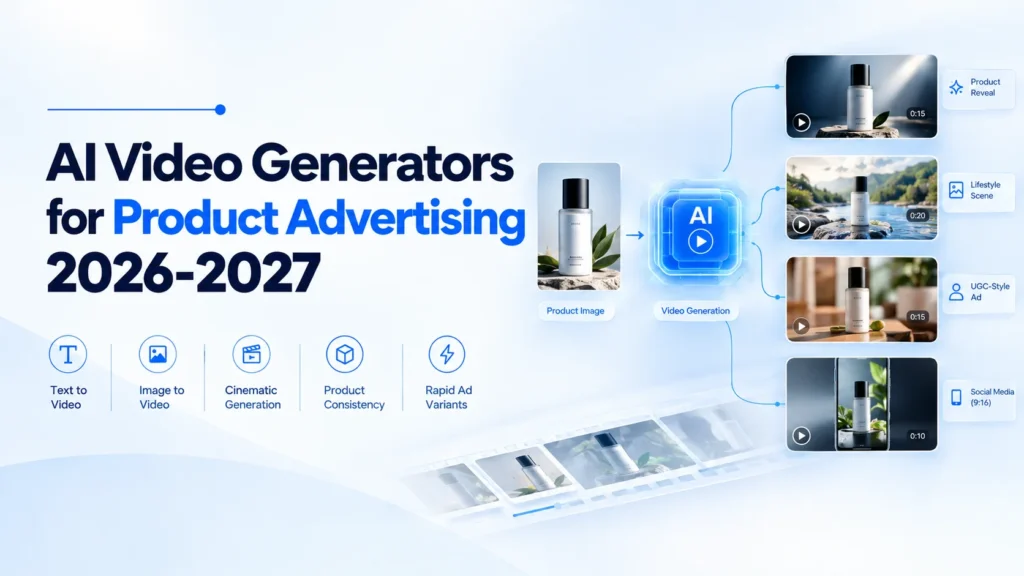
A product photograph, ideally a clean, well lit reference shot, becomes the anchor image for generation. That image is fed into an image to video tool as a reference, locking the product’s shape, color and proportions in place while the model generates motion, a camera move, a lighting change, a rotation, around it. The raw generation then moves through standard editing, trimming, color matching to brand guidelines, and pairing with voice or music, before final review and delivery. This workflow is strongest when a brand already has strong product photography and needs motion without a full video shoot.
Workflow 2: Product Concept to AI Advertisement
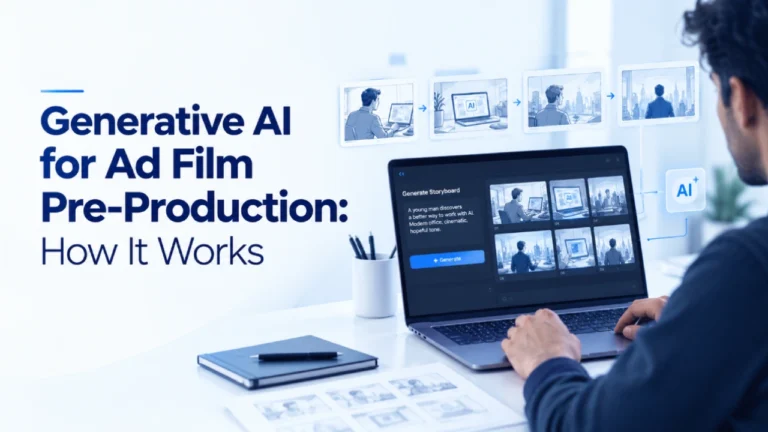
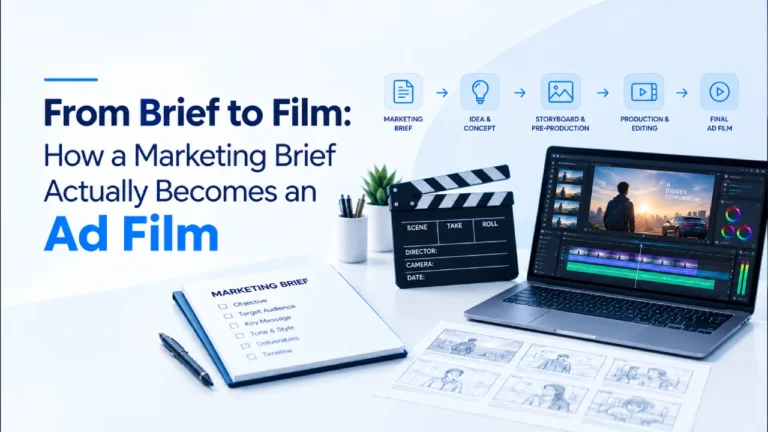
This workflow starts further back, with a creative brief rather than an existing image. The brief moves through concept generation, often assisted by a language model exploring several creative angles, into a storyboard that defines the shot sequence, then into AI video generation for each planned shot. Generated clips move through editing and a brand review pass before becoming a finished campaign asset. This workflow suits entirely new creative directions where no reference footage or photography exists yet.
Workflow 3: One Product, Multiple Ad Variations
A single approved generation, or a small set of them, becomes the source material for platform specific cutdowns, a 9:16 version for Instagram Reels and YouTube Shorts, a square or 4:5 crop for Meta feed placements, a slightly longer cut for a product landing page. Rather than regenerating from scratch for each platform, this workflow treats one strong generation as a master asset and adapts framing, pacing and length per destination. AI meaningfully reduces the production time this workflow takes, since the heaviest lift, the original generation and initial edit, happens once. It does not remove the need for a human pass checking each variant against platform specific creative best practices and brand guidelines before it goes live.
Where AI Video Generators Still Struggle
This is the section most promotional AI content skips, and it matters more in product advertising than almost anywhere else in commercial video, because a product error is immediately visible to anyone who has actually held the product.
Product deformation remains a real and documented issue, a bottle shape or packaging silhouette shifting subtly between frames or across generated variants. Incorrect or unstable logos are a closely related problem, with brand marks frequently rendering as plausible looking but technically wrong, a serious liability in any paid campaign. Packaging inconsistency across multiple generations of the same product is common enough that most serious workflows lock a reference image specifically to limit it, rather than trusting generation from text description alone. Text rendering inside a generated scene, packaging copy, a price tag, an on screen graphic, remains unreliable across nearly every current platform, which is why most product ads still add final text and graphics in post production rather than trusting the generator to render them correctly.
Physics errors still appear in liquid pours, fabric movement and object interaction, improving but not solved, which matters directly for categories like beverages, cosmetics and apparel where that physical behavior is central to the ad. Hand and object interaction, a hand picking up a product convincingly, remains one of the harder unsolved problems across the category broadly, not specific to any one platform. Limited shot continuity across a sequence, and inconsistent characters when a presenter or model needs to appear the same across multiple shots, both remain real constraints, which is part of why avatar specific platforms like HeyGen and Synthesia have built entire products around solving character consistency specifically, rather than treating it as a solved byproduct of general video generation.
Also Read: Top AI Tools for Film Production in 2026 and 2027
Commercial licensing complexity adds a layer of risk beyond the visual output itself. Terms differ meaningfully between platforms, some grant clear ownership of generated output on paid plans, others grant a more limited right to use, and free tiers across most platforms explicitly exclude commercial use. A brand running a national paid campaign and a solo creator testing a concept have genuinely different risk tolerance here, and the terms should be read accordingly before a generation becomes a paid ad.
For all of these reasons, traditional production remains clearly preferable in specific scenarios, anything requiring exact product specification accuracy for regulatory reasons, hero campaigns where brand safety risk tolerance is near zero, and any ad involving a real, named endorser rather than a generated avatar.
AI Video vs Traditional Product Advertising Production
| Factor | AI Video Generation | Traditional Production |
|---|---|---|
| Production speed | Hours to days per concept | Typically weeks from brief to delivery |
| Cost per variant | Low, often a few hundred to a few thousand rupees per clip at API rates | High, a full shoot day can run into lakhs regardless of variant count |
| Creative control | High for camera and lighting direction, lower for exact product or performance accuracy | Full control over every physical element, at a proportional cost |
| Product accuracy | Improving but still prone to deformation, logo and packaging drift | Exact, since the real product is physically filmed |
| Scalability | Very high, the same workflow produces many variants cheaply | Limited by crew, location and schedule availability |
| Iteration | Fast, a new variant can be generated in minutes | Slow and expensive, often requiring a reshoot |
| Cinematic control | Strong on leading platforms, still behind full manual control on complex sequences | Full manual control over every shot |
| Brand consistency | Dependent on reference locking and careful prompt discipline | Consistent by nature, since the same physical product and set are used throughout |
| Post production | Still required for text, final color and graphics in most workflows | Standard part of the process regardless of capture method |
| Human creative direction | Still essential at every stage, from prompting through final review | Essential throughout, embedded directly in the production process |
AI video generation is not displacing traditional production so much as sitting alongside it as a genuinely different tool for a genuinely different part of the job. It is strongest for high volume, fast turnaround, lower stakes variant production. Traditional production remains stronger for hero campaigns, regulated categories, and anything where exact physical accuracy or a real human performance is non negotiable. The teams getting the most value from this shift are combining both rather than treating the choice as binary.
The Future of AI Product Advertising in 2027
A handful of near term developments look likely to matter most for product advertising specifically, based on the direction current platforms are already moving in rather than speculative leaps. Better product consistency, through more sophisticated reference based generation that locks a product’s exact geometry across a full sequence rather than a single shot, is the single most requested capability across the platforms reviewed here, and the one most actively being worked on. More controllable camera movement, already visible in platforms accepting structured parameters rather than purely descriptive prompts, should continue reducing the gap between what a director intends and what a model produces.
Multi shot generation, producing a coherent sequence of connected shots rather than isolated clips, is likely to mature further, building on the multi shot storyboarding capability already present in platforms like Kling. AI assisted video editing, trimming, pacing and basic color matching handled automatically rather than manually, is a natural extension of capabilities already present in tools like Runway and Firefly’s editing suites. Automated ad variation, generating platform specific cutdowns from a single master asset with less manual intervention, follows directly from where Workflow 3 above already sits today. Personalized product advertising, tailoring a generated ad’s background, model or context to a specific audience segment at scale, is technically plausible given current reference and prompt control capabilities, though it raises its own brand safety and disclosure questions that will need resolving alongside the technology.
API based creative generation and increasingly AI native advertising workflows, where generation, variant production and basic performance testing happen inside one connected pipeline rather than across separate tools, represent the most likely structural shift for agencies and in house teams building at scale. None of this points toward AI replacing the creative judgment that decides which concept is right for a brand. It points toward that judgment having faster, cheaper raw material to work with.
Final Takeaway on top AI video generators for product advertising
There is no single best AI video generator for product advertising, and any article claiming otherwise is oversimplifying a genuinely use case dependent decision. The right platform depends on the advertising objective, whether the goal is a premium hero shot or rapid social testing, the product type, since liquids, fabrics and reflective materials stress different platforms differently, the level of creative control a campaign actually needs, the production scale required, and the commercial and legal requirements a specific brand or agency operates under. Runway’s product specific recipes, Veo’s cinematic realism, Firefly’s indemnified safety, and HeyGen’s multilingual avatar capability are not competing for the same job. They are solving different parts of the same broader advertising workflow, and the strongest teams in this category are the ones treating them that way rather than searching for one tool to replace the rest.
Sources and Methodology
This guide was compiled from official platform pricing and documentation pages, including Runway’s developer API documentation, Google’s Vertex AI and Gemini API pricing pages, Kling AI’s published pricing and terms, OpenAI’s Sora API documentation, Luma Labs’ product comparison pages, Pika’s pricing page, Adobe Firefly’s product pages, and HeyGen and Synthesia’s respective pricing and feature pages, cross referenced against independent comparative testing and industry reviews published in 2026. Pricing for AI video platforms changes frequently and should be verified directly against each platform’s current pricing page before budgeting a campaign. This article distinguishes documented platform claims from independent reviewer assessment and clearly marked editorial judgment throughout, and does not present unverified claims as confirmed fact.