Table of Contents
Why Cinematic Ads Outperform Generic Social Media Content
Cinematic Ads vs Social Media Content: Scroll through any Instagram feed for thirty seconds and count how many ads you actually remember afterward. Most people struggle to name even one. That is not a talent gap on the viewer’s part. It is a design failure on the brand’s part.
Somewhere in the last few years, a lot of marketing teams convinced themselves that “more content” was the same thing as “more results.” Post daily, keep it cheap, keep it fast, let the algorithm sort out what sticks. It worked for a while. It does not work as well anymore, and the data backs that up clearly.
At Cybertize Media Productions, we have sat across the table from enough brand teams to see the pattern repeat. A company spends lakhs producing dozens of quick social edits every month, and the engagement graph stays flat. Then they invest in one well shot, well directed cinematic piece, and it outperforms three months of generic content combined. This is not a coincidence. It is how attention actually works.
The Real Problem With Generic Social Content

Generic content is built for volume, not for memory. It is shot on a phone, cut fast, captioned with trending audio, and pushed out because the calendar demands a post. None of that is wrong on its own. Short, native, unpolished content absolutely has a place in a brand’s mix. The mistake is treating it as the only tool.
The trouble is that generic content rarely tells a story. It shows a product, states a claim, and moves on. There is nothing for the brain to hold onto. Neuroscience research on advertising has repeatedly shown that people remember stories, not statements, because narrative structure activates more regions of the brain than a plain product shot does. A well built ad film uses a beginning, a rising moment, and a resolution, the same structure that has worked in storytelling for centuries. A ten second product reel usually skips straight to the resolution and expects the viewer to care anyway.
What the Numbers Actually Say
The gap between polished video and generic content is no longer a matter of opinion. It shows up directly in performance data.
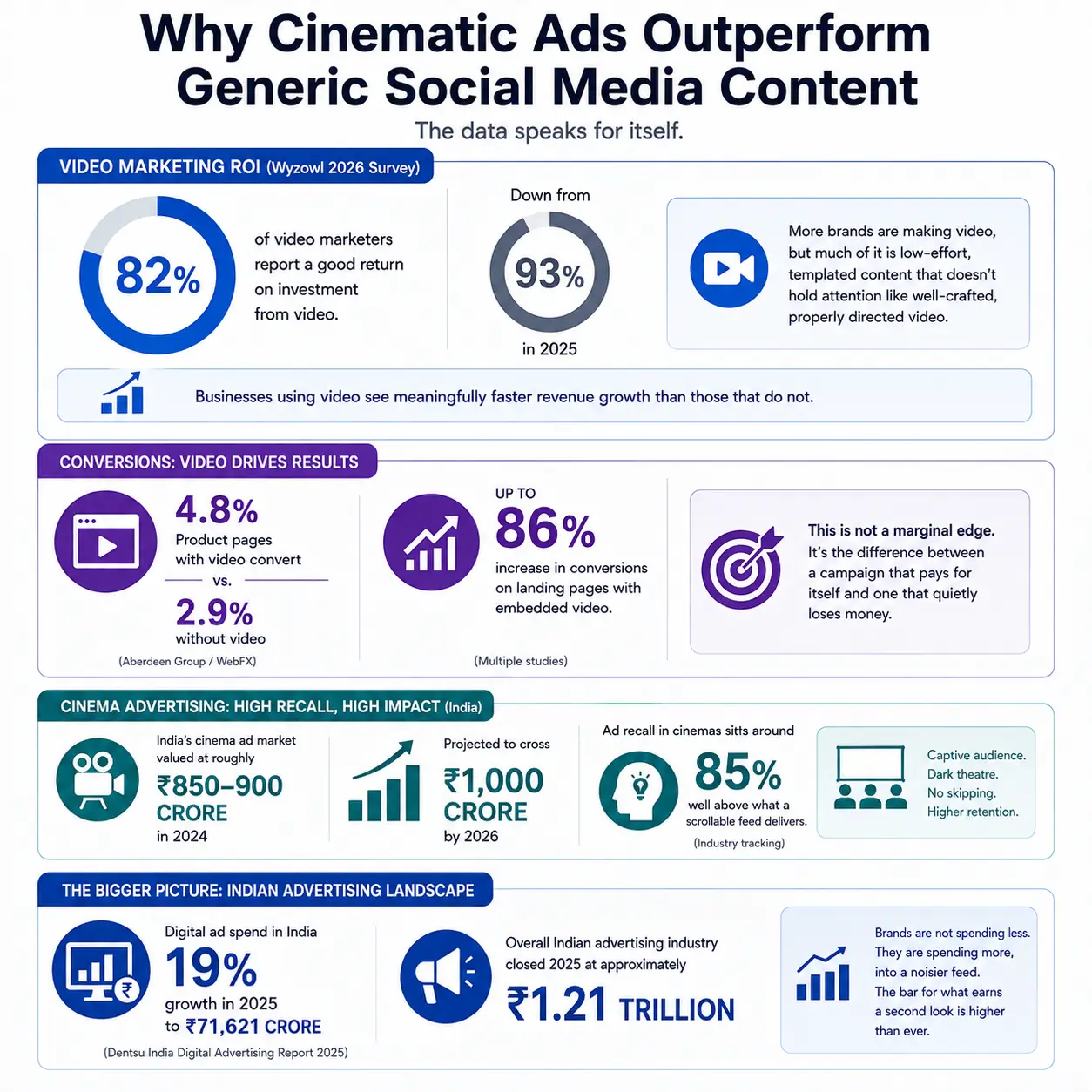
Wyzowl’s 2026 State of Video Marketing survey found that 82% of video marketers report a good return on investment from video, and that businesses using video see meaningfully faster revenue growth than those that do not. But that figure also tells a second story. It dropped from 93% the year before, and the most likely reason is not that video stopped working. It is that far more brands are now producing video, and a lot of that new supply is low effort, templated content that does not hold attention the way a properly directed piece does.
Conversion data makes the craft gap even clearer. Product pages carrying video convert at an average of 4.8%, compared to 2.9% on pages without it, according to Aberdeen Group and WebFX research. On landing pages, embedded video has been shown to lift conversions by as much as 86%. That is not a marginal edge. That is the difference between a campaign that pays for itself and one that quietly loses money.
Cinema advertising in India offers a similar signal from a different angle. India’s cinema ad market was valued at roughly Rs 850 to 900 crore in 2024 and is projected to cross Rs 1,000 crore by 2026, and one reason advertisers keep paying premium rates for a captive cinema audience is the recall it generates, sitting around 85% according to industry tracking, well above what a scrollable feed typically delivers. Viewers in a dark theatre, watching a film they cannot skip, retain the message in a way a six second pre-roll rarely achieves.
On the broader Indian advertising landscape, digital spend alone grew 19% in 2025 to Rs 71,621 crore according to Dentsu India’s Digital Advertising Report, with the overall Indian advertising industry closing the year at approximately Rs 1.21 trillion. Brands are not spending less. They are spending more, into a noisier feed, which raises the bar for what actually earns a second look.
Why the Brain Responds Differently to Cinematic Work

Cinematic Ads vs Social Media Content: A cinematic ad is not just a video with a bigger budget. It is built around choices that generic content usually skips entirely: deliberate framing, colour grading that sets a mood before a single word is spoken, sound design that guides emotion rather than just filling silence, and pacing that respects the viewer instead of rushing them. Every one of those choices is a signal to the brain that says pay attention, this matters.
Generic content, by contrast, often looks and feels like everything else in the feed. Same vertical crop, same trending transition, same stock caption style. The brain is extremely good at filtering out repetition. If an ad looks like the fifty other things a person scrolled past that day, it gets treated the same way, ignored, regardless of how good the underlying product actually is.
This is also why founder led and unpolished formats sometimes outperform expectations. They work because they are different from the surrounding noise, not because polish does not matter. The lesson is not “always go cinematic” or “always go raw.” It is that sameness is the real enemy, and cinematic craft is one of the most reliable ways to break out of it when a brand has something worth saying.
Also Read: 10 AI Ad Film Concepts That Brands Would Actually Buy
The Cost Myth That Holds Brands Back
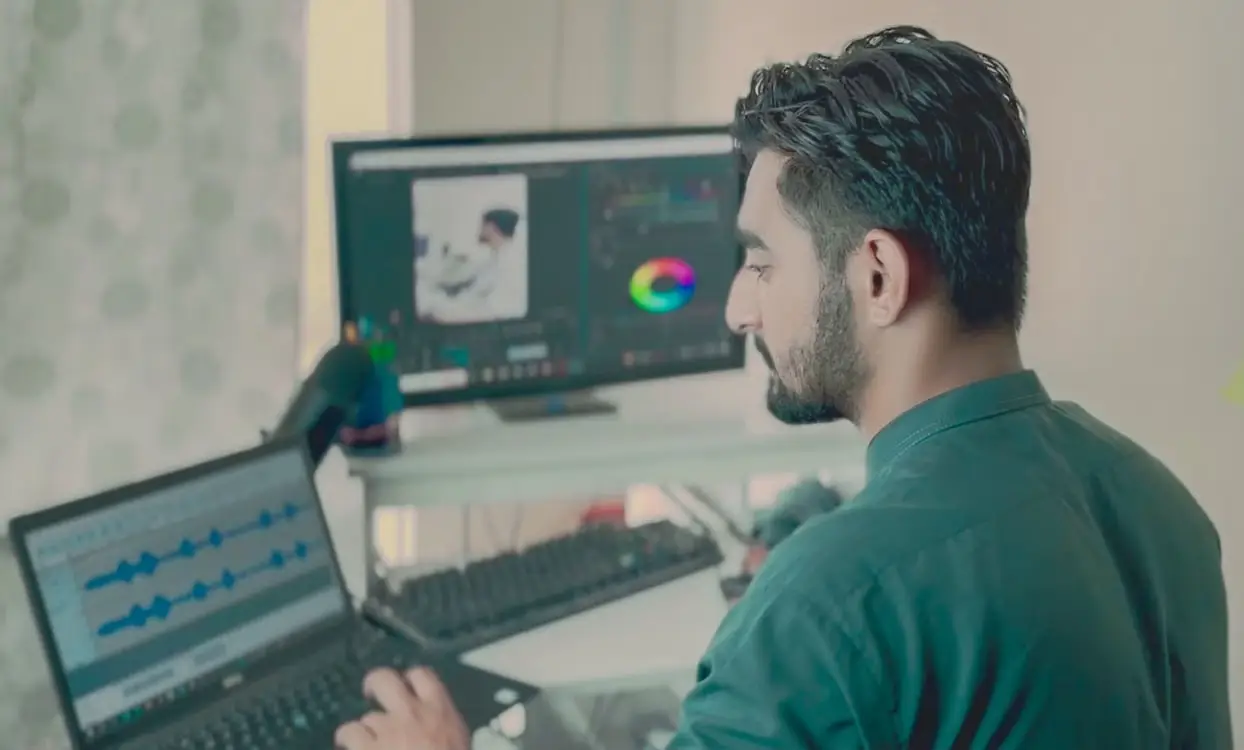
The biggest objection we hear is cost, and it deserves a straight answer. A basic digital first ad film in India today can start around Rs 75,000, and a mid range brand film that genuinely stops a thumb from scrolling typically sits between Rs 3 lakh and Rs 12 lakh, depending on shoot days, talent and post production complexity. That is not the celebrity backed, crore level national campaign most people picture when they hear “cinematic.” It is well within reach for a growing D2C brand or a regional business with a real story to tell.
AI assisted production has also compressed this further. Entry level AI enhanced ad films now start around Rs 2 to 5 lakh, running 40 to 70% below equivalent traditional production costs, while still delivering visual quality that matches mid budget traditional work for most digital use cases. The excuse that cinematic quality is only for large corporate budgets does not hold up the way it did even two years ago.
What actually costs a brand money is the opposite mistake, producing high volumes of forgettable content that never earns its media spend back. Twenty generic reels at a low individual cost can add up to more than one well made film, with a fraction of the recall and none of the conversion lift.
Cinematic Ads vs Social Media Content: Where This Leaves Brands in 2026
None of this means social native content should disappear. Quick, timely, platform aware posts still matter for staying visible and reactive. But when a brand needs to be remembered, when it needs to earn trust rather than just an impression, cinematic craft is doing work that a templated reel simply cannot replicate. The data on conversion, recall and ROI all point the same direction. Story beats noise, and craft beats volume, especially in a market as crowded and as fast growing as India’s advertising space is right now.
The brands that will stand out over the next few years will not be the ones posting the most. They will be the ones whose one great film everyone actually remembers.
Also Read: Animation Ads Deliver 42% Higher Engagement Than Static Creatives
Written for Cybertize Media Productions Private Limited.