Table of Contents
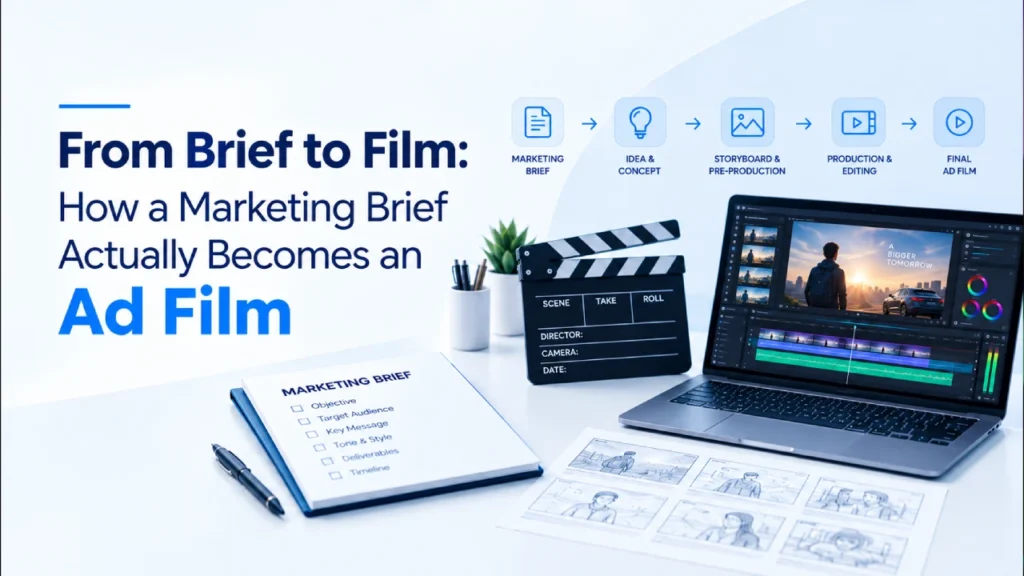
From Brief to Ad Film: How a Marketing Brief Actually Becomes an Ad Film
A marketing brief and a finished ad film are almost never the same document in spirit, even when the production team follows the brief closely. Something happens in between, a translation from business language into visual language, and how well that translation is done matters more to the final film than almost any decision made on the shoot day itself.
This is also, honestly, where most production vendors stop adding value and start just executing. A brief comes in, a treatment goes out, a shoot happens, a film gets delivered. Nobody asked why the brief said what it said. Nobody pushed back on an assumption buried inside it. The film gets made, technically correct, and still somehow does not land the way the brand hoped it would.
At Cybertize Media Productions, we think this gap, between receiving a brief and actually understanding it, is where the real value of a production partner either shows up or does not. Here is how that translation should actually happen.
What a Marketing Brief Is Actually Asking For

A good creative brief is meant to be a strategic document, not a checklist. Its real job is setting clear objectives, whether the priority is awareness, consideration or direct sales, defining the audience precisely enough that a creative team can picture a real person rather than a demographic slide, and establishing the key message the film has to carry, alongside the brand voice it needs to stay inside.
Hire Top Ad Film Experts in India
The trouble is that most briefs describe the outcome a brand wants without describing the emotional territory that outcome actually lives in. A brief might say “increase brand consideration among urban millennials,” which is a business objective, not a creative direction. Turning that into a film means asking a harder question underneath it. What does this brand need this audience to feel, not just know, for consideration to actually shift. That question rarely has an obvious answer sitting inside the brief itself.
Where the Real Interpretation Work Happens

From Brief to Ad Film: This is the stage most vendors skip, and it is also the stage that determines almost everything downstream. Interpreting a brief properly means sitting with the objective long enough to identify the emotional and narrative territory that will actually move the stated audience, then testing that direction against the brand’s existing identity before a single visual gets locked.
The data backs up why this step matters as much as it does. Nielsen’s analysis of nearly 500 CPG campaigns found that creative itself accounts for roughly 49% of a brand’s sales lift, more than targeting and media placement combined, and separate research puts creative’s share of overall ad performance closer to 70% across major platforms. Media buying can be close to perfectly optimised and still underperform if the creative sitting inside it was built on a shallow reading of the brief. The interpretation stage is not a soft, optional step before the “real” production work begins. It is arguably the most commercially consequential part of the entire process.
Yet this is also the stage that gets the least structured attention across the industry. Recent research from EMARKETER and Perion found that only 3.6% of marketers say their ad creative’s effectiveness is well understood and actively optimised, and separate Forrester research commissioned by VidMob found that 76% of marketers say advertising effectiveness is weakened by ineffective creative or by an inability to properly measure it. Most teams are not short on effort. They are short on a structured way to interrogate a brief before production starts, which is exactly the gap a genuinely strategic production partner is supposed to fill.
Turning Interpretation Into a Concept

Once the emotional territory is clear, the work becomes narrower and more concrete, translating a single insight into a concept that can actually survive a full production, a script, a visual language, a central idea simple enough that a viewer grasps it in the first few seconds and specific enough that it could only belong to this brand, not a category of similar brands.
Also Read:
Brand Storytelling Insight: Why Brands No Longer Need “Ads”, They Need Watchable Stories
This is where a brief’s constraints, budget, timeline, mandatory brand elements, product shots that must appear, actually become useful rather than limiting. A strong concept is built with its constraints in mind from the start, not designed freely and then awkwardly retrofitted to fit a budget or a legal requirement discovered halfway through pre-production. Productions that skip this alignment step are the ones that end up cutting a beloved shot at the eleventh hour because nobody checked whether it was actually affordable or legally clear back when the concept was still just an idea on paper.
From Concept to Script and Treatment

The treatment is where the interpretation becomes something a client can actually approve, a document that lays out the story, the visual tone, the pacing, and often a rough shot approach, translated fully out of strategic language and into filmmaking language. A good treatment does not just describe what will be shown. It explains why each major creative choice serves the original brief, which matters enormously at the approval stage, because it lets a client evaluate the concept against their actual objective rather than against personal taste.
This is also usually where a brief’s gaps become visible for the first time. A brief that seemed complete on paper often turns out to be silent on something the treatment stage forces into the open, how the film needs to cut down for shorter formats, whether the message needs to work without sound for feed based platforms, whether a regional language version is needed. Catching these gaps here, on paper, costs a conversation. Catching them after the shoot costs a reshoot.
Production: Where the Brief Finally Becomes Real
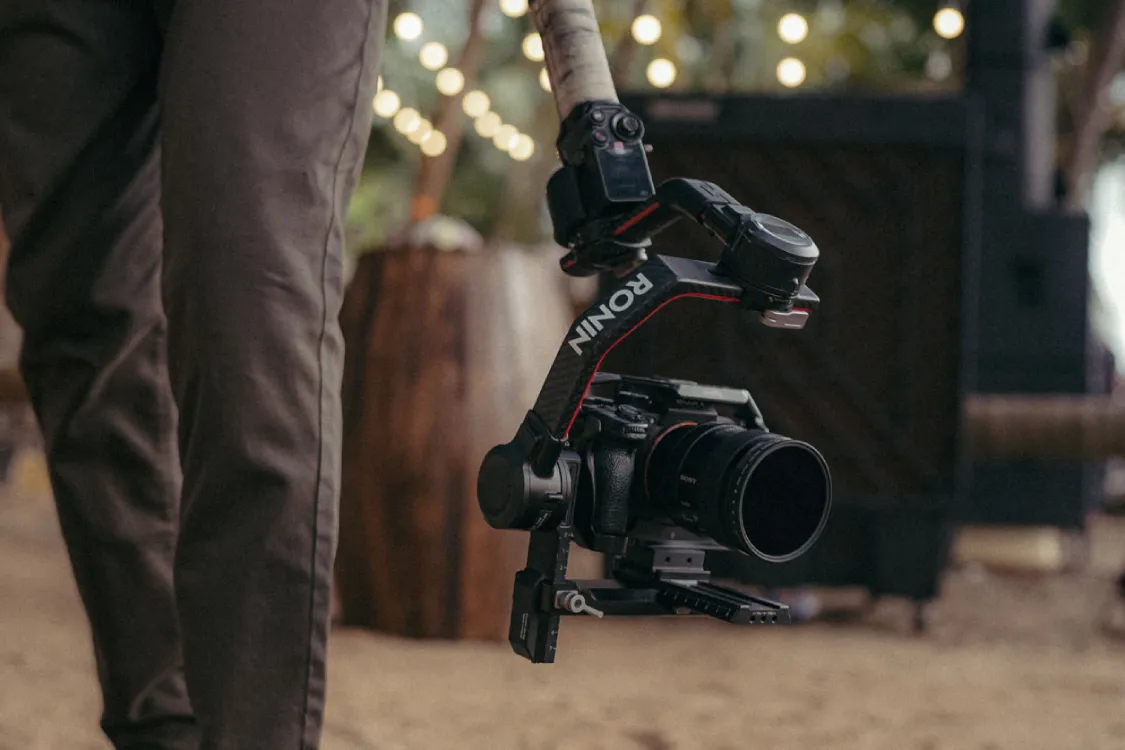
By the time a project reaches an actual shoot day, most of the decisions that determine whether the film succeeds have already been made. Production is where the treatment gets executed, camera choices, blocking, performance direction, but a well interpreted brief and a strong treatment mean the shoot day is mostly about capturing what has already been agreed, not discovering the film for the first time under time pressure.
This is also, not coincidentally, why AI adoption has grown fastest at the concepting and pre-production stage rather than in the moment by moment decisions on set. Recent industry data shows 83% of ad executives now say their company has deployed AI somewhere in the creative process, up from 60% just two years earlier, and AI assisted creative development has been linked to meaningful reductions in production time. But that adoption is concentrated in speeding up exploration and iteration, testing several visual directions quickly before committing budget, not in replacing the interpretive judgment that decides which direction is actually right for the brand.
Why This Whole Chain Matters More Than Any Single Step
The honest lesson in all of this is that a marketing brief becomes a good ad film through a chain of careful translations, not a single creative leap. Business objective into emotional territory. Emotional territory into concept. Concept into treatment. Treatment into shoot. Every weak link in that chain shows up in the finished film, usually in a way that is hard to name precisely but easy to feel, a film that is technically well made and still somehow does not move anyone.
Also Read:
10 AI Ad Film Concepts That Brands Would Actually Buy
This is also exactly why the strongest client relationships in this industry are rarely built on turnaround speed alone. They are built on a production partner who reads a brief the way a strategist would, asks the uncomfortable question about what is actually missing from it, and treats that interpretation work as seriously as anything that happens on set.